One bobble catches your eye at a cuff. Before reaching for a shaver, put the garment on a table and look closely. A compact pill, a loose knitted loop and the intended soft surface of a yarn are three different things. Removing the wrong one can do more harm than leaving the bobble alone.
The aim of depilling is a modest improvement to the surface while preserving the fabric. It is not to make a hairy yarn look smooth, or to erase every sign that a favourite sweater has been worn.
Identify the thing you want to remove
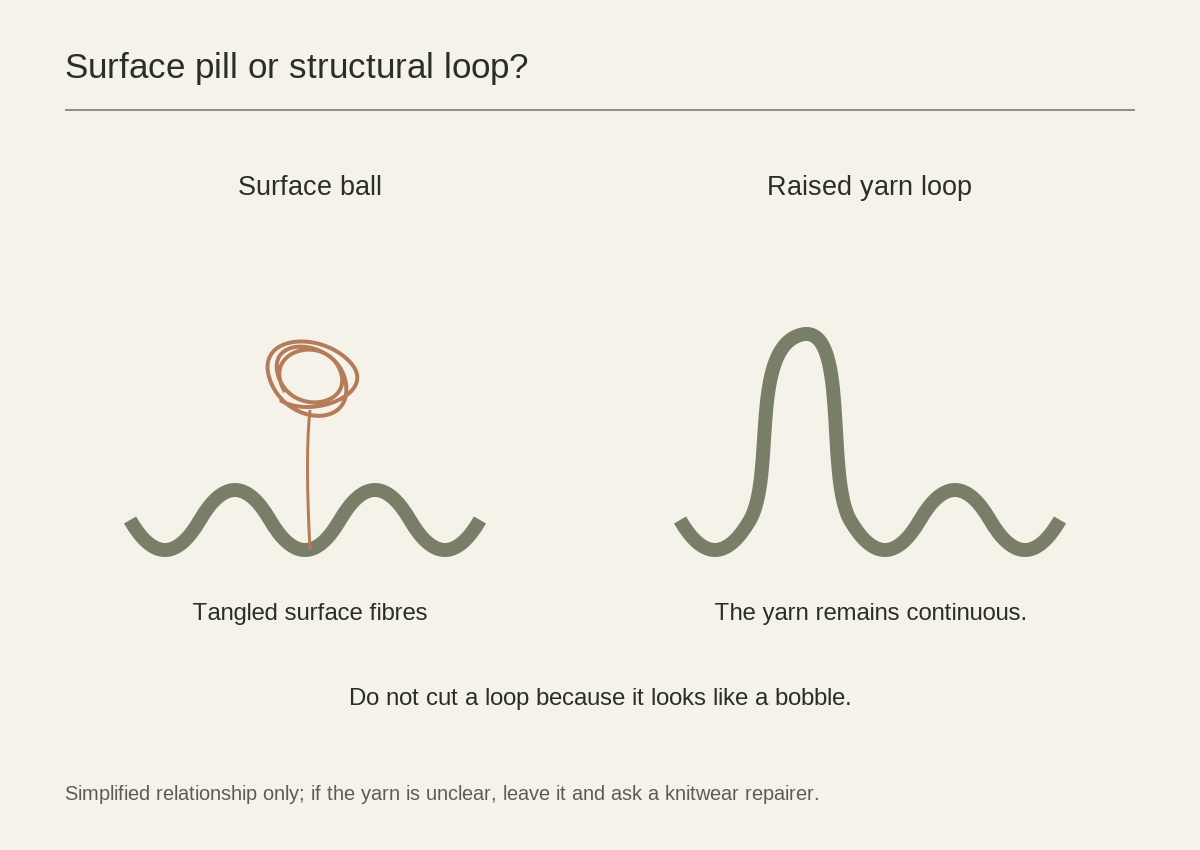
A pill is a small tangled ball of surface fibres. Woolmark describes pilling as a friction-related process with several contributing factors. A raised loop may instead be part of the yarn forming the knitted structure. CottonWorks’ knit-basics reference explains knitting in terms of intermeshing loops; cutting such a loop is a different action from removing a surface ball.
The original diagram exaggerates the distinction for teaching. It does not diagnose a real garment from a distance. Support the area and inspect it in good light without tugging. If you cannot distinguish the bobble from a continuous loop, leave it in place and ask the maker or a knitwear repairer.
Also look at the surrounding fabric. Fine wisps across an otherwise even surface may be the yarn’s intended halo. Attempting to shave all of that away changes the appearance you bought. Compare with an unworn or less-rubbed area, while allowing for differences in lighting and fabric direction.
Establish permission before choosing a tool
Read the supplier’s surface-care advice for the actual garment. If it gives no depilling instruction, ask which method, if any, is suitable for that yarn, structure and finish. A very fine, open or already damaged knit is a reason to seek a knitwear-care or repairer’s assessment.
Photograph the untreated area in useful light before asking. Include an overview as well as the close view, so the supplier can see the position and construction. This records the question; it does not diagnose the fabric.
A list of wool tools is not an alpaca method
Woolmark lists hand removal, combing and fabric shavers as options for wool. That is the source’s general wool guidance. It does not establish safe hand pulling, comb contact or shaver settings for the fine alpaca garment in front of you, and this article supplies no alpaca-specific tool trial.
If the garment supplier confirms a method, follow both its instructions and the tool’s exclusions, including any test-area requirement. A cutting guard does not by itself establish suitability for raised stitches, seams or embroidery. Where the instructions are missing or conflict, resolve that with the supplier or a repairer before treatment.
Resistance, a drawn loop, visible thinning or a changed surface is a reason to stop. Do not increase force or make repeated passes to chase a perfectly smooth result. A household razor or scissors is not a substitute for identifying what you would be cutting.
Keep surface care separate from a repair
If inspection reveals a loose loop or hole, leave it undisturbed and seek repair advice. Depilling removes surface material; repairing the knitted structure is a different job.
Do not wash or steam to disguise an uncertain treatment. The care overview keeps cleaning permission separate from surface grooming. Preserve the supplier’s answer with the garment’s care record.
Note repeated contact without diagnosing quality
Once the cuff question is resolved, note any repeated contact from a strap or closure; the layering guide helps locate it. Leave a few bobbles in place when removing them would threaten the yarn’s intended surface or an uncertain loop. A question for a repairer is a useful outcome, not a failed grooming task.