Bobbles follow the route of a cross-body bag strap, while the surrounding knit looks intact. A second imagined sweater has surface pills beside a broken stitch. Those are different observations, even if both owners describe the problem as “pilling”.
Follow the contact area, surrounding cloth and care history before asking what the change means. Pilling forms small fuzzy surface balls; it does not identify fibre purity or an overall quality grade. The care guide handles routine upkeep; this article interprets the evidence.
What pilling tells you directly
Woolmark describes pilling in wool clothing as fuzzy balls formed through rubbing during wear. Its account highlights common contact areas and explains that activity and abrasion against other surfaces influence what happens. That is useful wool-textile context, not a controlled comparison of every alpaca yarn or blend.
The direct observation is a change at the surface. It does not identify the fibre composition or prove that a garment was made badly. A few pills at a repeated contact point and widespread deterioration with broken stitches are different findings; neither should be reduced to a single adjective such as “cheap”.
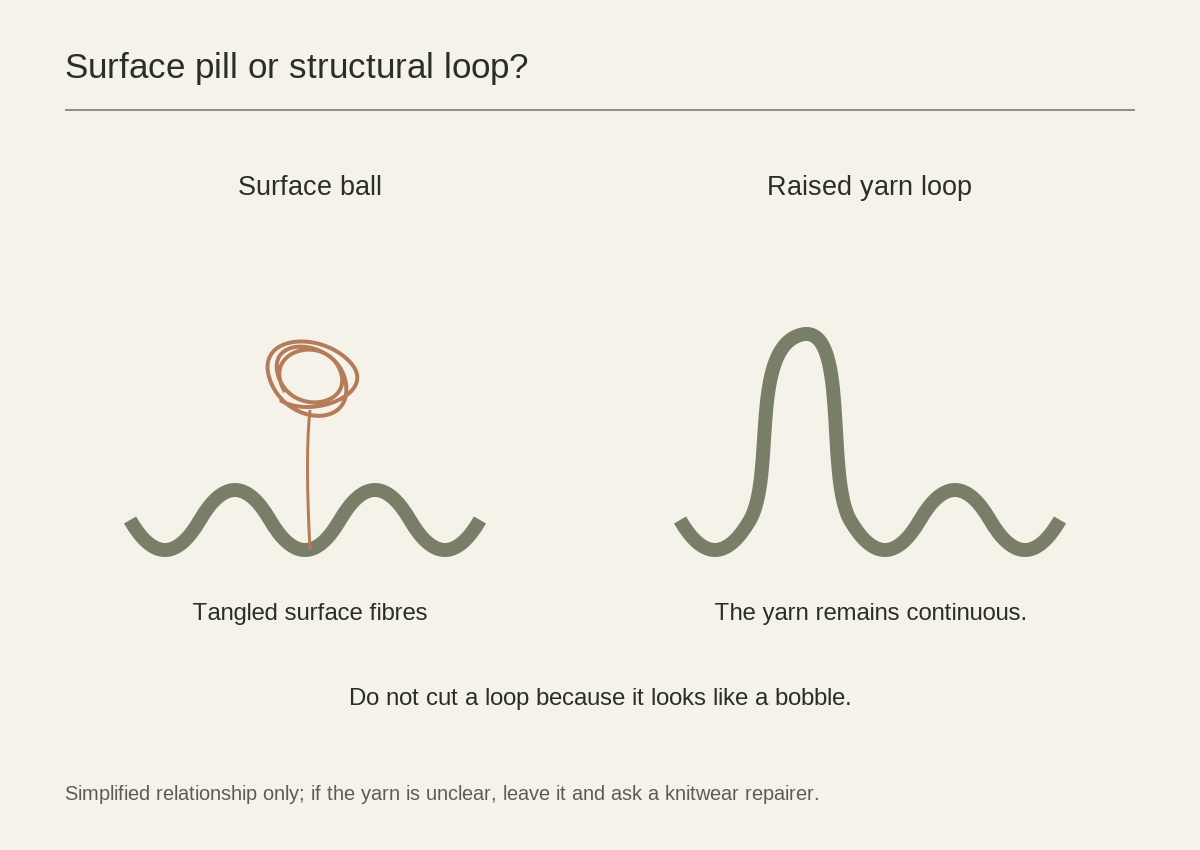
Also distinguish pills from loose lint or a pulled loop. Do not tug at something attached to the fabric to find out which it is. A snag, hole or broken yarn needs a different assessment from surface bobbling.
Find the contact pattern
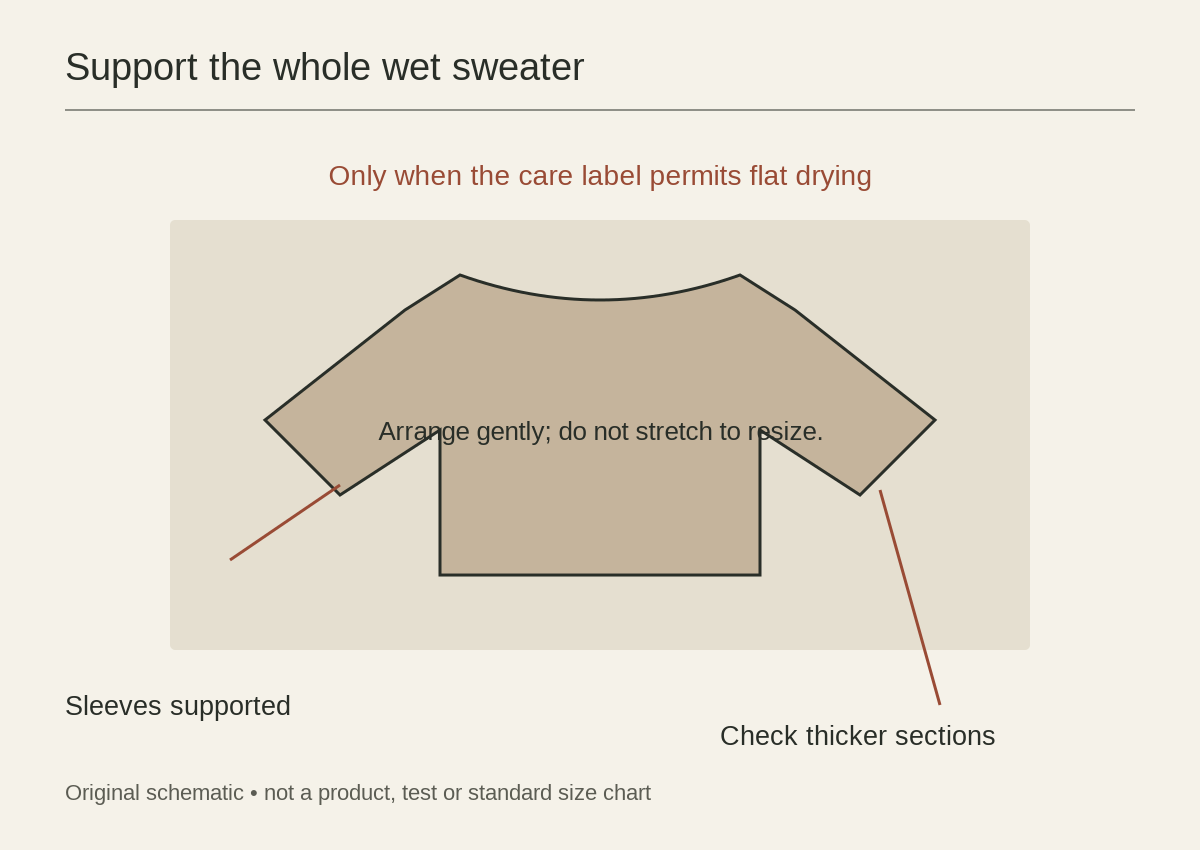
Lay the dry garment on a supported surface and photograph the affected area without stretching it. Note the location and what normally touches it: an inner sleeve against the body, a bag strap, a chair edge or a close outer layer.
| Observation | Useful question | What it cannot prove alone |
|---|---|---|
| Bobbles along a strap route | Does this area meet the same strap repeatedly? | Fibre purity or a manufacturing fault |
| Pills at inner sleeves | Where do sleeve and body rub during wear? | That every part will wear identically |
| Loose fluffy surface | Is it the intended finish, shedding or newly formed pills? | A fibre grade from appearance |
| Pulled loops or broken stitches | Is a repair assessment needed? | That a depilling tool is appropriate |
This is a way to organise observations, not a diagnostic chart. Keep the original photographs if you later need to discuss a quality concern with the seller.
Why the fibre name is not enough
A finished knit is the result of fibre selection, yarn construction, fabric structure and finishing. Woolmark’s design guidance for wool discusses factors such as fibre length, twist and fabric cover. Those variables help explain why the subject is more complex than “natural fibre good, blend bad”. They do not give an alpaca shopper a guaranteed no-pill formula.
The Alpaca Owners Association describes alpaca fibre characteristics but does not supply a pilling result for the garment in your hands. A softer hand-feel, a low stated micron average or a higher price is not a substitute for evidence about wear in a particular product.
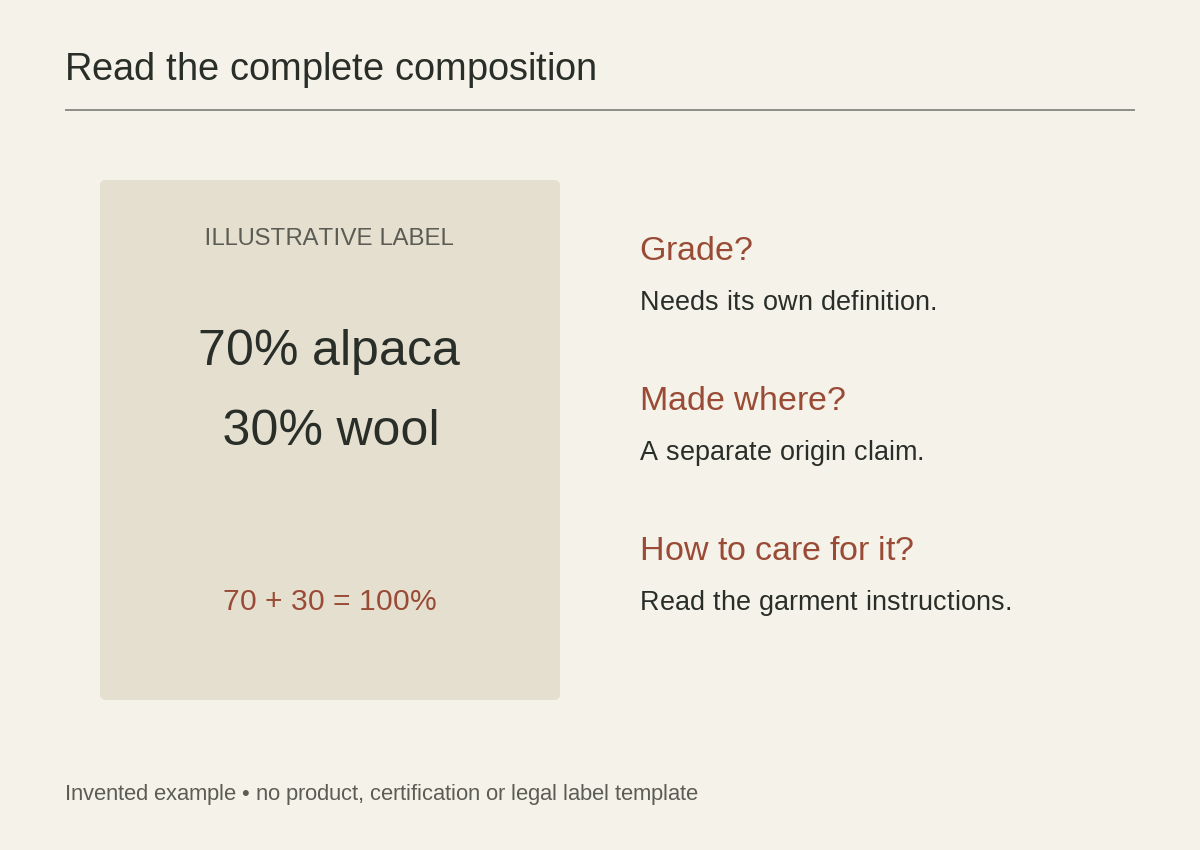
Read the blend reference before treating composition percentages as a performance score. Two sweaters with the same declared blend can differ in yarn and construction. Pilling cannot authenticate those percentages by sight or touch.
Assess a quality concern in context
For the first imagined sweater, the concentration of bobbles along the strap route is the detail to record alongside the otherwise intact cloth. No rate of wear has been tested or declared acceptable here. Photographing the contact route gives the seller more useful information than reporting only “alpaca pills”.
For the second imagined sweater, record the pills and the broken stitch separately. Surface grooming will not repair a structural defect, and trimming before seeking advice may remove evidence or cause further damage.
If the garment is new or the change seems unexpectedly rapid, contact the seller with the purchase date, care record and photographs. Ask what assessment and remedy it offers for that exact item. This guide cannot decide a warranty or consumer-rights outcome from a description alone.
Reduce avoidable friction without promising prevention
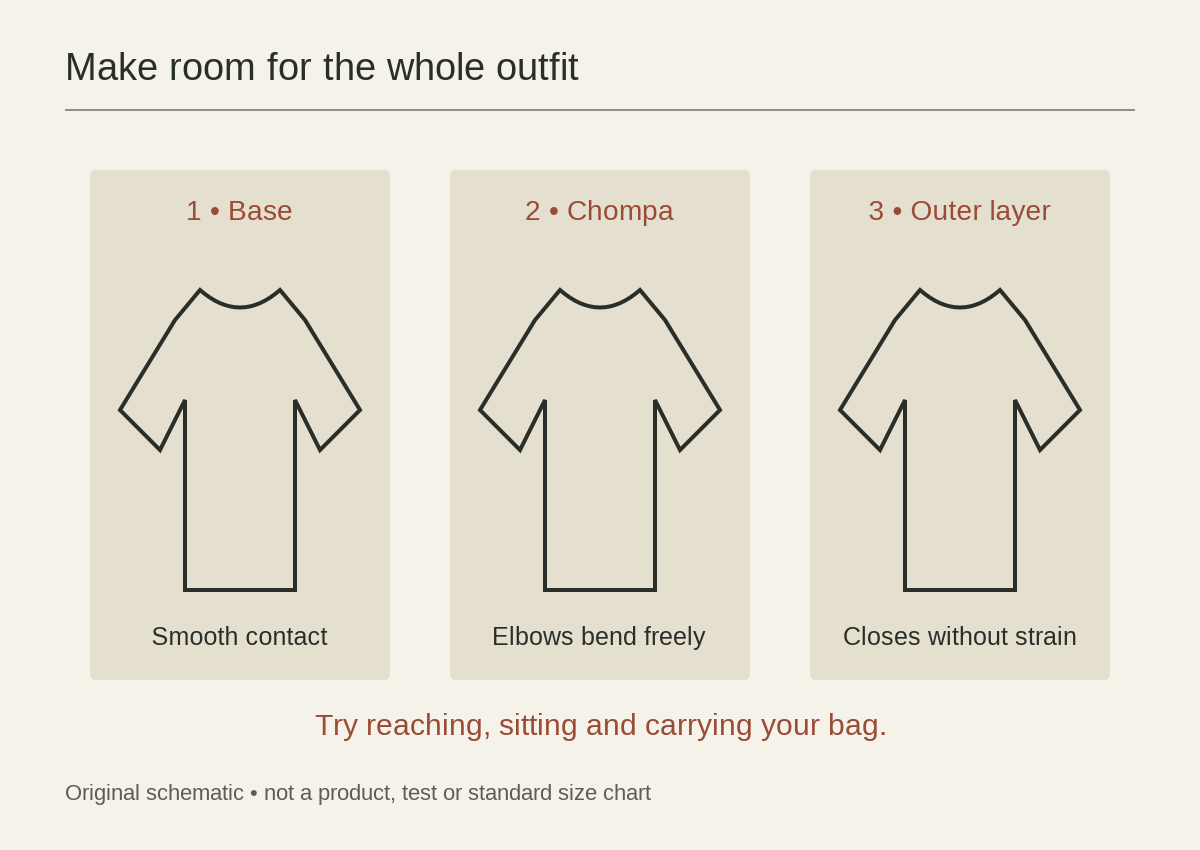
Check how your usual bag, desk or outer layer meets the sweater. Where a repeated contact is easy to change, changing it may be a sensible practical step. The layering guide can help you spot tight or awkward contact points in the whole outfit.
Follow the garment’s care instructions. PAKA’s category-specific care page is one example of why advice should stay attached to the product. Do not wash more often, add an unapproved conditioner or use heat in the hope of preventing every future pill.
Decide whether surface grooming is appropriate
Before using a comb, shaver or scissors, establish what the maker recommends for the particular knit. Raised stitches, loose structures, decoration and thin areas need care; a generic tool recommendation is not permission to cut into them. If you are unsure whether you are looking at a pill or damaged yarn, ask a competent repairer.
Keep a brief record of the location, care and any advice received. Judge the garment through several kinds of evidence: construction, fit, condition and the seller’s response as well as its surface appearance. Pilling matters to use and appearance, but it should remain one observation within that assessment.