Wool
Caring for Alpaca Knitwear
A practical care guide for alpaca sweaters, hats, and knitwear, focused on preserving loft, drape, and fit.
Alpaca knitwear can last a long time, but it is easier to damage than many people expect, especially through over-washing, heat, and poor storage. This guide covers simple care habits that preserve loft, drape, and fit.
For broader context, browse the Wool guides.
How to Hand Wash Alpaca Knitwear Without Damaging It
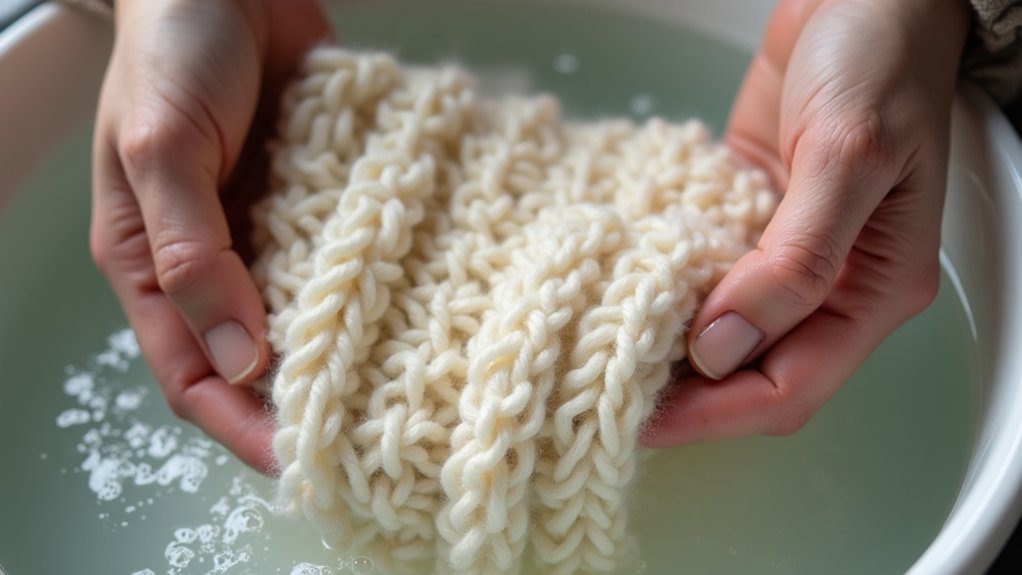
Hand washing alpaca knitwear requires lukewarm water, a gentle detergent designed for delicate fibers, and a clean basin or sink. Fill the basin with water and add a small amount of detergent, swirling to dissolve. Submerge the garment completely and let it soak for three to five minutes. Use gentle agitation to clean the fibers, pressing the fabric softly without twisting or wringing. Drain the soapy water and refill the basin with cold water for rinsing. Repeat the rinsing process until all detergent residue is removed. Press the water out carefully by rolling the garment in a clean towel. Lay the knitwear flat on a dry towel, reshaping it to its original dimensions, and allow it to air dry away from direct heat or sunlight.
The Right Way to Dry Alpaca Sweaters Flat
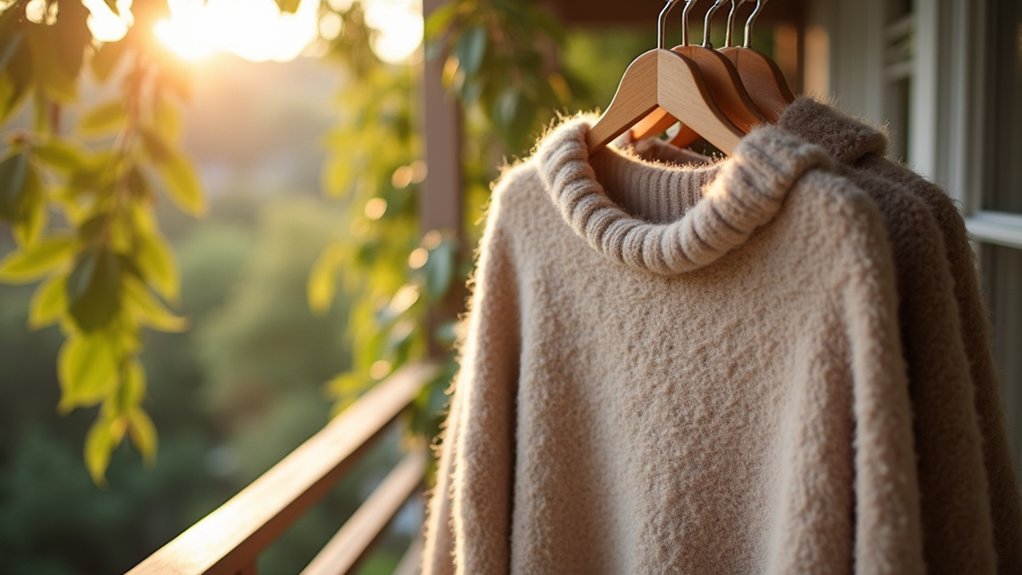
After washing, proper drying becomes the most important step in maintaining an alpaca sweater’s shape and texture. One should gently squeeze out excess water without wringing or twisting the fabric. Flat positioning on a clean, dry towel prevents stretching and distortion. The sweater needs reshaping to its original dimensions while damp. Rolling the garment in a towel removes additional moisture before transferring it to a mesh drying rack or fresh towel. Air circulation underneath prevents mildew formation. Humidity control matters substantially - avoiding damp basements or steamy bathrooms accelerates drying without damage. Direct sunlight and heat sources like radiators must be avoided, as they can cause shrinkage or fiber damage. The sweater typically requires 24-48 hours to dry completely.
Between-Wash Care: Airing and Brushing Your Alpaca
How often should alpaca sweaters actually be washed? Usually less than you think. Between washes, simple habits keep garments fresh without stressing the fiber.
Air pieces out after wear and let moisture evaporate fully before putting them back in a closet. Fresh air does more than frequent washing.
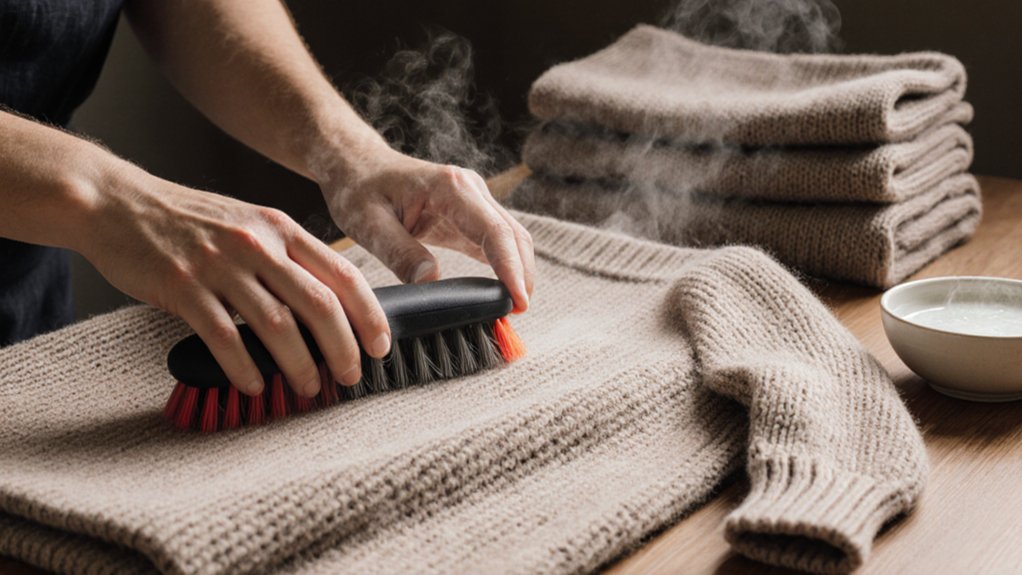
Proper brush technique involves using a soft-bristled garment brush or specialized sweater comb. Gently stroke in one direction following the knit’s grain to remove surface dust and prevent pilling. Apply light pressure to avoid stretching delicate fibers. Brush after airing, when the garment’s completely dry. This simple routine extends time between washes while maintaining the sweater’s appearance and longevity.
How to Store Alpaca Knitwear to Prevent Moths
Moths pose a serious threat to alpaca knitwear because these insects feed on natural protein fibers, leaving behind irreparable holes. To protect garments during storage, one should clean them thoroughly before putting them away, as moths attract to body oils and food residues. Store items in airtight containers or sealed bags to prevent moth access. Cedar blocks or lavender sachets inside containers provide natural deterrents without chemicals. Avoid using mothballs, which can damage delicate alpaca fibers and leave unpleasant odors. Place moth traps in closets and storage areas to monitor and catch adult moths before they lay eggs. Store knitwear in cool, dark, dry locations, as moths prefer warm, humid environments. Regular inspection every few months helps with early detection of any potential problems.
Removing Pills From Alpaca Without Ruining the Fiber
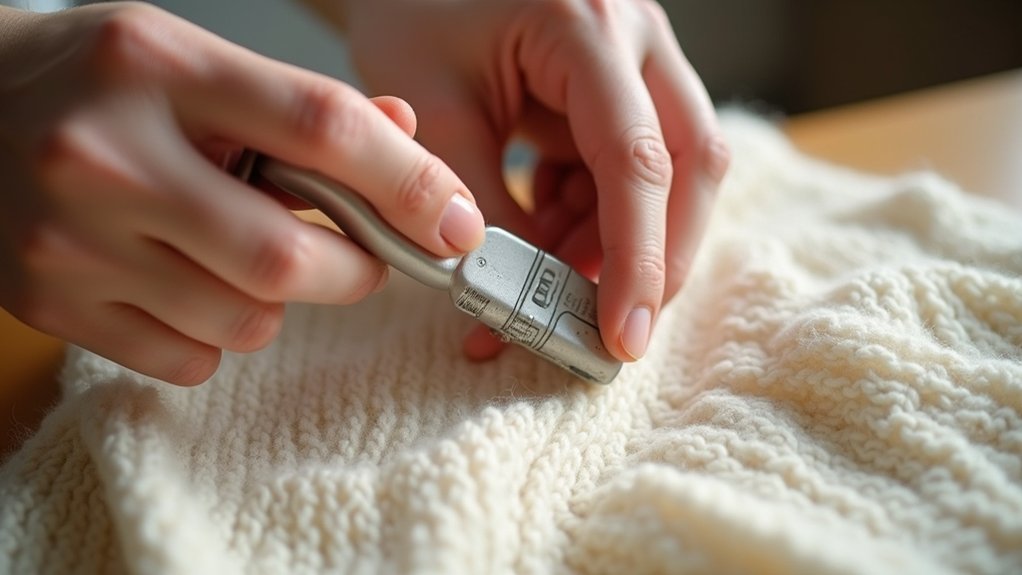
While pilling occurs naturally with alpaca knitwear through regular wear and friction, removing these fiber balls requires gentle techniques that preserve the garment’s integrity. Pilling causes include areas of high friction like underarms, sleeves, and where bags rub against the fabric. Understanding these patterns helps prevent excessive damage.
Tool options for safe pill removal include:
- Fabric shavers with gentle settings designed for delicate fibers.
- Sweater combs that lift pills without cutting the underlying fabric.
- Fine-grained pumice stones for very light pilling on flat surfaces.
One should always work in the direction of the knit and avoid pulling or tugging. Lay the garment flat on a clean surface and use light pressure. Regular maintenance prevents pills from becoming embedded in the fiber structure.
A useful companion read is the alpaca overview.
Related guides
- Compare it with the alpaca wool overview.
- Use the natural dye overview for a nearby point of comparison.
- Pair this topic with the sweater sizing guide.