Wool

Natural Dyes in Peru: Useful Context for Buyers

A practical look at natural dyes in Peruvian textiles, focused on color, consistency, and realistic expectations.

Last updated 2025-11-19Wool Guides

Peruvian textiles command premium prices in global markets, yet buyers often struggle to distinguish naturally dyed pieces from synthetic imitations. The difference matters beyond aesthetics - authentic natural dyes represent centuries-old knowledge, ecological practices, and fair compensation for skilled artisans. Understanding what cochineal, chilca, and high-altitude plant dyes actually look like on fiber helps buyers make informed decisions. The visual cues aren't always obvious, and price alone won't reveal authenticity.

Natural Dyes in Peru: Useful Context for Buyers overview

For broader context, browse the Wool guides.

How to Spot Authentic Peruvian Natural Dyes
Natural Dyes in Peru: Useful Context for Buyers - How to Spot Authentic Peruvian Natural Dyes

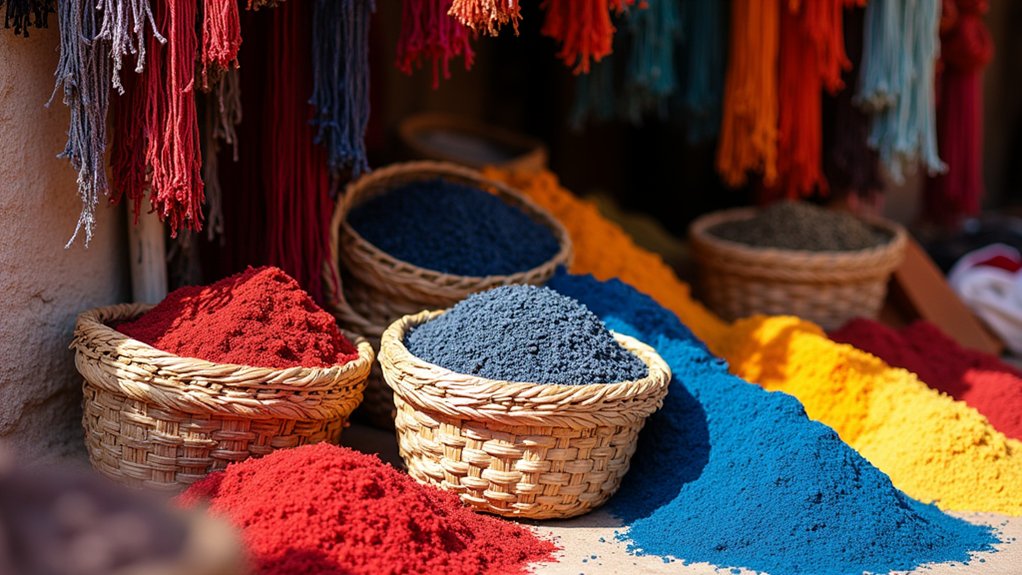
How can travelers distinguish genuine natural dyes from synthetic imitations when shopping for Peruvian textiles? Authentic pieces display subtle color variations within individual threads, reflecting the organic nature of plant-based pigments. Synthetic dyes produce unnaturally uniform hues. Natural dyes often show slight fading or color shifts depending on lighting conditions, while chemical alternatives maintain consistent brightness.

Plant identification knowledge helps buyers recognize traditional colorants like cochineal red, indigo blue, and chilca yellow. Artisans who use authentic methods can explain their mordant effects - how substances like alum or iron alter final colors. Natural-dyed textiles typically feel softer and emit earthy scents when new. The weave's reverse side should show dye penetration throughout fibers rather than surface-level coating. Reputable sellers provide detailed information about dye sources and processing techniques.

What Natural Dyes Are Used in Peruvian Textiles?

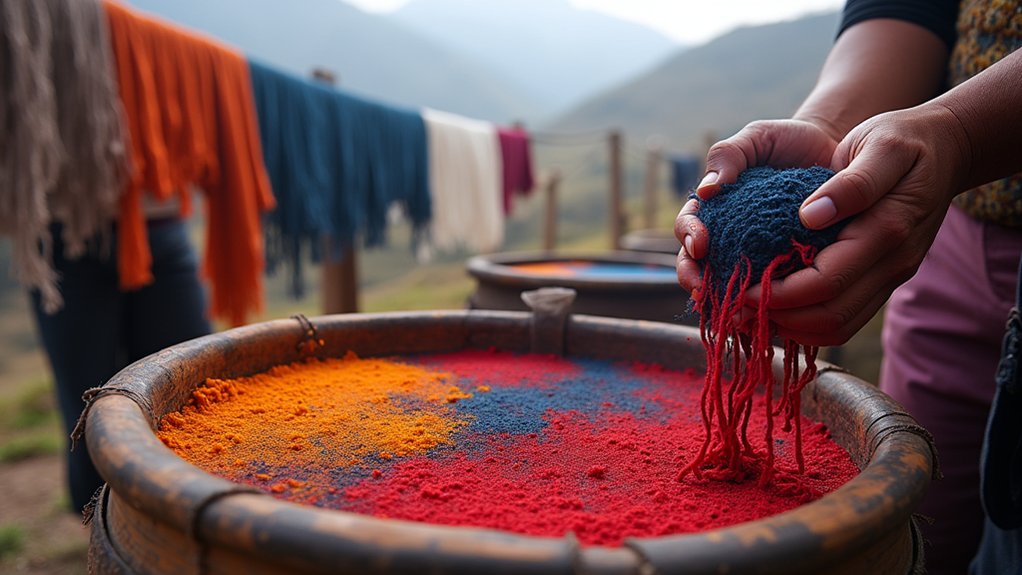
Peruvian textile artisans extract vibrant colors from dozens of native plants, insects, and minerals that have supplied their craft for millennia. Each dye source produces distinct hues that define Peru's textile heritage.

Primary Natural Dyes in Peruvian Textiles:

  1. Cochineal - Female insects harvested from prickly pear cacti yield intense reds and pinks. Cochineal sources remain primarily concentrated in southern highland regions where artisans carefully cultivate these valuable insects.

  2. Chilca - This native shrub produces golden yellows and greens depending on mordant effects, which alter final color outcomes through chemical reactions with metals like aluminum or iron.

  3. Ch'illca and Qolle - Indigenous plants generating earthy browns, grays, and blacks that provide essential neutral tones for traditional patterns and designs in woven textiles.

Why Andean vs. Coastal Textiles Look and Cost Different
Natural Dyes in Peru: Useful Context for Buyers - Why Andean vs. Coastal Textiles Look and Cost Different

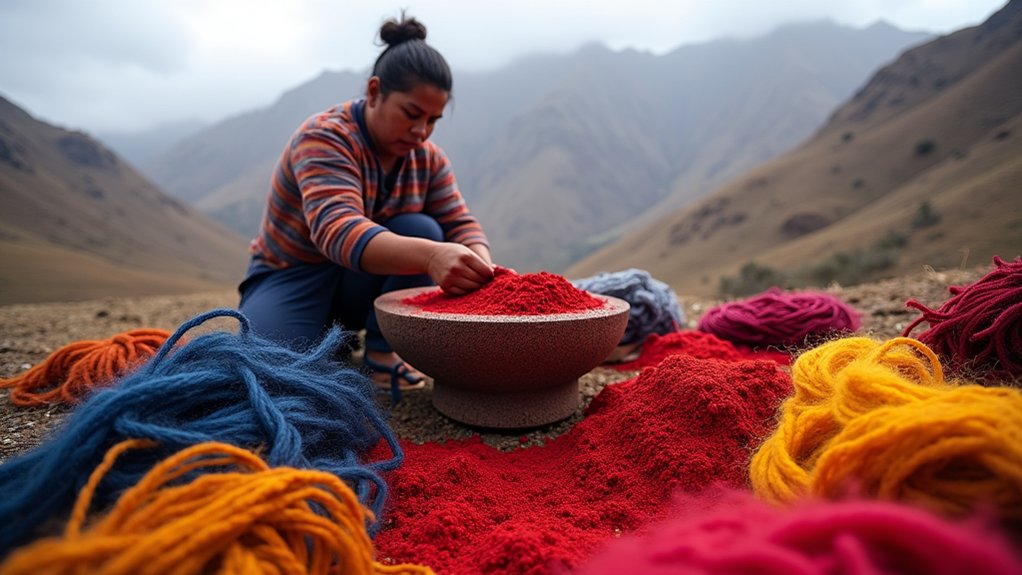
Geographic conditions and cultural traditions create stark differences between textiles produced in Peru's Andean highlands and coastal regions, affecting both their visual characteristics and market prices.

Andean textiles feature bold geometric patterns and rich earth tones derived from high-altitude plants and minerals. The altitude aesthetics reflect harsh mountain environments where weavers use thick alpaca and llama fibers. These pieces command premium prices due to limited production, labor-intensive processes, and specialized dyeing knowledge.

Coastal textiles display lighter colors and simpler designs, utilizing cotton and dyes from lowland plants. Coastline costs remain lower because materials are more accessible and production scales efficiently. Coastal weavers adapted techniques for commercial markets, while highland artisans maintain ancestral methods. Buyers should recognize these regional distinctions when evaluating authenticity and pricing.

What You Should Actually Pay for Naturally Dyed Textiles

Understanding fair prices for naturally dyed Peruvian textiles requires knowledge of production costs, labor hours, and material quality. Artisans spend weeks preparing dyes from cochineal, plants, and minerals, then hand-weaving complex patterns. Fair pricing reflects this intensive process.

Market value varies considerably based on three factors:

  1. Dye source complexity - Cochineal-dyed pieces command higher prices than plant-based alternatives due to insect cultivation demands 2. Weaving technique - Backstrap loom textiles require more skill and time than treadle loom production 3. Design intricacy - Traditional patterns with multiple colors and fine details justify premium pricing

Buyers should expect to pay $50-$150 for small items like scarves, while large wall hangings range from $200-$800. Prices below these ranges typically indicate synthetic dyes or exploitative labor practices.

Where to Buy Authentic Peruvian Textiles That Support Artisans
Natural Dyes in Peru: Useful Context for Buyers - Where to Buy Authentic Peruvian Textiles That Support Artisans

Knowing what constitutes fair pricing means little without access to trustworthy sellers who properly compensate their artisans. Buyers should prioritize artisan cooperatives in Peru's weaving regions, particularly in Cusco, the Sacred Valley, and around Lake Titicaca. These organizations typically guarantee transparent profit-sharing and preserve traditional dyeing techniques. Reputable cooperatives include Centro de Textiles Tradicionales del Cusco and local associations in Chinchero and Patacancha.

For those unable to travel, several online platforms specialize in ethical sourcing from verified Peruvian textile producers. These retailers maintain direct relationships with artisan groups and provide detailed information about dye sources and production methods. Museums with indigenous craft programs occasionally sell authentic pieces, offering another reliable channel. Certification programs and fair-trade labels help verify authenticity, though direct purchases from cooperatives remain the most effective way to support traditional artisans.

A useful companion read is the alpaca overview.

Related guides