Sweaters
Comparing Alpaca Blends and Pure Fiber
A practical reference for comparing pure alpaca fiber with common blends in sweaters and knitwear.
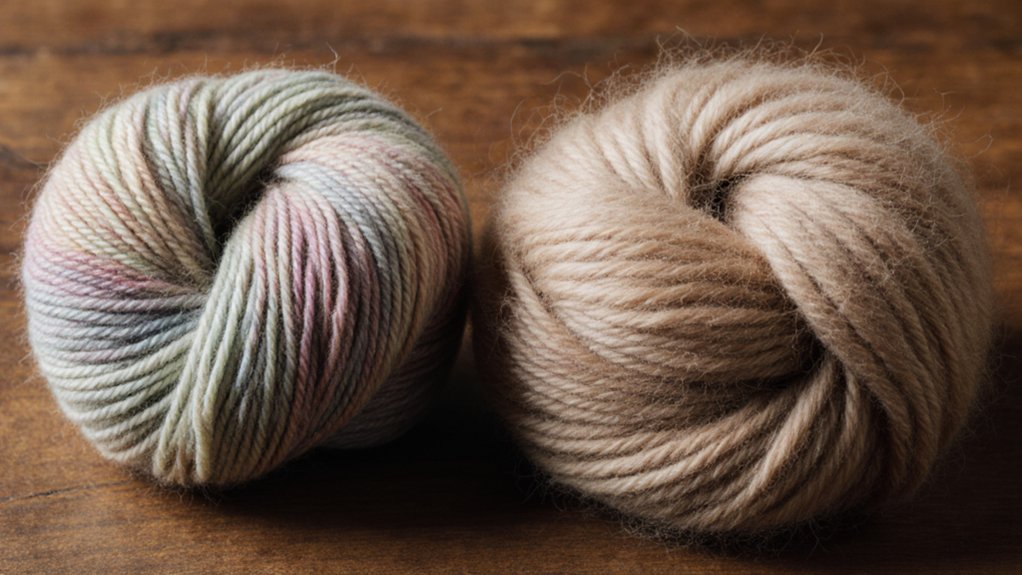
Shoppers evaluating alpaca products face a familiar choice: pure alpaca or a blend. Each option has trade-offs in softness, warmth, durability, and shape retention. This page focuses on what blends typically change in real wear, so you can pick based on use rather than label claims.
For broader context, browse the Sweater guides.
Pure Alpaca vs. Alpaca Blends: Warmth and Softness Compared
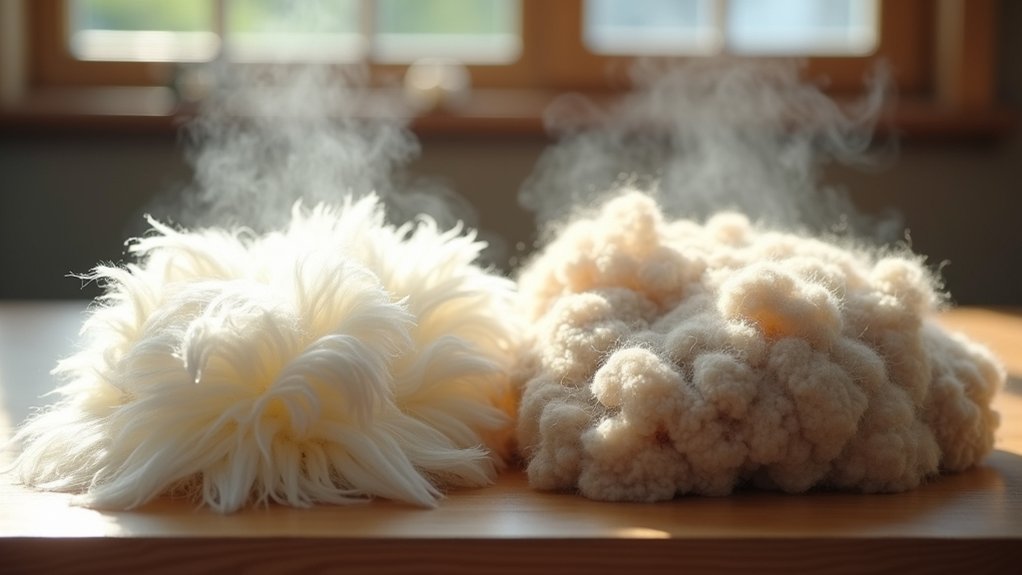
How do pure alpaca and alpaca blends compare when it comes to warmth and softness?
Pure alpaca is often valued for warmth-to-weight and next-to-skin softness, especially in finer grades. Blends can still be warm, and they often improve durability and shape retention.
The practical choice depends on use: pure alpaca for softness and warmth, blends for higher-wear situations where structure matters more.
Why Alpaca Blends Win for Durability and Shape Retention
While pure alpaca excels in warmth and softness, it falls short in one critical area: structural integrity over time. Alpaca fibers lack elasticity, causing garments to stretch and lose their original shape with regular wear. This is where blends demonstrate superior performance.
Adding materials like merino wool or synthetic fibers provides essential shape memory that pure alpaca can’t achieve alone. These blended fabrics bounce back after stretching, maintaining their fit through countless wear cycles. Durability insights reveal that blends resist pilling better and withstand friction more effectively than pure alpaca.
The combination creates garments that retain their structure while preserving alpaca’s desirable qualities. For items requiring longevity - like sweaters, socks, and activewear - blends offer the practical advantage of extended wearability without sacrificing comfort.
Common Blend Types (and Why They Exist)
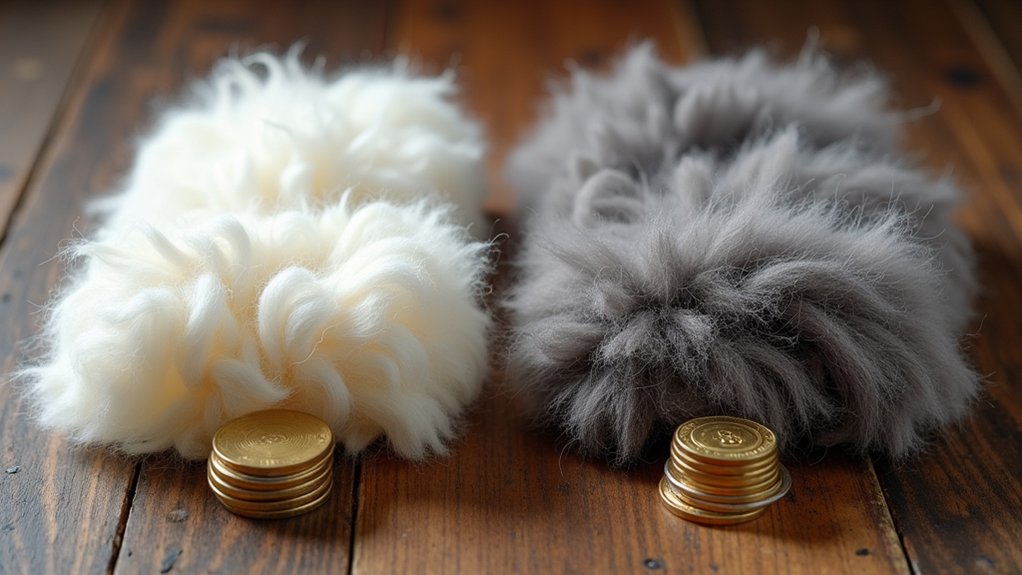
Blends are usually trying to solve a specific problem:
- Alpaca + sheep wool: adds bounce and helps knitwear recover shape.
- Alpaca + nylon/synthetic: adds abrasion resistance for high-friction items (socks, gloves).
- Alpaca + silk: can increase drape and sheen in scarves and lighter pieces.
How to Wash and Care for Pure Alpaca vs. Blends
Proper care techniques differ substantially between pure alpaca garments and blended fibers, requiring distinct approaches to maintain longevity and appearance. Pure alpaca requires gentle hand washing in cool water with mild detergent, as the delicate fibers can felt or shrink when agitated. Machine washing isn’t recommended for 100% alpaca items, though some manufacturers treat fibers to withstand delicate cycles. Alpaca blends containing synthetic materials like acrylic or nylon tolerate machine washing better, particularly those with less than 50% alpaca content. These blends can often handle gentle cycles and low tumble drying. Regardless of composition, lay garments flat to dry and avoid wringing. Store items folded rather than hung to prevent stretching, and use cedar blocks instead of mothballs for protection.
What Pure Alpaca Fiber Offers That Blends Sacrifice
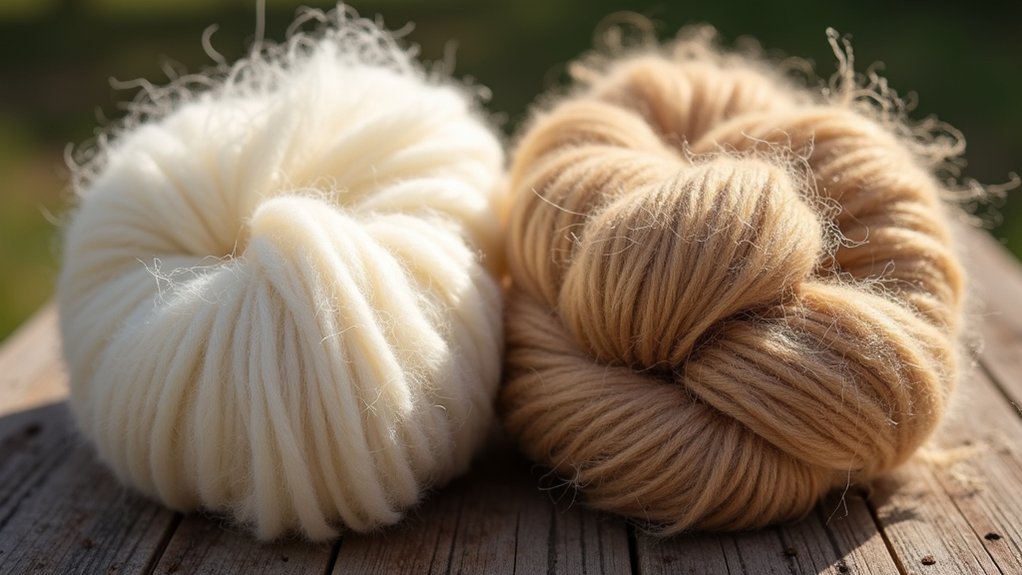
Pure alpaca can deliver a distinctive feel: light warmth and softness with a smooth hand. What blends often change is not “better or worse” but the balance:
- Blends can add structure and durability.
- Pure alpaca can feel softer, but may stretch more depending on knit density.
Which Blend Makes Sense for Which Use
Blending alpaca with other fibers serves specific purposes - reducing cost, adding elasticity, or improving durability for high-wear items. The ratio directly impacts performance characteristics and longevity.
Instead of memorizing ratios, match fiber choice to wear conditions:
- Sweaters and chompas: a touch of wool can help with shape retention.
- Socks and gloves: nylon/synthetic blends are common for durability.
- Scarves and shawls: silk blends can emphasize drape; pure alpaca can be very soft but depends on grade.
A useful companion read is the alpaca overview.
Related guides
- Compare it with the sweater sizing guide.
- Use the chompa layering guide for a nearby point of comparison.
- Pair this topic with the alpaca wool overview.