A sweater’s label says hand wash only, while the shop’s general article says some alpaca knits can go in a machine. That hypothetical conflict cannot be settled by choosing the wool programme. The article has not identified this sweater as machine-washable.
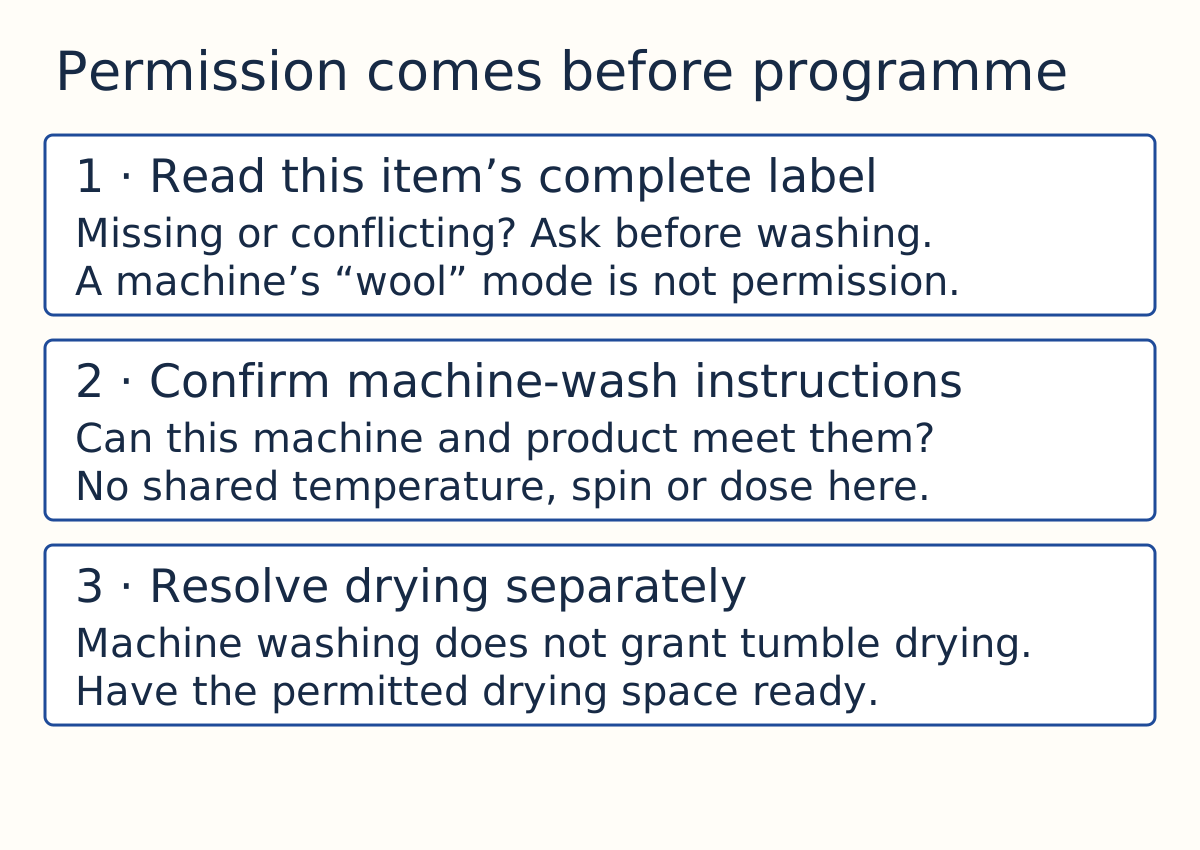
Follow the decision from the attached instruction through item-specific clarification, machine capability and separate drying permission. Until those agree, keep to the item’s confirmed care and leave machine washing unresolved. The care overview covers the wider choices.
Why advice differs between products
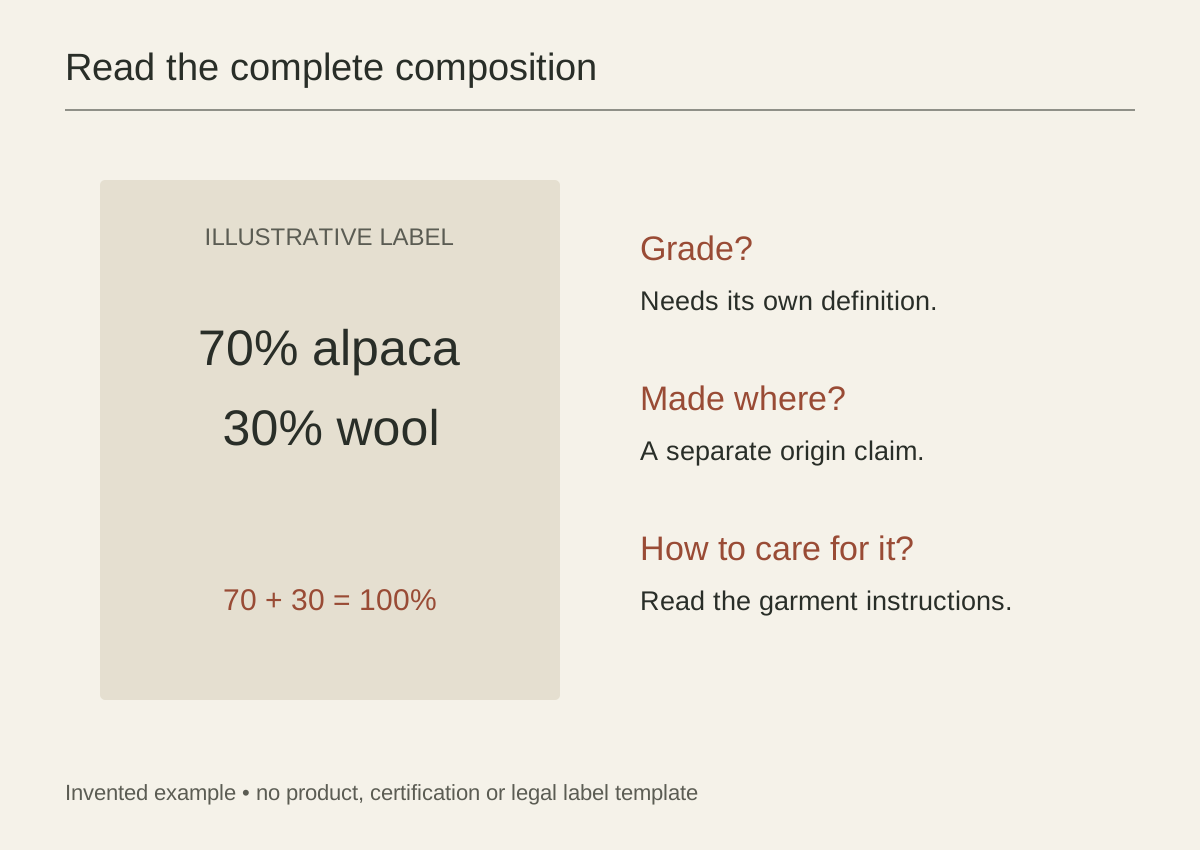
A completed garment includes yarn, knit structure, seams, trims and sometimes a lining. Two items containing alpaca need not share the same permitted care. Do not copy the instructions from socks to a sweater because the fibre name matches.
PAKA’s care page illustrates this distinction within one supplier’s range: it gives different guidance for sweater knits and socks. Sol Alpaca’s care page strongly recommends dry cleaning while also describing washing steps. These are the suppliers’ own instructions, not a universal alpaca washing standard or an endorsement of every garment sold elsewhere.
For your item, identify the product and read the complete attached label first. If the supplier’s current web guidance and the garment disagree, ask it to resolve the discrepancy for that exact item rather than choosing the more convenient instruction.
Separate permission from machine capability
Woolmark discusses machine washing for wool garments whose care claim allows it. That is useful evidence of a label-led approach, but it is guidance about wool and its approval system. It does not certify an unrelated alpaca garment.
A programme name such as “wool”, “delicate” or “hand wash” describes a machine setting. It does not change a hand-wash-only or dry-clean-only garment into a machine-washable one. Equally, a permitted washing method does not automatically permit tumble drying.
Do not borrow a temperature, spin speed or detergent dose from a generic wool guide when your garment specifies something different. Read the machine manual alongside the garment instructions. If you cannot establish the required setting, stop before experimenting on a valued piece.
Make the decision before loading
| What you have | Appropriate next step |
|---|---|
| Clear machine-wash permission and complete usable instructions | Check that the machine and products can meet them |
| Hand-wash-only instruction | Use the permitted method; a machine setting is not a substitute |
| Dry-clean-only instruction | Seek the specified professional service and show the label |
| Missing or contradictory instructions | Request written item-specific clarification |
| Machine washing allowed but drying method unclear | Resolve drying before washing |
The decision diagram above keeps permission ahead of machine settings and treats drying as a separate question. It intentionally does not supply one temperature or spin setting for all alpaca clothing.
Build an item-specific care record
Photograph the label, record the product code and save any supplier clarification. Write down the permitted wash method, temperature limit if supplied, other cycle restrictions, detergent requirements and drying method. Leave missing fields unanswered rather than filling them with a default from another garment.
For the hand-wash-only sweater introduced above, save the conflicting web statement beside a photograph of the actual label. The broad statement does not identify your sweater as one of those knits. Ask the supplier about the exact item and keep to the attached instruction while the conflict is unresolved.
A different garment might have clear machine-wash permission but a flat-dry requirement. Those are two separate stages. A combined wash-and-dry programme would not meet that record simply because its washing stage appears suitable.
Prepare the whole process
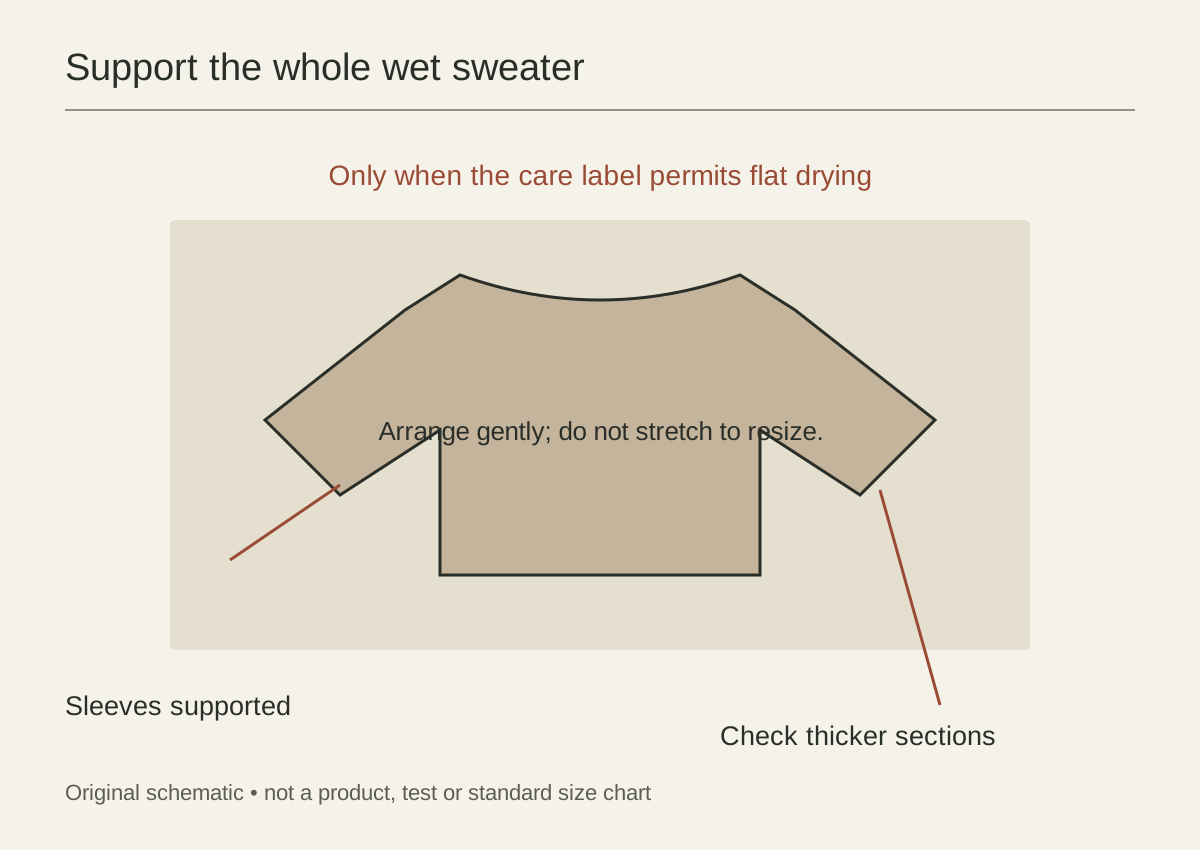
Before any permitted wash, check the label for fastening, colour-separation and handling instructions as well as the main method. Prepare the required drying space and allow enough time. A wet garment should not leave you choosing an improvised drying method because every flat surface is occupied.
If there are repairs, loose embellishments, unknown trims or a stain requiring treatment, ask the supplier or an appropriate textile-care professional before proceeding. A general care label may not answer how to treat damage or an unfamiliar stain. Do not use repeated washes to test whether distortion will improve.
Blends deserve the same item-specific approach. The blend reference explains what composition can and cannot establish. An added synthetic fibre does not, by itself, prove machine-wash permission for the completed garment.
Reassess after care, without escalating automatically
Once the garment is dry according to its instructions, compare its shape with your pre-wash record. If something has changed unexpectedly, photograph it and ask for advice rather than trying a hotter wash, harder spin or aggressive reshaping. This is not a recovery recipe for shrinkage or felting.
Keep the record for the next cleaning and follow the storage guidance when putting the dry garment away. The useful outcome is a repeatable method permitted for your item, or a clear decision that machine washing remains unconfirmed.