
Buying in Peru
Packing Alpaca Garments for Travel
A practical guide to packing alpaca garments so they travel well and recover shape after transit.
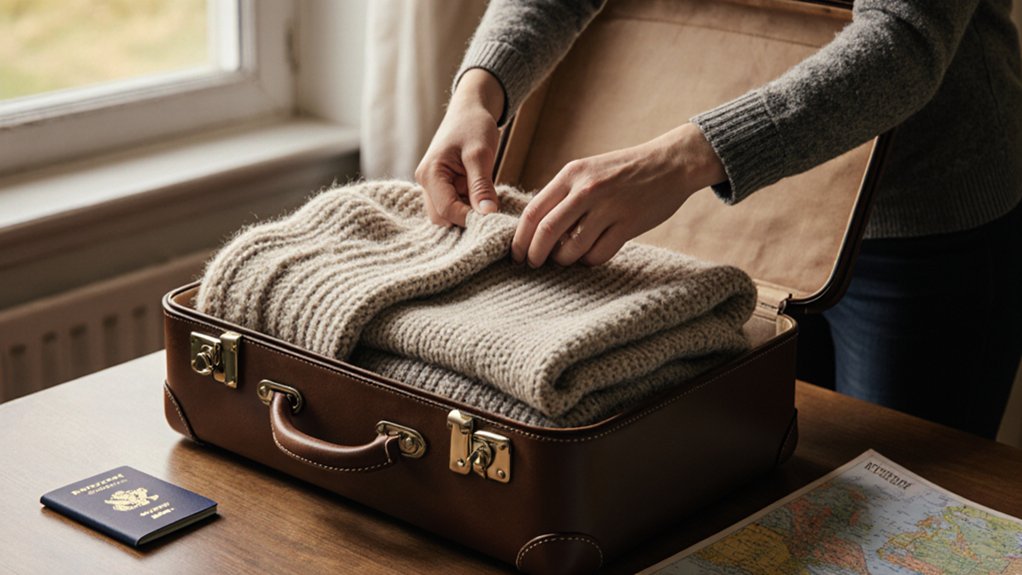
Alpaca garments travel well when you avoid two common mistakes: hard creases and trapped moisture. This guide focuses on simple packing habits that preserve shape and feel without overthinking it.
For broader context, browse the Buying in Peru guides.
How to Fold Alpaca Sweaters Without Stretching or Creasing
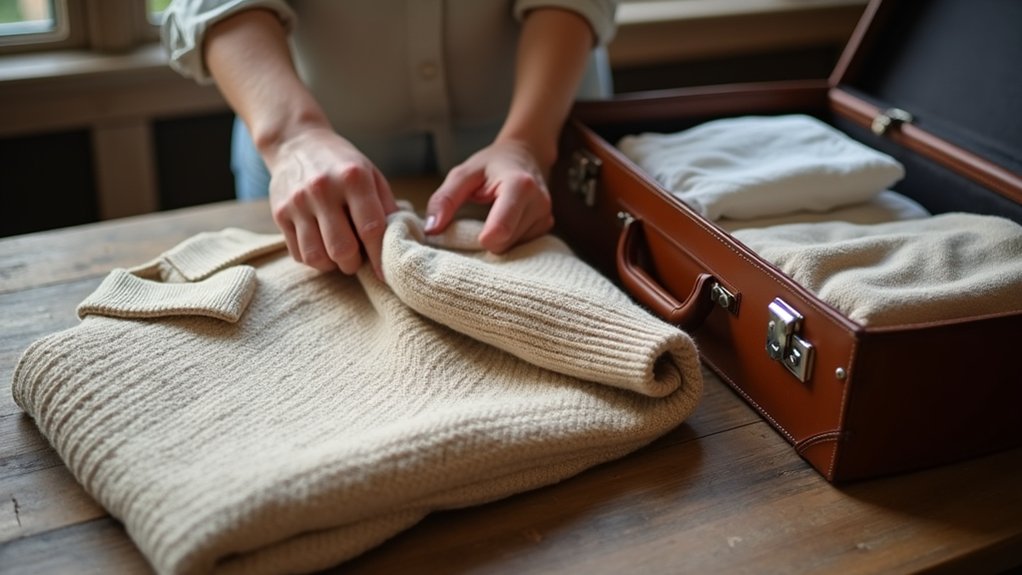
Alpaca sweaters require careful folding techniques to maintain their shape and luxurious feel during travel. Understanding fold dynamics prevents damage to the delicate fibers. The ranger roll method works best: lay the sweater flat, smooth out wrinkles, and fold sleeves inward toward the center. Roll from bottom to collar in a tight cylinder, which minimizes pressure points and eliminates sharp creases.
For crease prevention, place tissue paper between folds or insert a small towel inside the roll. This distributes pressure evenly across the fabric. Never hang alpaca sweaters in luggage, as gravity stretches the fibers. Stack rolled sweaters horizontally in suitcases rather than vertically. This positioning maintains the garment’s original structure and prevents unwanted stretching during transit.
Best Materials for Packing Alpaca Garments (Tissue Paper vs. Garment Bags)
Choosing the right packing materials protects alpaca garments from moisture, friction, and compression damage during travel. Acid-free tissue paper offers specific advantages for delicate alpaca pieces. It provides a protective barrier between garment layers, prevents color transfer, and maintains shape without adding significant weight to luggage. Tissue advantages include breathability and easy accessibility when packing multiple items together.
Breathable garment bags deliver superior protection for high-value alpaca coats and sweaters. These bags shield garments from dust, snags, and moisture while allowing air circulation that prevents musty odors. Bag durability ensures repeated use across multiple trips, making them cost-effective for frequent travelers. Cotton or muslin bags work best, as plastic traps moisture and damages natural fibers. Combining both methods - wrapping garments in tissue before placing them in bags - provides best protection for valuable alpaca pieces.
Packing Alpaca Shawls and Scarves Without Wrinkles
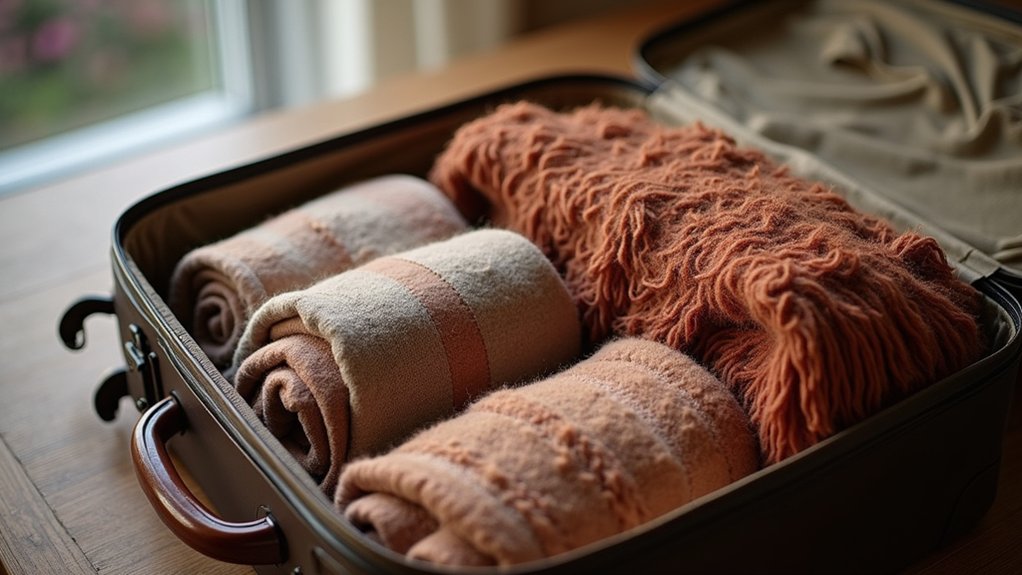
Strategic folding techniques preserve alpaca shawls and scarves in pristine condition throughout any journey. Wrinkle prevention begins by laying the garment flat on a clean surface, smoothing out any existing creases. For shawls, fold lengthwise into thirds, then roll from one end to create a compact cylinder. Scarves require a simpler approach - fold in half lengthwise and roll gently.
Material care improves when travelers place rolled items in the center of luggage, surrounded by softer clothing that provides cushioning. Avoid placing heavy objects on top. Upon arrival, immediately remove alpaca accessories from luggage and hang them in a steamy bathroom for fifteen minutes. The natural fibers will release minor wrinkles without direct heat exposure, maintaining their luxurious texture and appearance.
Fitting Multiple Alpaca Pieces in Your Suitcase Efficiently
Travelers who master individual garment packing can maximize suitcase space by organizing multiple alpaca pieces systematically. Placing heavier items like alpaca sweaters at the bottom near the wheels ensures proper weight distribution and prevents crushing delicate pieces. Rolling lighter garments such as tops and leggings creates vertical columns that fit into gaps between bulkier items.
Using packing cubes designates specific compartments for different alpaca garment types, making retrieval easier while maintaining organization. This method also helps visualize bag capacity more accurately. Filling shoes with rolled alpaca socks or accessories utilizes otherwise wasted space. Layering shawls between clothing sections provides cushioning while keeping everything wrinkle-free. Strategic placement of each piece transforms chaotic packing into an efficient system that accommodates numerous alpaca garments without exceeding luggage limits.
Protecting Alpaca From Moisture and Humidity During Travel
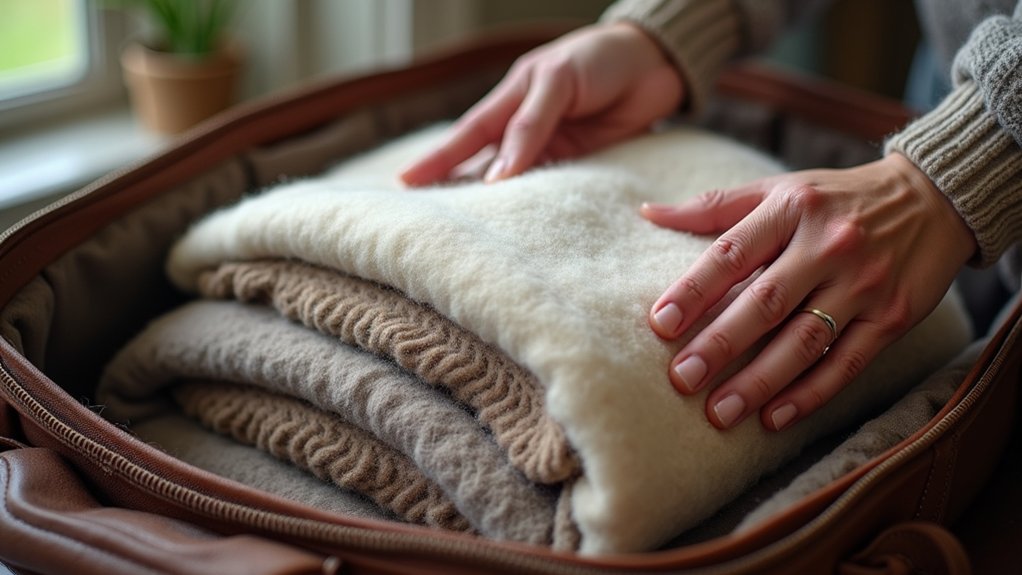
Moisture poses a significant threat to alpaca fibers during travel, as humidity can cause the material to absorb water and develop unpleasant odors or even mildew. Travelers should invest in waterproof packing cubes or resealable plastic bags with airtight sealing capabilities to create a protective barrier against environmental moisture. Silica gel packets placed inside these containers provide additional moisture control by absorbing excess humidity. It’s crucial to make sure alpaca garments are completely dry before packing them away. If items become damp during travel, one should remove them from sealed containers immediately and allow them to air dry in a well-ventilated area. Avoid storing alpaca clothing in hotel bathrooms where steam and humidity levels remain elevated. These preventive measures help maintain the fiber’s integrity and softness throughout the journey.
What to Do If Your Alpaca Sweater Arrives Wrinkled?
When alpaca sweaters emerge from luggage with creases and wrinkles, travelers shouldn’t panic, as these natural fibers respond well to gentle restoration techniques. The steam method works effectively: hang the garment in a bathroom while running a hot shower, allowing steam to penetrate the fibers without direct water contact. Alternatively, use a handheld steamer held several inches away from the fabric, moving continuously to prevent heat damage. For minor wrinkles, simply hanging the sweater overnight often suffices, as alpaca’s natural elasticity helps fibers relax. Avoid direct ironing, which can flatten the luxurious texture. These gentle care approaches preserve the sweater’s softness and structure while eliminating travel-induced creases, ensuring the garment looks its best.
Unpacking and Storing Alpaca Garments at Your Destination
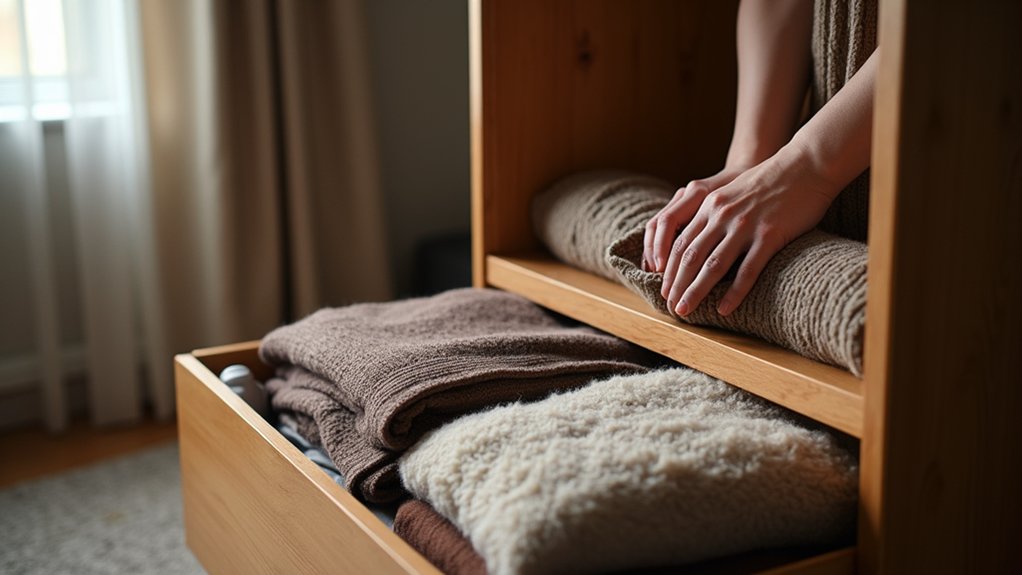
Proper unpacking of alpaca garments immediately upon arrival protects the investment and maintains their pristine condition throughout the trip. Travelers should remove alpaca items from luggage first, gently shaking them to release compression wrinkles. Hanging garments in the bathroom while showering creates steam that naturally relaxes fibers without direct water contact.
Hotel storage requires breathable solutions. Hanging sweaters on padded hangers prevents shoulder distortion, while folding remains acceptable for short stays. Avoid plastic dry-cleaning bags that trap moisture. Airport storage lockers work for brief layovers, but travelers shouldn’t leave alpaca garments compressed for extended periods. Hotel closets with adequate ventilation provide ideal conditions. Keeping items away from direct sunlight, radiators, and air conditioning vents prevents fiber damage and color fading during the stay.
Why Alpaca Can’t Be Packed Like Regular Wool or Cotton
Alpaca knitwear often has less elastic recovery than many wool knits, so sharp creases and heavy hanging can show up more. The practical takeaway is simple: roll or fold gently, keep items dry, and let them breathe after transit.
A useful companion read is the alpaca overview.
Related guides
- Compare it with the Cusco buying guide.
- Use the pricing reference for a nearby point of comparison.
- Pair this topic with the alpaca wool overview.