An unreadable label is a reason to stop before filling the basin. In this illustrative care problem, the sweater needs cleaning but the fibre name cannot tell you which treatment its dyes, trims and knit can tolerate. Identify the item and resolve the instructions first.
If hand washing is confirmed, follow the permitted method from preparation through supported wet handling to fully dry storage. The framework below supplies no universal temperature, product dose or soak time, and does not override a dry-clean-only instruction.
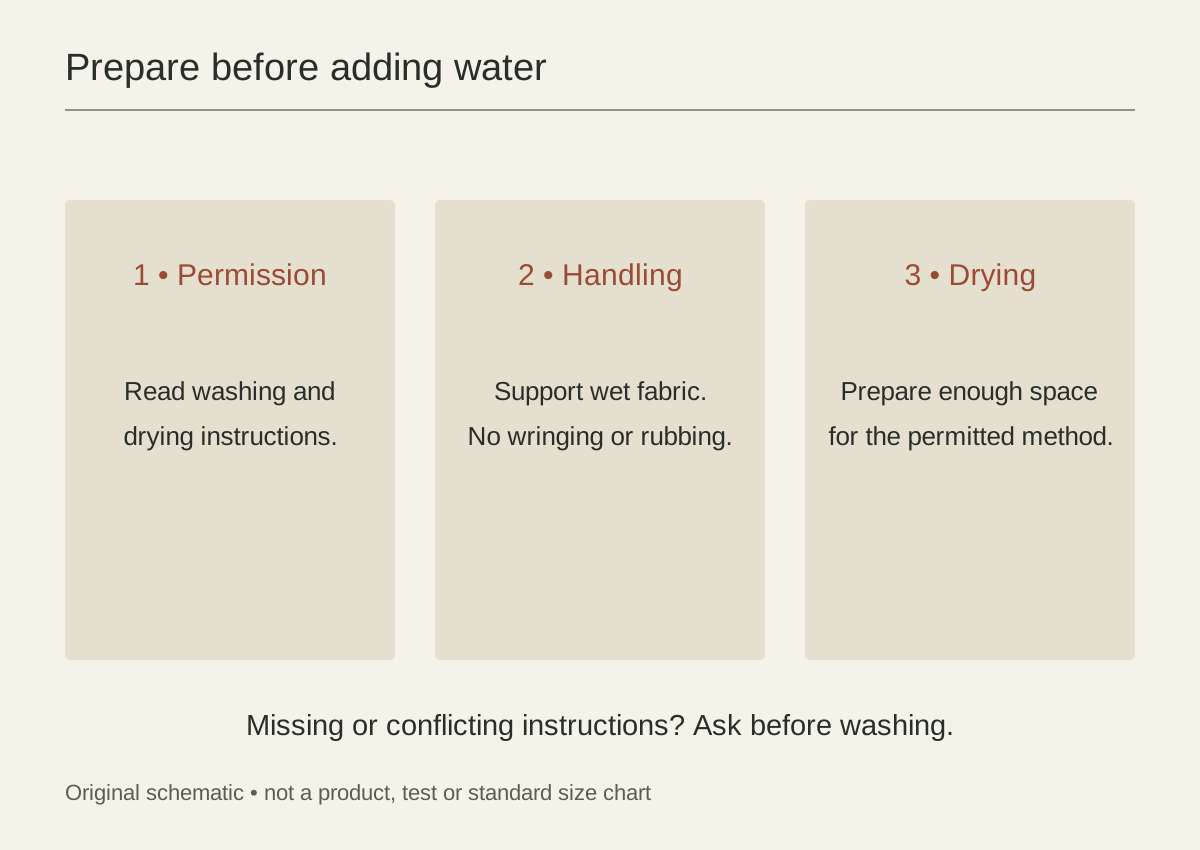
Read the instructions before preparing a basin
Photograph the label and read the complete maker guidance, including drying. Do not stop at a hand-wash symbol while ignoring a condition about temperature or decoration.
Supplier advice varies. PAKA’s care page distinguishes product categories. Sol Alpaca strongly recommends dry cleaning, then gives a hand-washing routine; the presence of those steps is not permission to override a sewn-in dry-clean-only instruction. Use the maker’s guidance for the actual piece, and ask about any conflict before proceeding.
For the wider care decisions, begin with the knitwear overview. For our unclear-label sweater, this is the decision that must be settled before moving on. The handling framework below applies only once hand washing has been confirmed for the actual piece.
Prepare the whole routine
Have a clean basin, suitable towels and a flat drying space ready. Choose a cleaning product intended for the fibres and consistent with the label. Read its dosage rather than adding an arbitrary capful.
If the garment has a particular stain, fragile trim or uncertain colour behaviour, ask about that issue before a general wash. A valuable piece is a poor place to improvise a treatment based on a generic online recipe.
| Before starting | Confirm |
|---|---|
| Care permission | Hand washing is allowed for this garment |
| Water | The label’s temperature guidance |
| Cleaning product | Suitable fibre/garment use and correct dose |
| Colour or stain concern | Appropriate specific advice if needed |
| Drying arrangement | Space to support the complete garment |
Work with the knit, not against it
- Prepare water and cleaning product according to the instructions before placing the garment in the basin.
- Lower the sweater gently and support it. Use minimal movement rather than scrubbing or rubbing sections together.
- Follow the label or maker’s guidance on contact time. This article does not prescribe a universal soaking period.
- Drain and rinse as directed, handling the garment gently and avoiding abrupt or unnecessary changes in treatment.
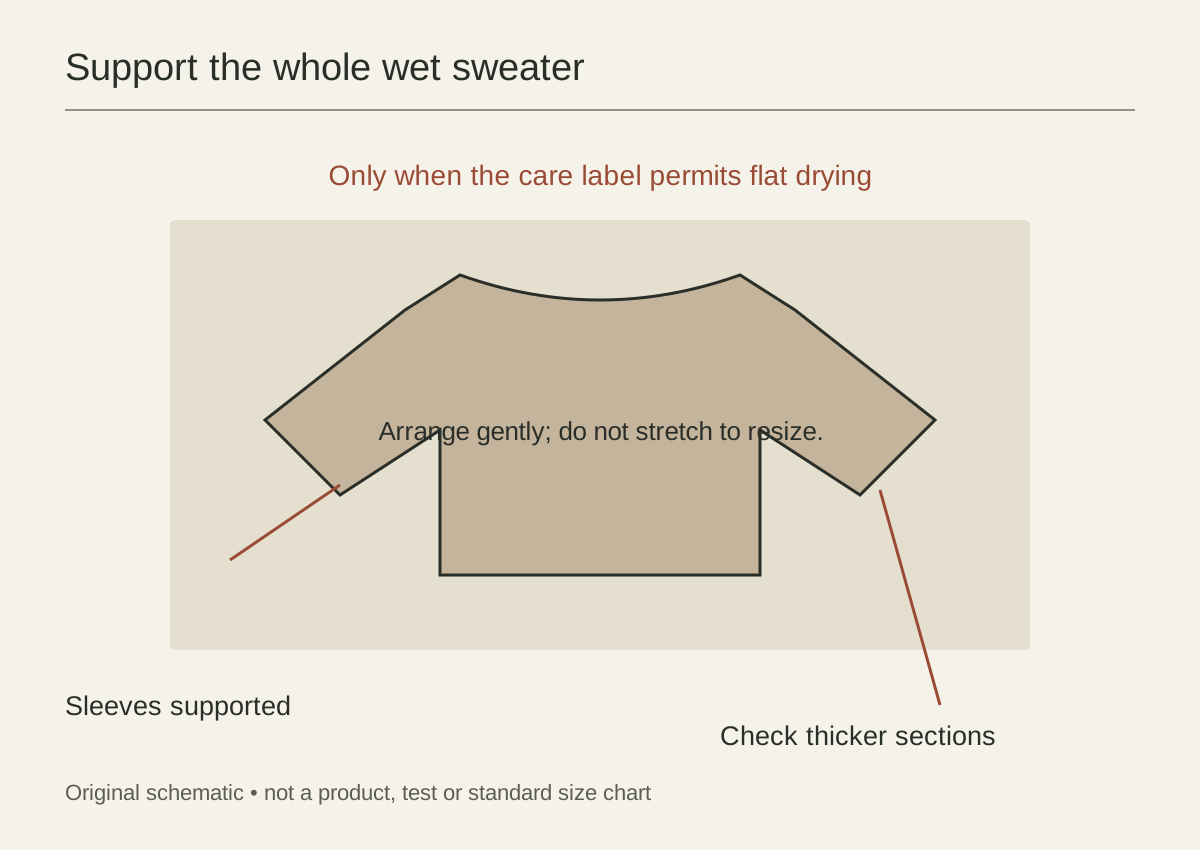
- Support the body when lifting it. Do not let the weight of the wet sweater hang from its shoulders or one sleeve.
- Where the instructions permit, press out excess water gently and use clean towels to absorb moisture. Do not wring or twist.
- Move to the specified drying method, arranging the shape without stretching it into a new size.
These steps describe a handling approach, not a tested cleaning result for every alpaca blend. Stop and seek advice if you encounter an unexpected problem rather than repeatedly rubbing or applying stronger products.
When the routine does not match the garment
| Situation | A useful response |
|---|---|
| Missing or unreadable care label | Ask the maker with the composition and photographs; do not choose a wash solely from ‘alpaca’ |
| Written label and website disagree | Request product-specific clarification and keep the reply |
| Stain remains after permitted cleaning | Ask about the stain rather than repeating a stronger wash |
| Unexpected colour in the water | Avoid improvising bleach, vinegar or another household treatment; seek maker or professional advice |
| Fragile decoration or an old textile | Obtain advice for the complete object, not only its main fibre |
A friend’s success with another blend has not supplied the unclear-label sweater’s missing instruction. Prepare the questions and drying space first; filling the basin is the last preparation step, not the first decision.
Drying is part of washing
The job is not finished when the water is removed. Woolmark’s general knitwear guidance explains how hanging a wet knit can change its shape under the weight of retained water. That reference concerns wool; the actual alpaca garment instructions still lead.
If flat drying is permitted, use a clean surface or suitable drying mesh and support the whole sweater. Let thicker sections dry completely. Keep it away from a radiator or other direct heat unless specific instructions say otherwise.
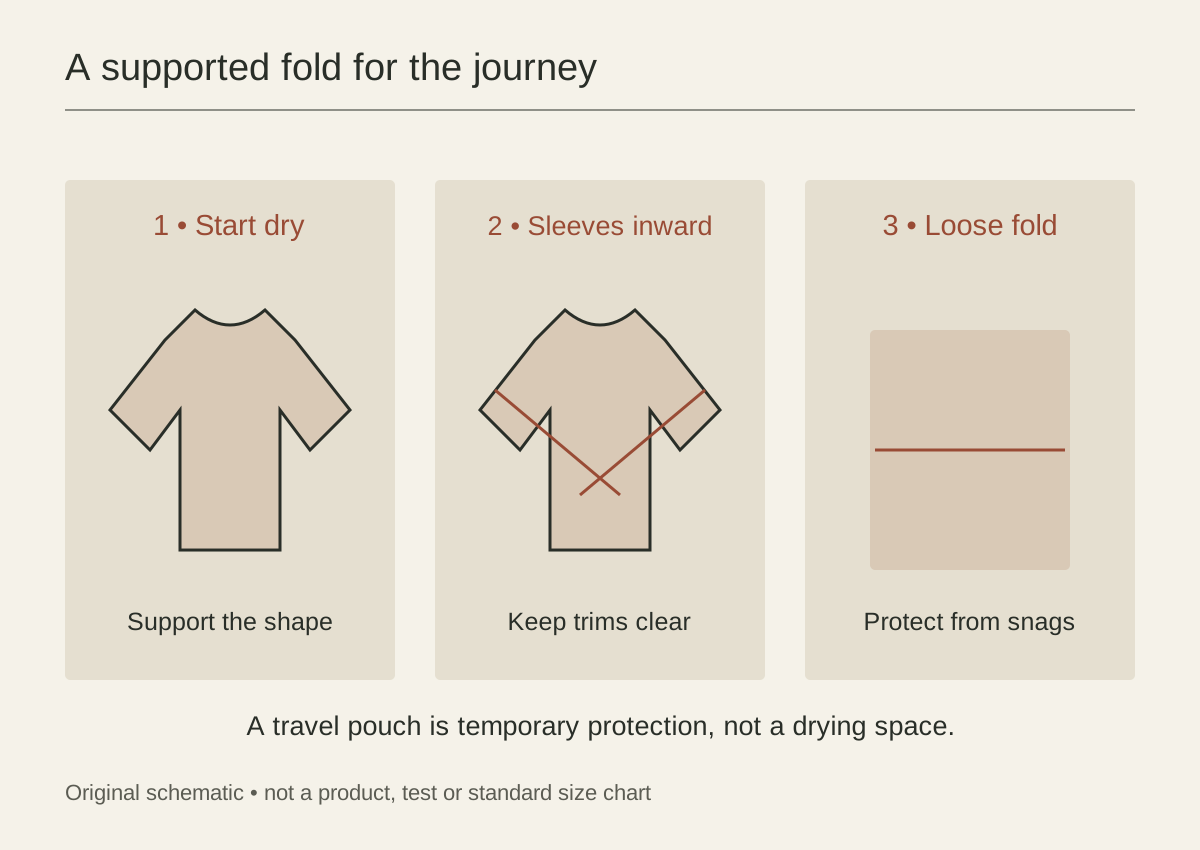
Our packing guide applies the same fully-dry principle before travel. Do not force the final drying stage to fit a departure deadline.
Keep a short care record
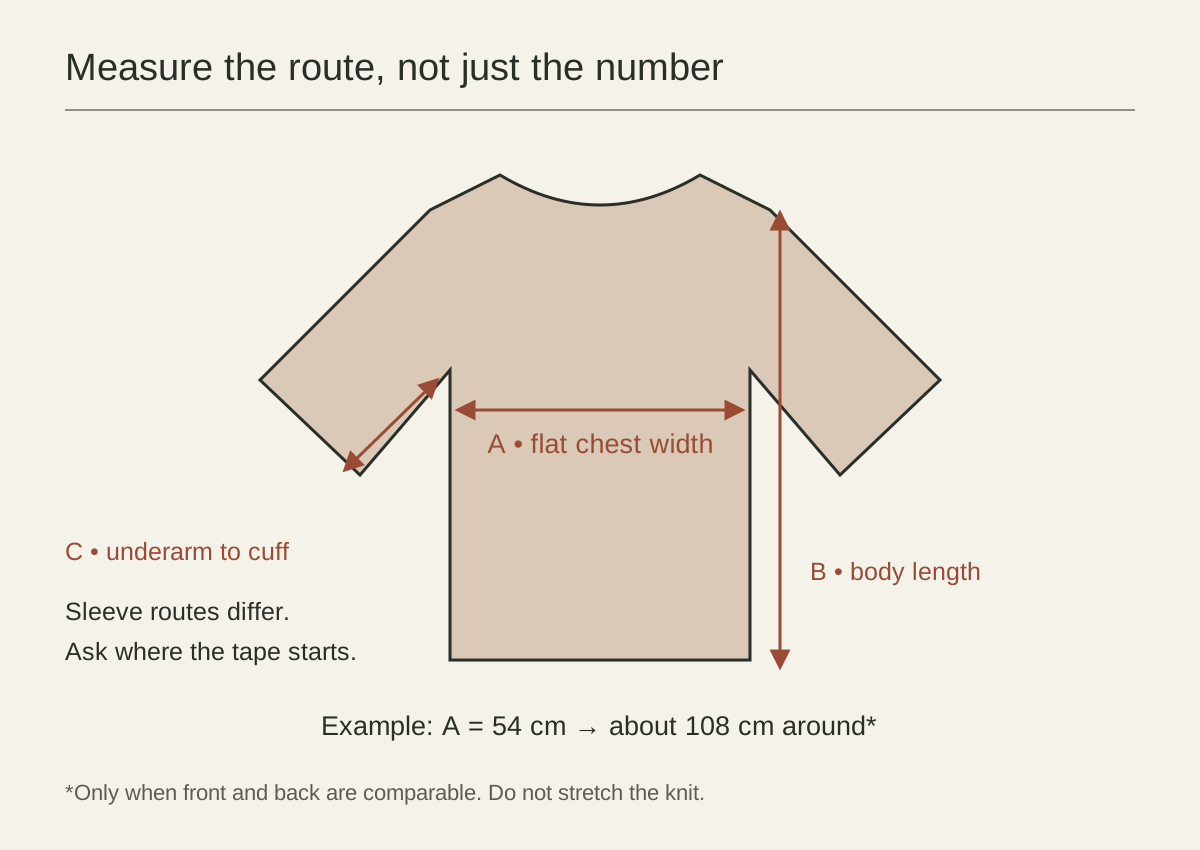
Once the sweater is fully dry, keep the resolved instruction, method, product and any maker advice together. A photograph of the dry garment with its ordinary measurements can help if you later notice a fit change.
For those dimensions, use the sweater sizing guide. Keep the instructions you used with that record. They are more useful for the next wash than a memory of “gentle treatment”.