The sweater’s body feels dry, but its doubled cuffs are still damp and departure is approaching. This hypothetical problem starts before washing: did the garment’s permitted drying method have enough space and time?
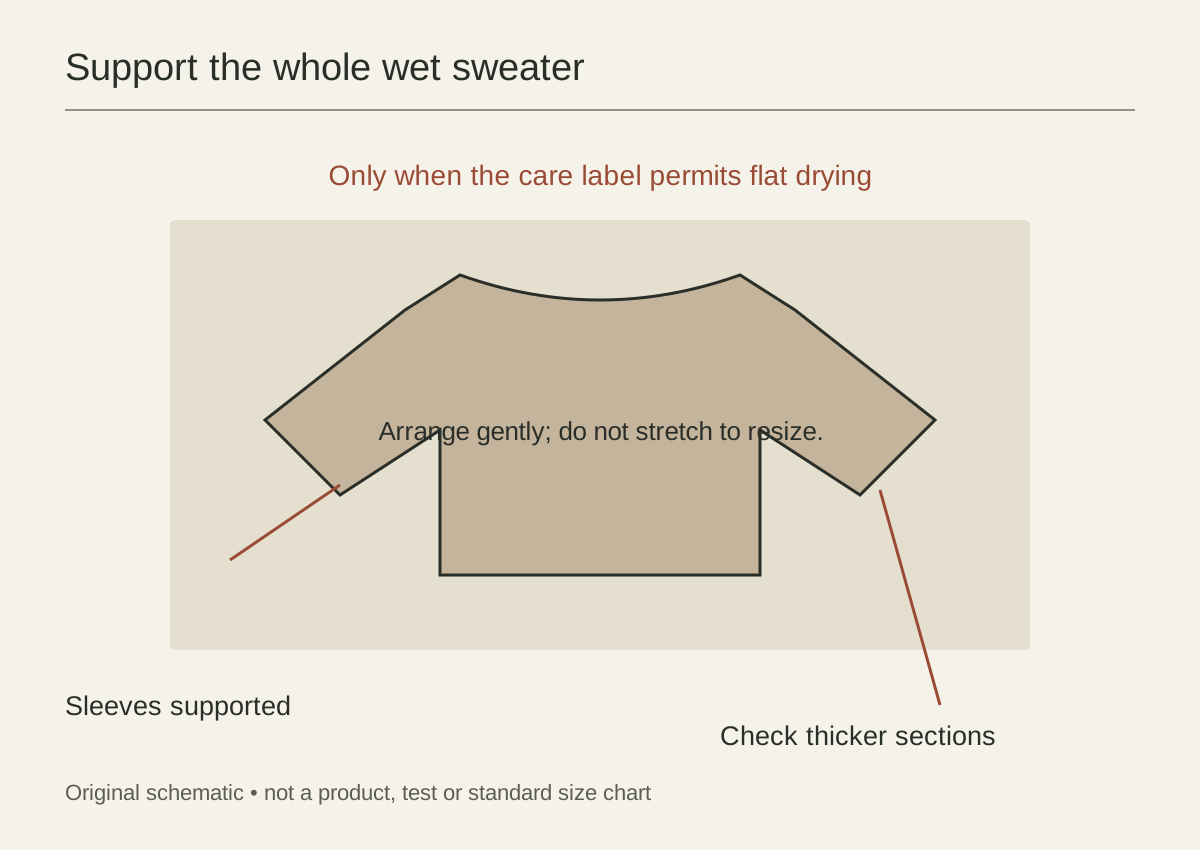
Follow the piece from its instructions through supported transfer, the drying surface and a final thicker-area check. If flat drying is permitted, the entire garment needs support. A travel deadline does not create permission for direct heat or a different drying method.
Check what the label permits
Read the drying instruction before washing so you can prepare the right space. A tumble-dry allowance on one product does not apply to an unrelated alpaca sweater. Do not infer it from a machine-wash symbol either: washing and drying instructions are separate.
PAKA’s published advice distinguishes several product categories. Sol Alpaca describes its own towel handling and reshaping routine. Their instructions help demonstrate that the actual product matters; they are not a general permission to treat every alpaca blend identically.
For the earlier care decisions, start with caring for alpaca knitwear.
Support the garment while moving it
A wet sweater can hold considerable water. Move it with support under the body and sleeves rather than lifting it from one cuff or the neckline. Avoid pulling a long section into a stretched shape while transferring it.
Where the garment instructions permit, remove excess water with gentle pressure and clean towels. Do not wring the sweater. If a drying instruction is unclear or the piece has fragile decoration, ask the maker or a suitable professional before improvising.
Woolmark’s general wool-knitwear guidance explains that hanging a wet knit can change its dimensions under its own weight. That is background about wool construction; the label on your alpaca piece remains the controlling instruction.
Arrange a permitted flat-dry piece
| Check | Useful action |
|---|---|
| Surface | Use a clean absorbent surface or appropriate drying mesh |
| Shape | Place body, sleeves and edges gently in their intended positions |
| Support | Avoid a sleeve or heavy section hanging over the edge |
| Heat | Keep away from direct heat unless the label specifically permits it |
| Moisture | Check cuffs, seams and thicker sections before declaring it dry |
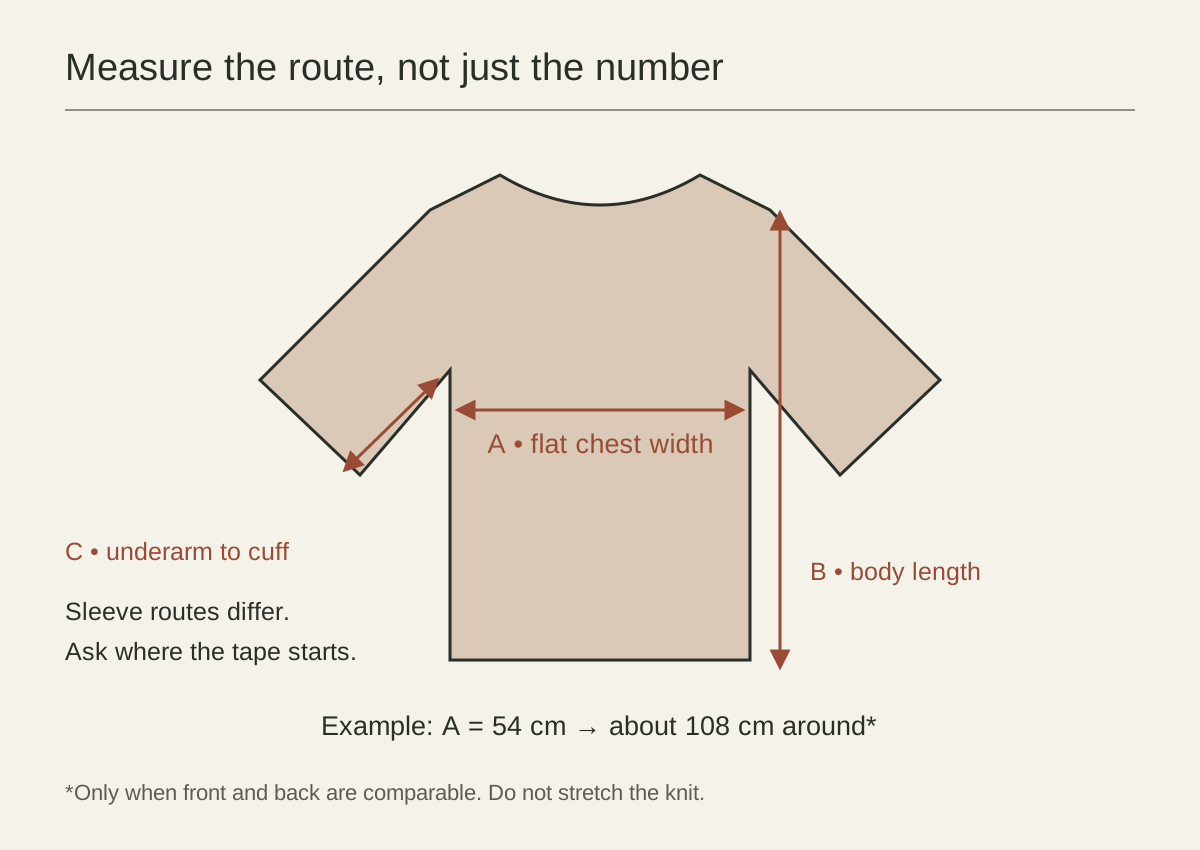
Set the sweater into its ordinary shape rather than stretching it to a new set of dimensions. If you recorded the dry garment before washing, that record can be a useful reference, not an instruction to force a damaged fabric back into place.
The sweater sizing guide explains how measuring routes affect those records.
Allow time without inventing a drying promise
Drying time depends on the garment and conditions. This article does not promise that a thick knit will be ready overnight or after a fixed number of hours. Plan around the piece rather than trying to meet a deadline with a radiator or hairdryer.
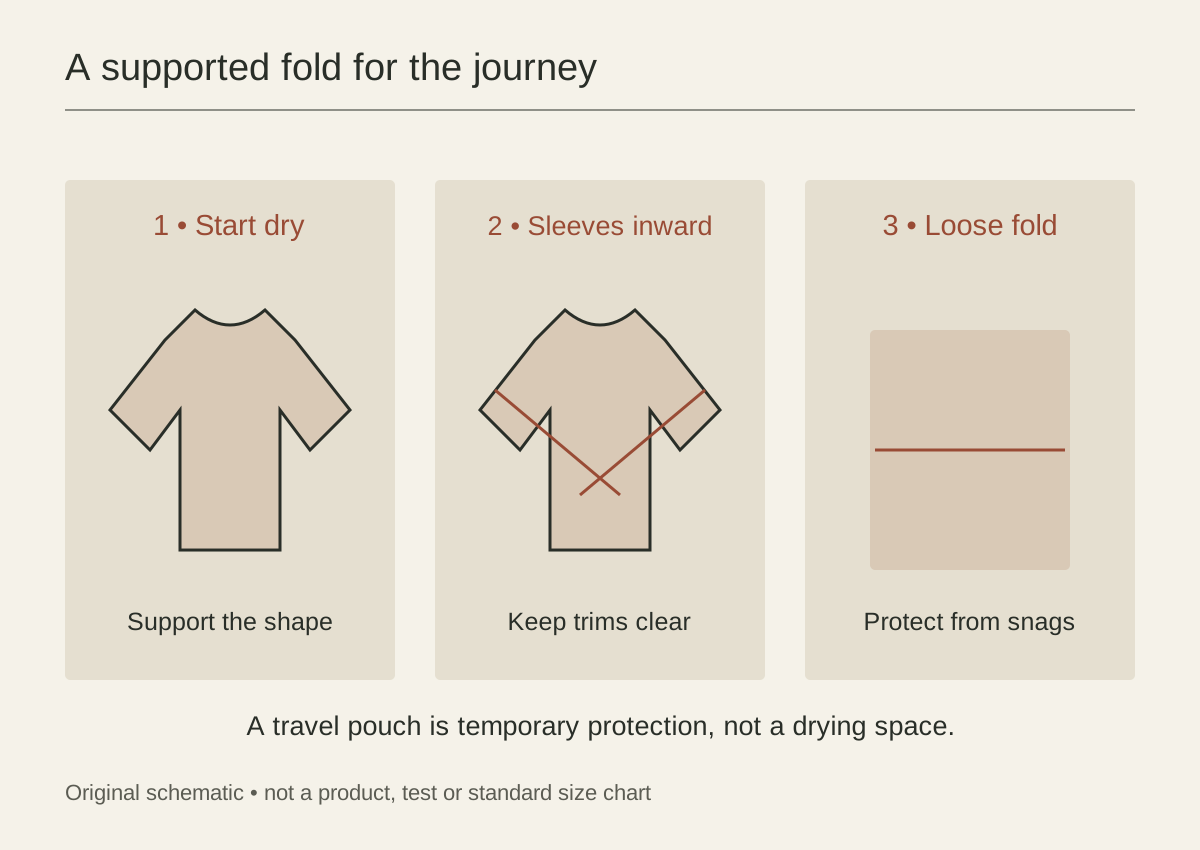
For the sweater with damp cuffs, a sealed travel pouch is not the place to finish drying. If you need to leave before the sweater is fully dry, reconsider the garment or the transport arrangement instead of packing damp cuffs against the rest of your luggage.
For travel handling, read packing alpaca garments.
Troubleshoot the setup, not the sweater
If the supporting towel is wet, prepare a fresh, dry support where the garment instructions allow it. Move the sweater with its weight supported instead of dragging the sleeves across the surface. Make sure a sleeve, hem or decorated edge has not fallen off the drying area.
The cuffs in the departure-day example still need their own check; a dry-feeling body does not settle their condition. Check those thicker areas before folding. The answer is more permitted drying time and a suitable setup, rather than pressing the cuffs with an iron to meet a deadline.
Before leaving the piece to dry, ask:
- Is its entire weight supported, with no section hanging down?
- Are sleeves and seams arranged naturally, without stretched corners?
- Is it away from direct heat and sunlight as the instructions require?
- Will you be able to check it again before storing or packing it?
These checks apply the handling principles above; they do not promise a particular drying time or reverse previous damage.
Reassess only when dry
Only when the cuffs and the rest are fully dry should the example move to folding or packing. If its shape or surface has changed unexpectedly, note what happened and consult the maker before repeating treatment. Steam or pressing may be unsuitable for the particular fibre mixture, dye or trim.
Do not hang a wet sweater to make creases fall out. A smaller intervention may be enough, or professional advice may be the right next step. If the final dimensions have changed, photograph and record the change before trying another treatment. That gives the maker useful information and avoids turning a drying problem into a sequence of experiments.