The chest measurements match, but one sweater’s sleeves crowd the coat. In this hypothetical fine-knit/chunky-knit comparison, repeating the chest figure will not resolve the problem: fabric bulk and upper-sleeve room have become the important questions.
Follow the two knits from the listing’s word “weight” to their surfaces, coat fit and luggage space. The sizing guide covers dimensions; here we keep thickness, mass and fibre diameter separate, without assigning either knit a warmth rating.
Separate three meanings of weight
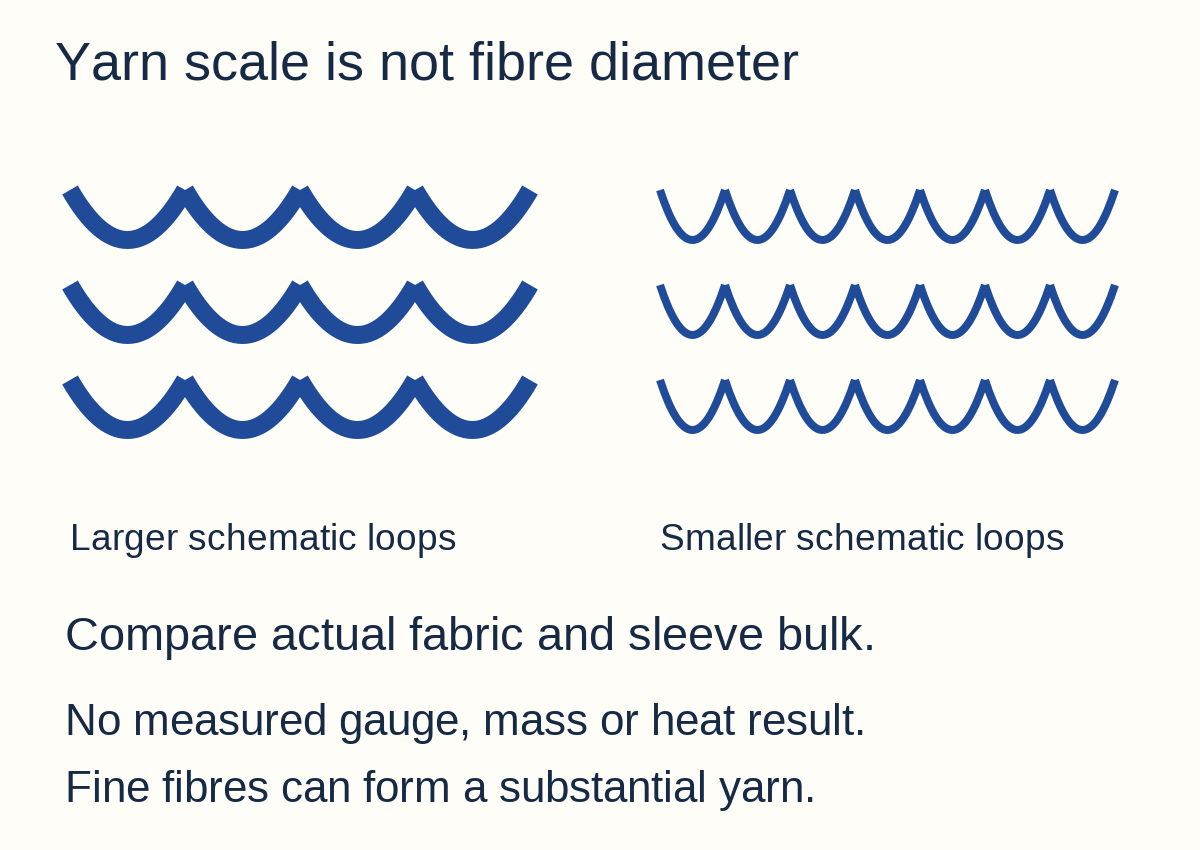
Yarn weight usually describes a thickness category in knitting, not the weight of a completed sweater on a scale. The Craft Yarn Council’s system places terms such as chunky in its yarn categories and gives gauge guidance, while warning that the ranges are guidelines.
A shop’s description of a “chunky sweater” is not necessarily a declaration that it uses that particular standard. Ask what the seller means. A finished garment’s weight in grams is another measurement, affected by its dimensions, yarn and construction. Fibre diameter, measured in microns, is a third question: thick yarn can contain fine individual fibres.
| Information | Helps answer | Does not answer alone |
|---|---|---|
| Yarn thickness category | How the yarn is described | Finished warmth or garment mass |
| Garment weight in grams | How heavy this size is | Warmth per gram or softness |
| Knit structure and density | How the fabric is arranged | Whether it fits over your base layer |
| Fibre composition or diameter | What material evidence is claimed | Exact drape or next-to-skin comfort |
Keep those fields separate in your comparison. “Chunkier” does not mean coarser fibre, and “fine knit” does not certify a premium grade.
Look at the spaces as well as the yarn
Examine an ordinary, unstretched section of the knit. Are the stitches close together, or are there obvious openings? Ask for a close photograph against a plain background if buying online. A strongly backlit image can reveal openings, but it cannot measure insulation or reproduce how the fabric feels.
Do not pull a garment apart to assess it. Ask the seller how the fabric is intended to sit when worn, especially with lace, openwork or a very loose stitch. A fine knit stretched tightly over the body is a different viewing condition from the same piece lying relaxed.
The Alpaca Owners Association notes the importance of fabric type to insulating behaviour. It does not supply a universal chunky-versus-fine result for finished sweaters. Without comparable garment testing, avoid numerical warmth claims or fixed temperature bands.
Check bulk where layers meet
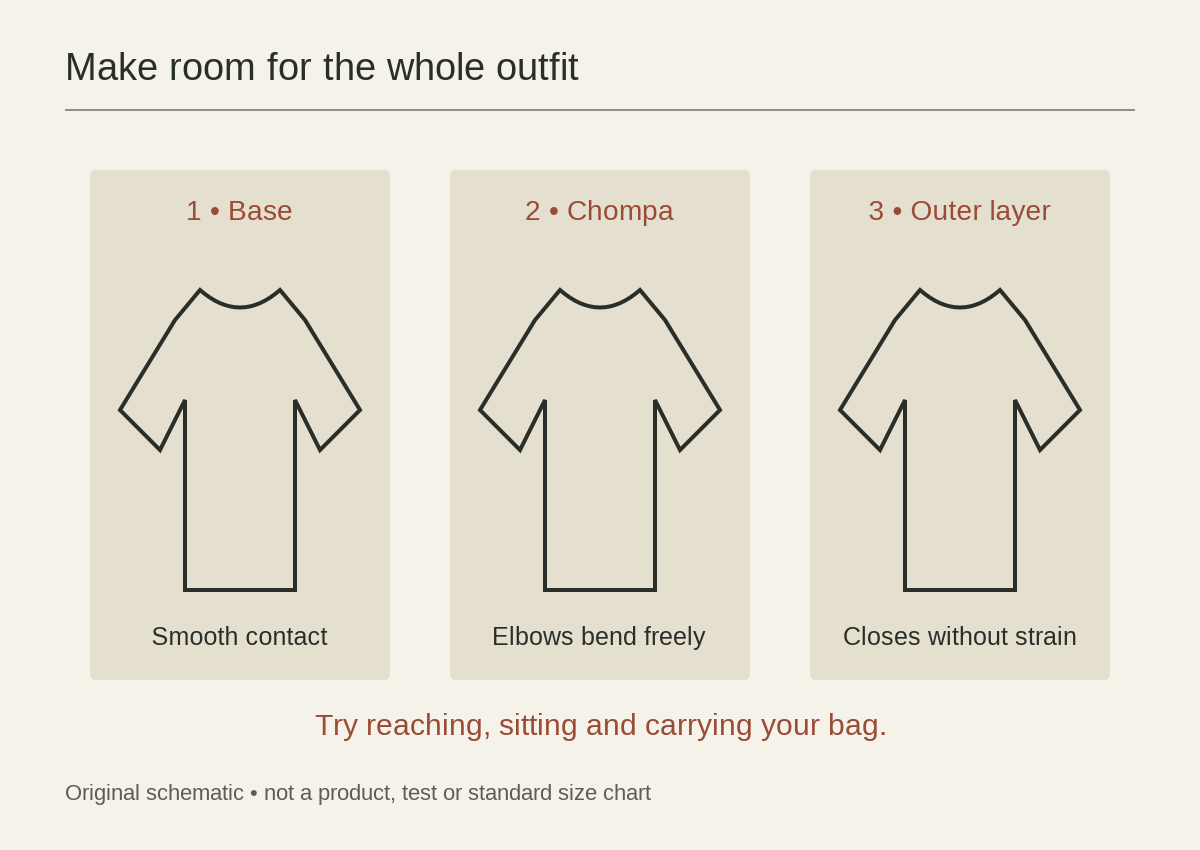
A heavier-looking knit can be appealing as the visible outer layer. Under a close jacket, its sleeves, cuffs and collar might occupy more room than you want. Try those areas with your actual jacket rather than judging only the sweater’s chest width.
A fine knit may fit beneath another garment more easily, but “fine” cannot guarantee that. Shoulder construction, sleeve dimensions and ribbed edges still matter. Follow the layering guide and check movement in the complete outfit.
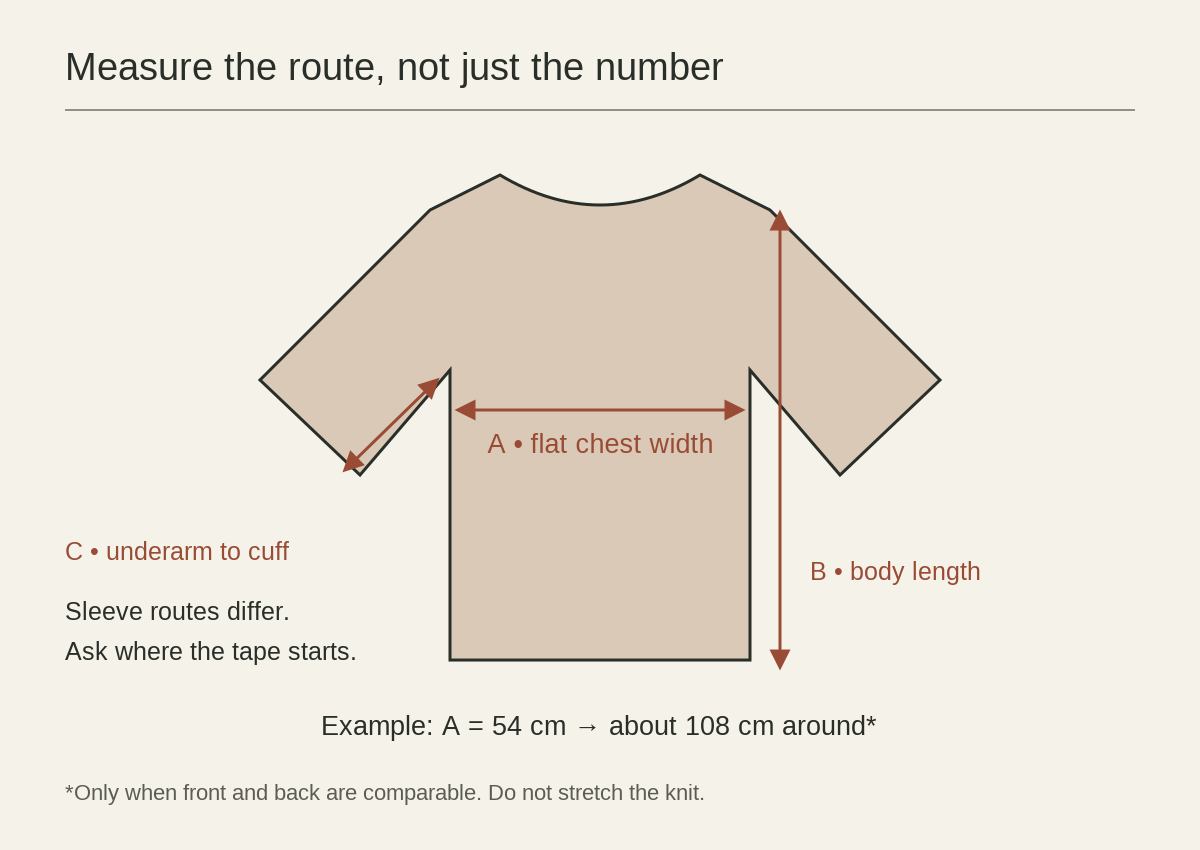
The hypothetical sweaters have matching flat chest measurements, but that comparison leaves the sleeves unresolved. No product test has been performed. If the chunky piece has substantially bulkier sleeves, the same jacket may feel more restrictive at the elbows. The useful next measurement is the upper sleeve and jacket room, not another chest figure.
Handle weight and drape as separate observations
If you can handle the garment, support it and notice how it hangs naturally. Do not stretch the shoulders or suspend a heavy knit by one edge. Ask for the weight of the actual size you are considering; a figure for a sample size may not represent yours.
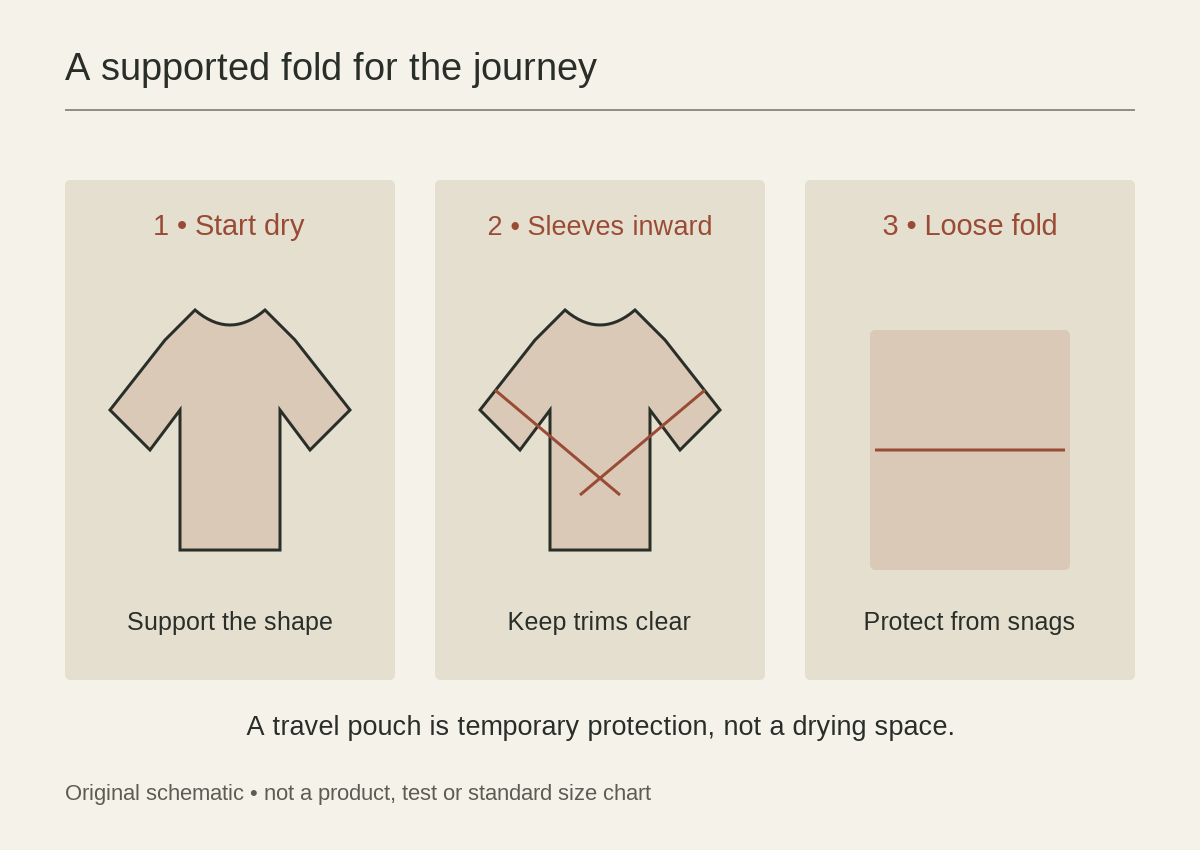
For packing, bulk and mass can affect different limits. A sweater may fit your luggage volume but still be heavier than you want to carry. Another may be light but occupy more space loosely folded. The knitwear packing guide helps you plan support and space without squeezing a delicate piece into a promised compression ratio.
Buy for a defined role
Write one sentence about the job: “a layer under my existing coat” or “a visible sweater worn over a shirt indoors”. Then gather the measurements, composition, care instructions and photographs that answer that job.
For a coat layer, prioritise sleeve room, neckline overlap and movement. For a visible knit, inspect the surface, intended opacity and edges as well as the overall fit. If you are unsure about skin comfort, do not assume either thickness category settles it.
Finish by checking the care label and the space you have for permitted drying and storage. Neither chunky nor fine tells you that machine washing is allowed. Choose using the garment’s evidence and your intended use, leaving broad warmth and longevity promises out of the decision unless the seller can substantiate them.