A shop description says “chompa”; the label inside lists wool and acrylic. There is no contradiction in that hypothetical example. In Peruvian clothing usage, chompa commonly means a sweater or jumper. The noun identifies a garment, while the label describes its material.
Understanding that division makes a short shopping conversation easier. Translate the garment word first, then use a few specific questions to establish which sweater is being offered and whether it will work for you.
What the dictionary establishes
The Asociación de Academias de la Lengua Española’s Diccionario de americanismos records a sweater-like knitted garment meaning for Peru and several other countries. It also records another regional use involving a jacket. Context matters when translating a short clothing description.
That entry establishes usage, rather than the origin of a specific garment or an explanation of every local variation. This article does not claim a particular etymology or suggest that only Peru uses the word.
In British English, ‘jumper’ may be the natural translation for an over-the-head knitted garment. ‘Sweater’ is also widely understood. Check the photograph and construction instead of assuming the translation alone describes the opening or shape perfectly.
What ‘chompa’ leaves unspecified
For the imagined wool-and-acrylic jumper, the next useful words concern composition, finished dimensions and care. Adding “de alpaca” introduces a material claim, but still leaves the full percentages to establish. “Handmade” raises a different question: which stages were done by hand?
A description such as “one size” needs numbers rather than another translation. Keep those questions separate and the conversation can move forward without asking the word chompa to carry a complete product specification.
A short shopping conversation
You can ask about a chompa without assuming an alpaca composition:
| Question in Spanish | What you are asking |
|---|---|
| ¿De qué material es? | What material is it made from? |
| ¿Cuál es la composición? | What is the composition? |
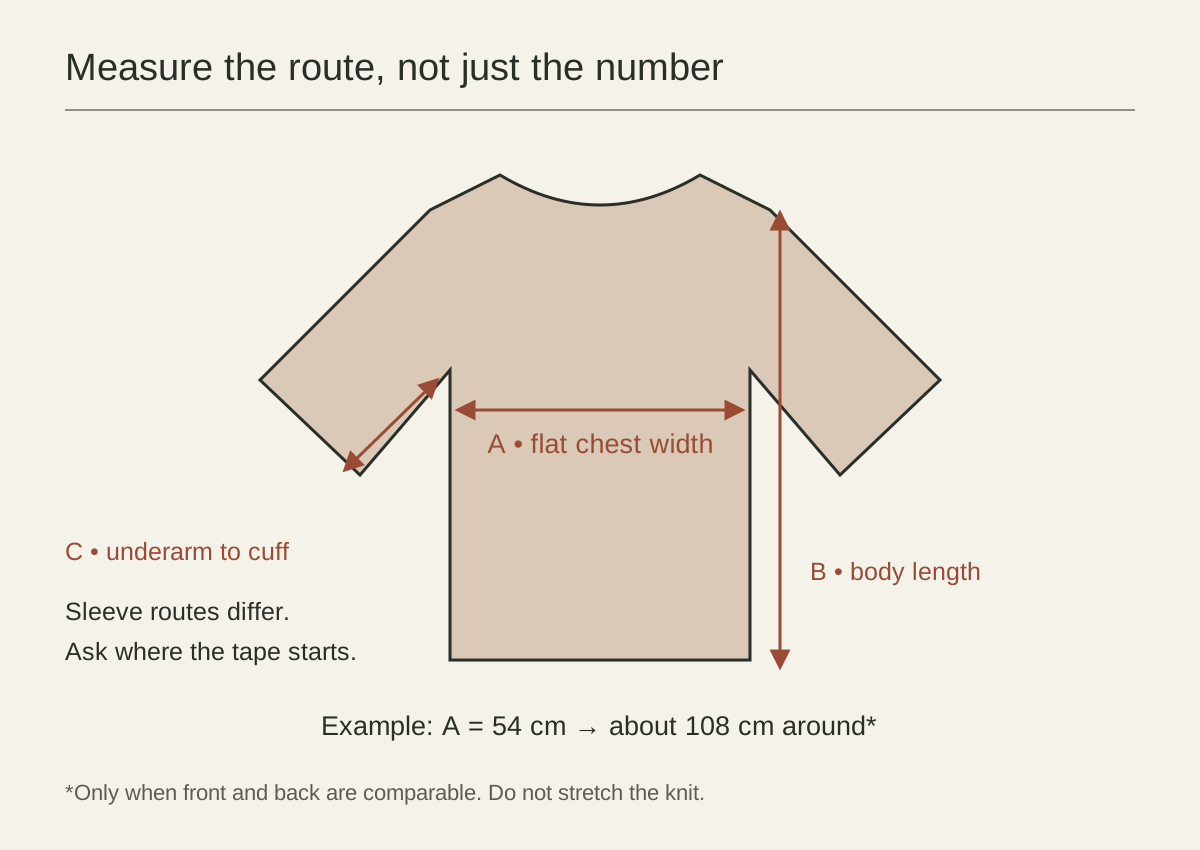
| ¿Cuánto mide de ancho? | How wide is it? |
| ¿Cómo se lava? | How is it washed? |
These are ordinary question examples, not quotations from a particular seller. For the width question, show the chest point and ask whether the answer is a flat width or a circumference. For care, request the label or written instructions rather than relying on a remembered phrase.
If someone calls an item a chompa and its label declares wool and acrylic, the garment word has not contradicted the label. If the seller separately calls it pure alpaca, that is a composition claim to clarify. Keeping those statements apart makes the conversation much easier.
Use the word alongside measurements
Once you have identified the jumper and its composition, ask whether its size chart describes the intended body or the finished garment. Compare chest width, body length and sleeve length using the same measuring routes. A garment’s familiar local name does not make its size labels universal.
The sweater sizing guide explains ease and finished dimensions. If you plan to wear the chompa over another top, make that part of the comparison rather than choosing a larger letter size without checking its dimensions.
Read the making story carefully
The same jumper may have a named maker, a retailer’s account or very little provenance information. Ask who made the particular piece and what the seller knows directly. Do not infer a maker’s identity from a generic weaving display or a patterned surface.
The Peruvian alpaca overview separates fibre, construction and provenance. A precise description of a machine-knit garment can be more useful than a vague romantic account that does not establish how anything was made.
Choose a chompa for everyday use
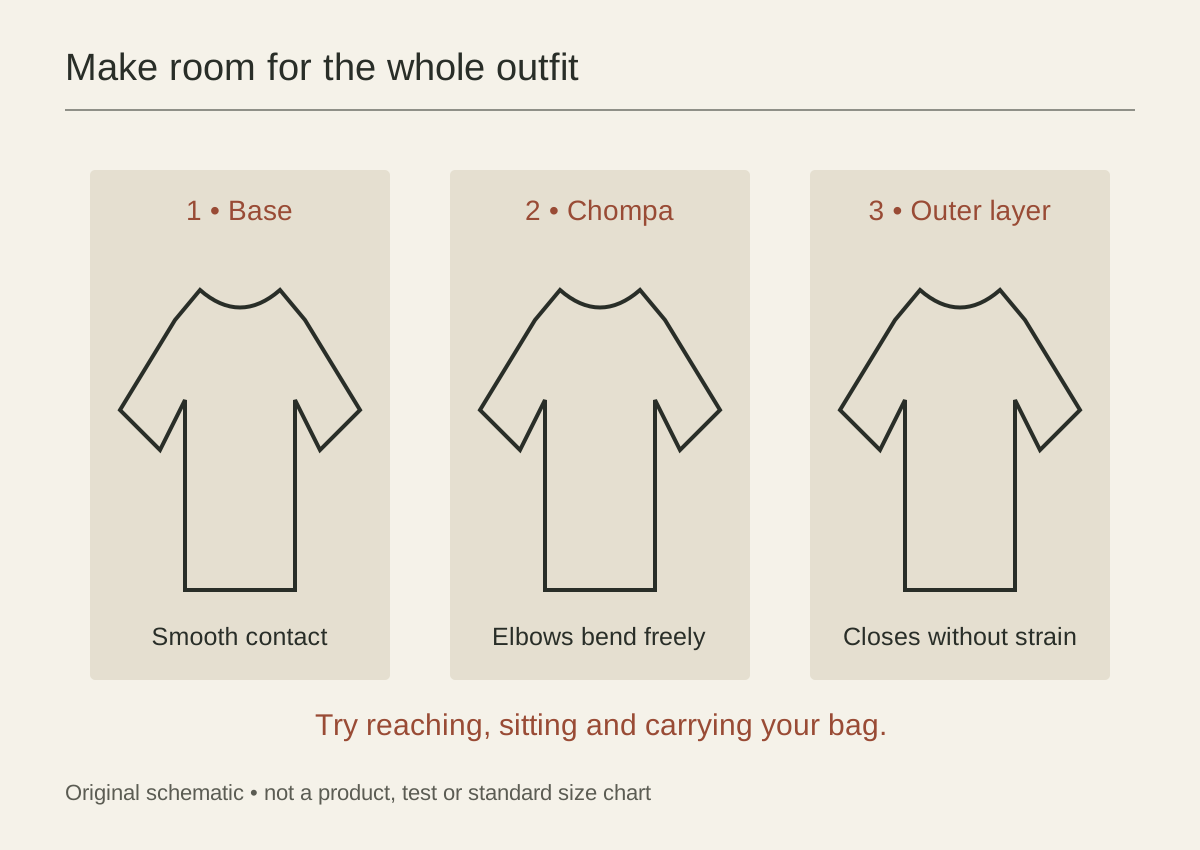
Try the sweater with the layers you expect to wear and check movement at the upper arms, neckline and hem. Read the care label and think about where it will go when you take it off.
Our layering guide covers those practical combinations. Keep the garment description, size basis and care advice together. In our example, the useful result is a wool-and-acrylic jumper you can identify, measure and look after. The word chompa began the conversation; those details complete it.