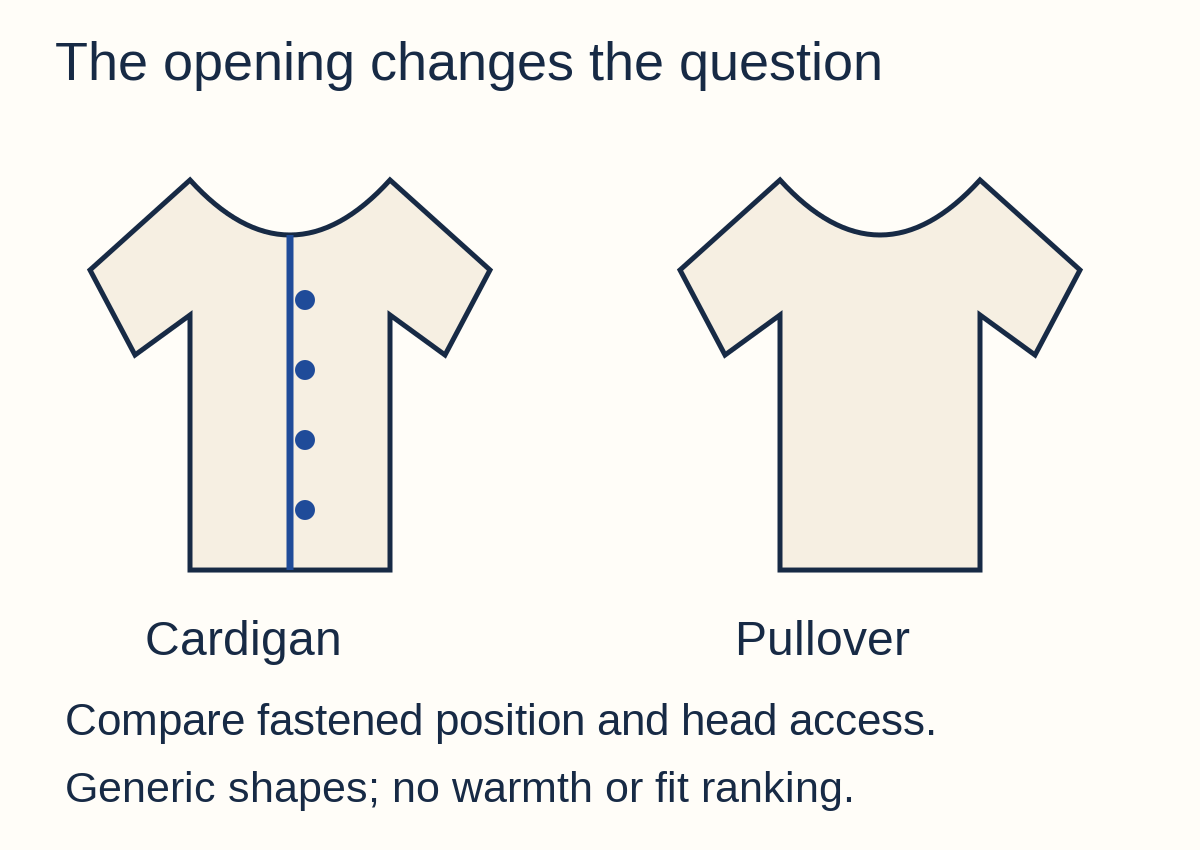
Choose between a cardigan and a pullover by trying the actions you expect to repeat: putting it on, taking it off, reaching and adjusting your layers. A cardigan opens at the front; a pullover goes over the head. That simple distinction affects daily use more directly than a promise that one style is universally warmer or more flattering.
Both need the right measurements. Begin with the sweater sizing guide, then compare openings, closures and the way each garment sits over your usual clothes.
Start with the moment you will use it
Picture arriving indoors with a coat, bag and sweater. Would you like to open the front while keeping the sweater on, or do you usually remove the whole layer? For a desk, train or shared room, that can be a useful choice of convenience. It is not a measured temperature-performance claim.
A pullover offers a continuous front without buttons or a zip to manage. It may suit you if you prefer fewer front edges and normally keep the layer on. Check that the neckline passes comfortably over your head and that taking it off is manageable for you.
| Everyday question | Cardigan checks | Pullover checks |
|---|---|---|
| How will I adjust it indoors? | Try open and closed positions | Try removing it over the intended base |
| What touches my neck? | Check edges, collar and fastenings | Check neck opening, seam and collar |
| Will I wear it under a jacket? | Inspect front overlap and closure bulk | Inspect neckline and fabric bulk |
| Can I dress easily in it? | Operate the actual buttons or zip | Test the actual head and arm openings |
Neither name guarantees accessibility. The design of a small button, a stiff zip or a narrow neck opening can be decisive. Try the particular fastening or ask for a close photograph and useful dimensions.
Compare fit in the position you will wear
An open cardigan can appear roomy because its fronts are not meeting. That does not tell you whether it will close without pulling. If closed wear matters, fasten it during the fitting and check the front at chest, waist and hem.
Look for pulling around the closure, an edge that twists or a hem that changes position when you sit. Those observations need interpreting alongside the intended design; an intentionally draped open-front cardigan is not meant to behave like a fitted buttoned one.
For a pullover, inspect the chest, upper arms, neck and hem separately. A roomy body does not guarantee a comfortable sleeve. Craft Yarn Council guidance distinguishes body measurements from finished measurements and the added or subtracted space called ease. Its charts are guidelines, not a universal allowance for alpaca garments.
Ask comparable measurement questions
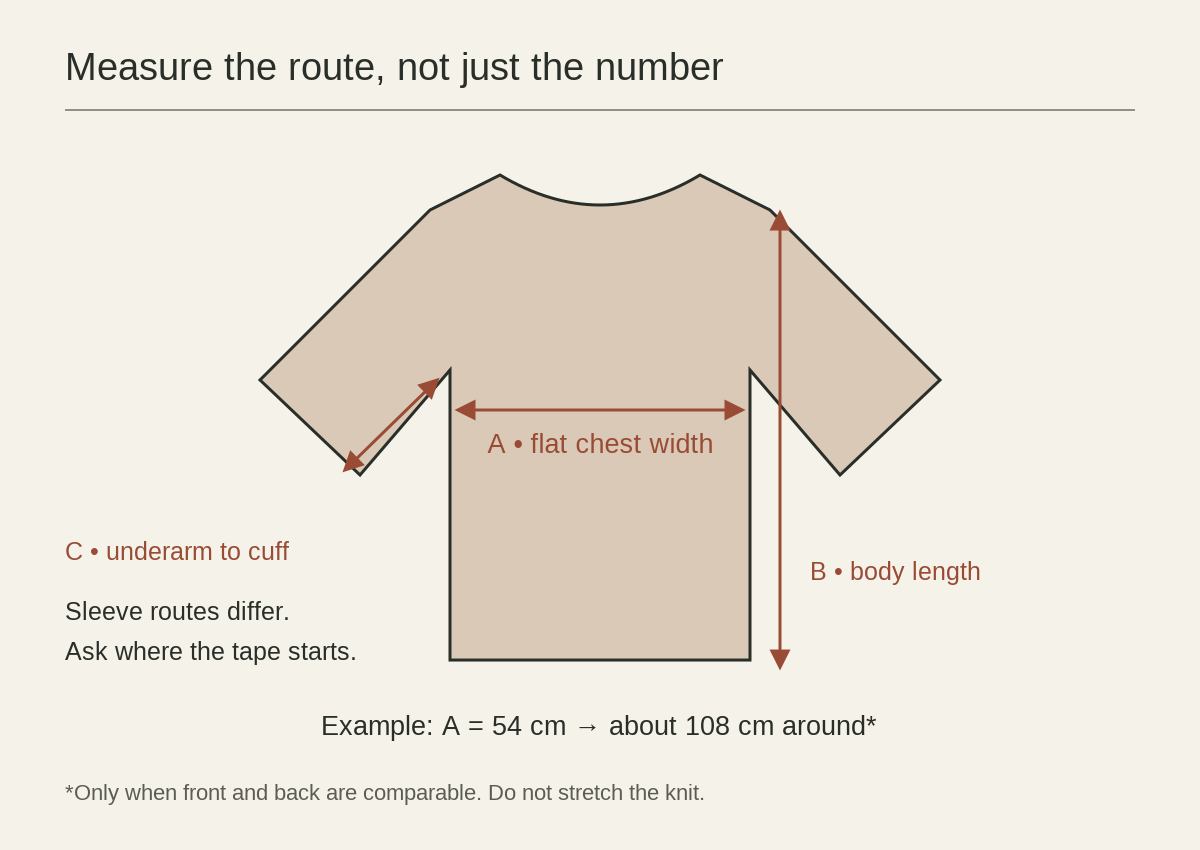
For a fastened cardigan, ask for the flat chest measurement with the closure in its intended worn position. Record whether the fronts merely meet or overlap; a photograph of that arrangement makes the number reproducible. For an open-front style, a flat width may not describe a closed circumference at all. Record the seller’s method instead of doubling a number without knowing what it covers.
For both styles, compare body and sleeve lengths using the same starting points. A dropped shoulder can make a seam-to-cuff number misleading when compared with a set-in sleeve. A clear schematic or photograph of the tape is more useful than guessing from a size letter.
Here is a hypothetical decision: two garments both list a 54 cm flat chest. The pullover was measured relaxed across front and back; the cardigan was measured with an unspecified overlap. You do not yet have equivalent evidence. Ask how the cardigan was arranged before deciding they offer the same room.
Inspect the closure as part of the garment
Back at the arrival-indoors decision, try the actual adjustment: with permission, operate each fastening gently. Check whether buttons pass through their holes without excessive force, whether the edge lies as intended and whether a zip catches the knit. Do not pull at a loose thread to test strength.
Think about the places you will carry a shoulder strap or rest an arm. A bulky front edge or large button might sit awkwardly under another layer. This is a fitting observation, not a reason to reject all fastened styles.
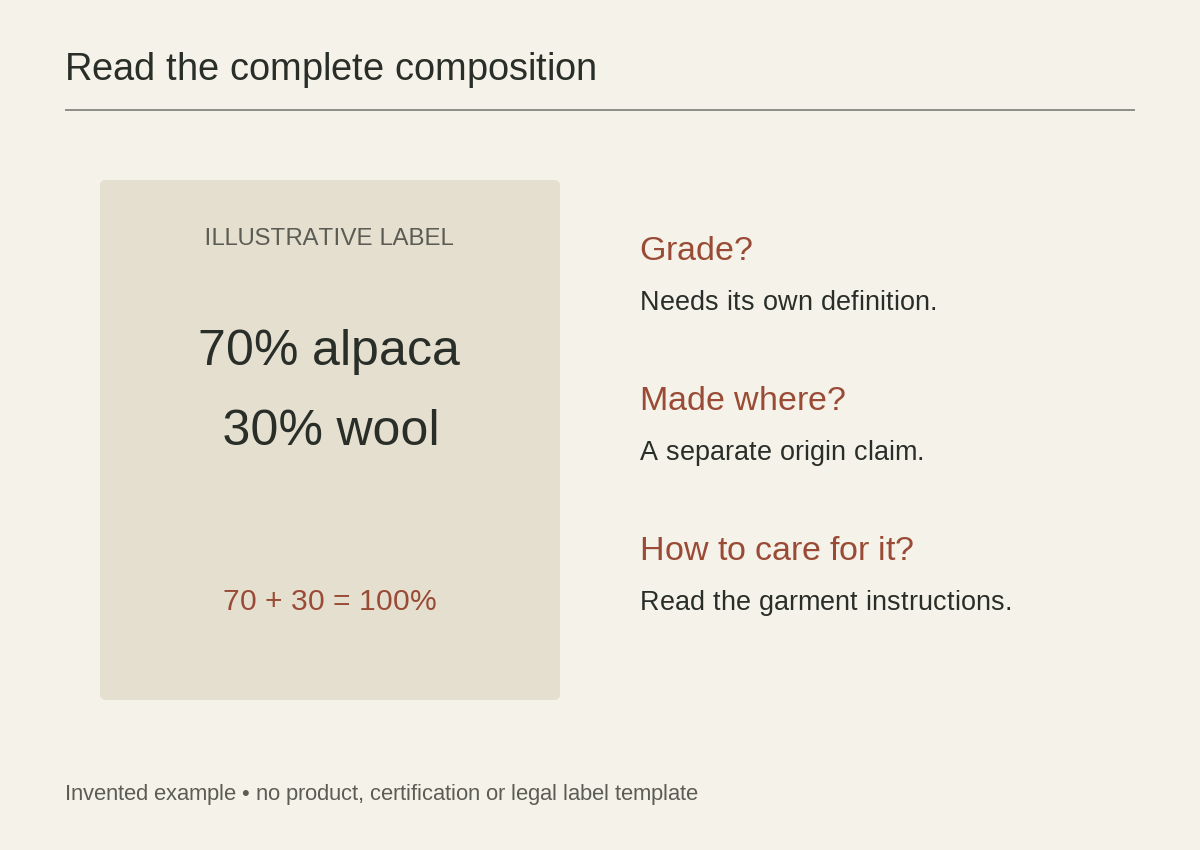
The Alpaca Owners Association describes alpaca fibre characteristics, but fibre identity alone does not establish the behaviour of a complete knit. Structure, garment dimensions and finishing still need examining. The blend guide helps separate a material declaration from a performance promise.
Try a complete outfit before deciding
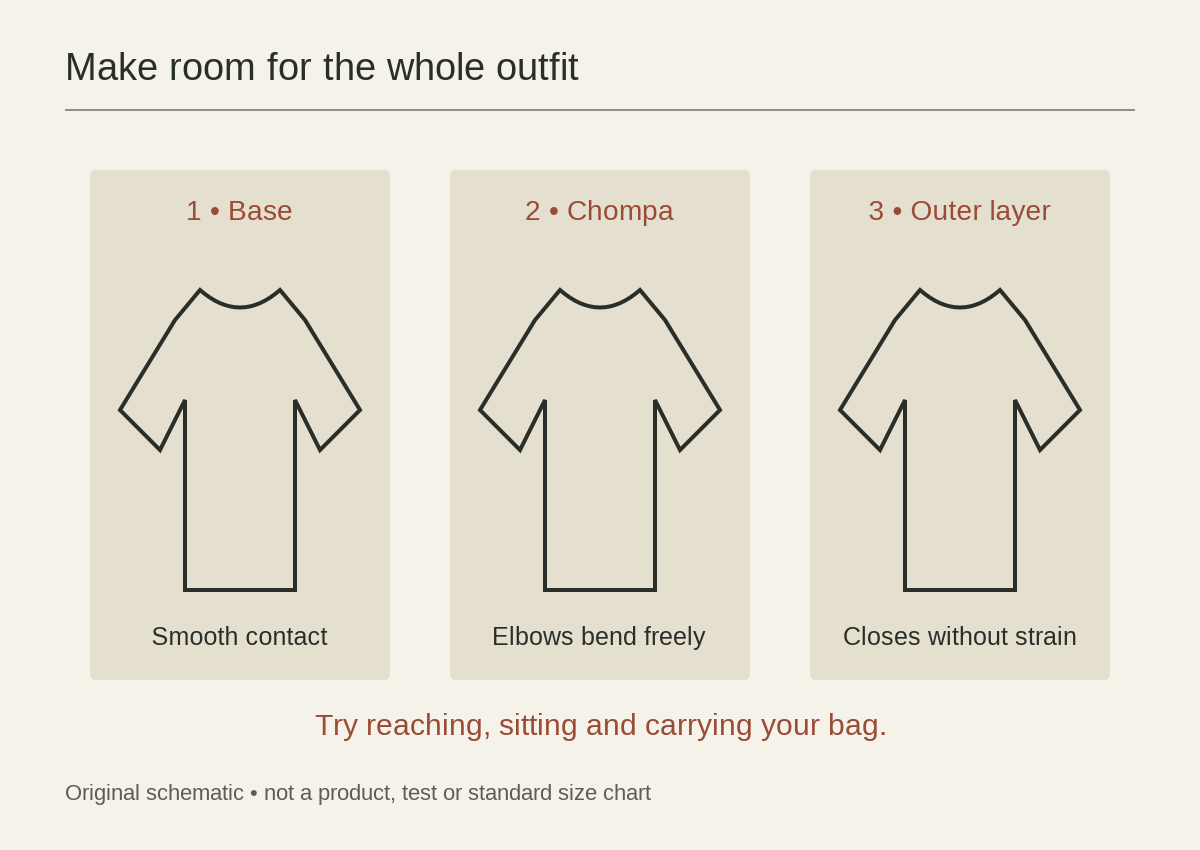
Use the layering with chompas guide to test a base layer, sweater and outer garment together. Sit, reach forward and raise your arms gently. Check whether the cardigan’s fronts stay where you want them, or the pullover’s hem and neck move uncomfortably.
Keep a short decision record: usual layer underneath, expected open or closed wear, fastening or neckline concerns, and any unanswered measurement. If buying online, add return terms and photographs of the closure. Choose the style whose actual construction fits those needs; neither garment name can make that choice on its own.