Ponchos

Understanding Handwoven Patterns

A guide to reading handwoven patterns as signs of structure, rhythm, and workmanship rather than decoration alone.

Last updated 2025-11-03Poncho Guides

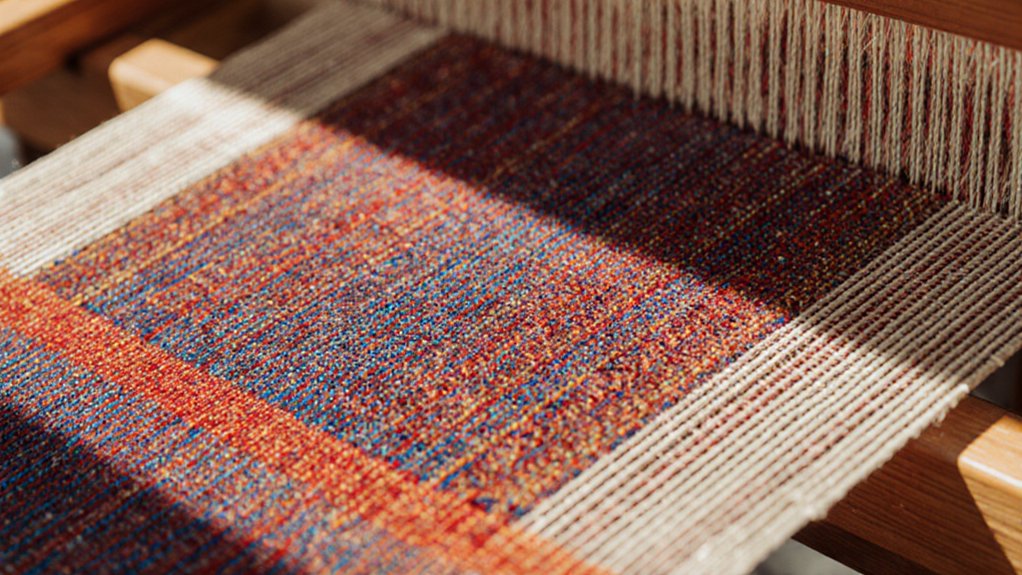
Handwoven textiles reveal their secrets through structural logic rather than surface decoration alone. Each interlacement of warp and weft follows predictable rules that create everything from simple checkerboards to intricate geometric motifs. Recognizing these patterns requires understanding how threads cross, how shafts lift in sequence, and why certain yarn combinations produce specific textures. The difference between a basic plain weave and a complex overshot design isn't mystery - it's mathematics translated into fiber, and the fundamentals are more accessible than most crafters realize.

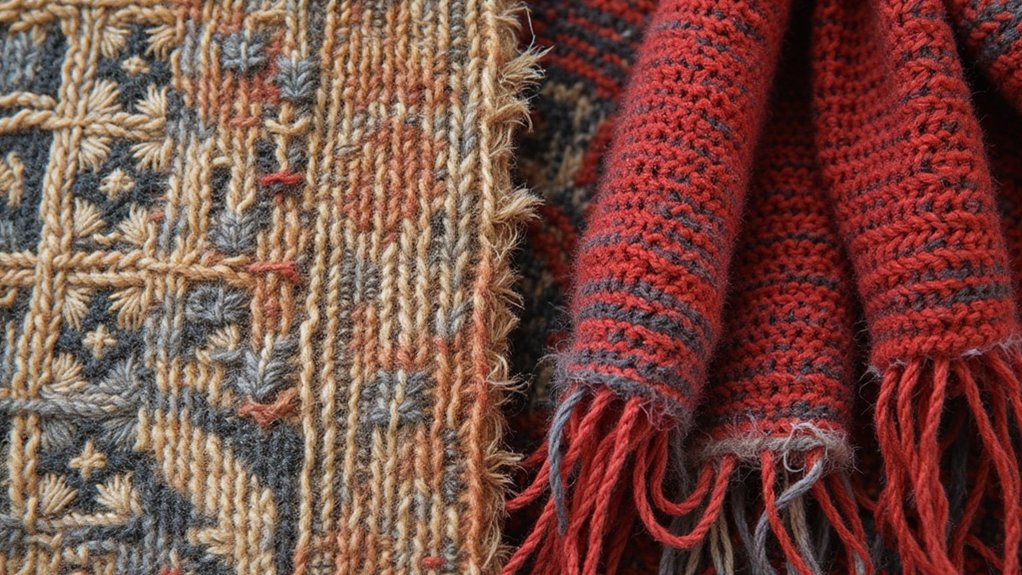
Understanding Handwoven Patterns overview

For broader context, browse the Poncho guides.

Plain Weave, Twill, Satin, and Tapestry: The Four Foundation Patterns

Understanding Handwoven Patterns - Plain Weave, Twill, Satin, and Tapestry: The Four Foundation Patterns

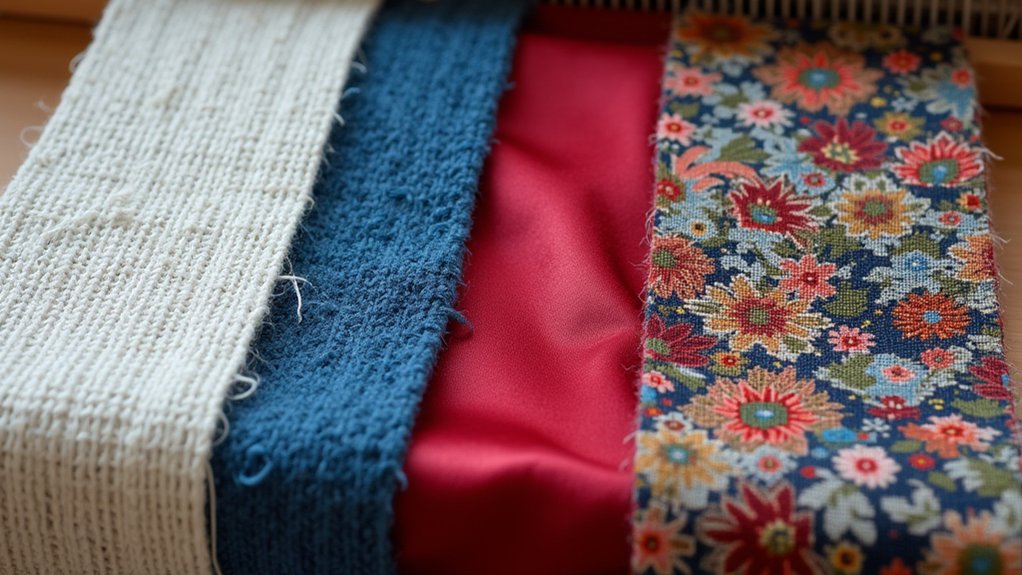
At the heart of every woven textile lies one of four fundamental interlacement patterns that determine how warp and weft threads cross over and under each other. Plain weave creates a simple over-one-under-one structure, offering maximum stability and durability. Twill produces diagonal lines through stepped interlacement, providing flexibility and drape. Satin generates a smooth, lustrous surface by floating threads over multiple crossings before interlacing. Tapestry employs plain weave as its base but uses discontinuous weft threads to build pictorial designs. These pattern foundations serve distinct purposes in textile creation. Understanding yarn compatibility proves essential when selecting which structure to use, as fiber weight, texture, and elasticity influence the final fabric's performance and appearance. Mastering these basics enables weavers to create endless variations.

Visual Clues That Distinguish Handwoven Pattern Types

How can one identify different weave patterns when examining a finished textile? Plain weave shows a simple checkerboard structure where threads alternate over and under consistently. Twill reveals diagonal lines created by offset intersections, producing a distinctive ribbed surface. Satin displays a smooth, lustrous face with minimal visible interlacing points. Tapestry weaves feature pictorial designs with weft threads completely covering the warp.

Visual examination requires attention to surface characteristics and thread behavior. Texture mapping helps identify how yarns interact - whether they create flat, ridged, or irregular surfaces. The intersection density affects light reflection and tactile qualities. Color symbolism becomes apparent when examining traditional patterns, where specific hues and combinations carry cultural meaning. Thread count, floats, and crossing angles provide additional identification markers for determining authentic weave structures.

How Threading and Treadling Create Stripes, Checks, and Geometric Designs

Understanding Handwoven Patterns - How Threading and Treadling Create Stripes, Checks, and Geometric Designs

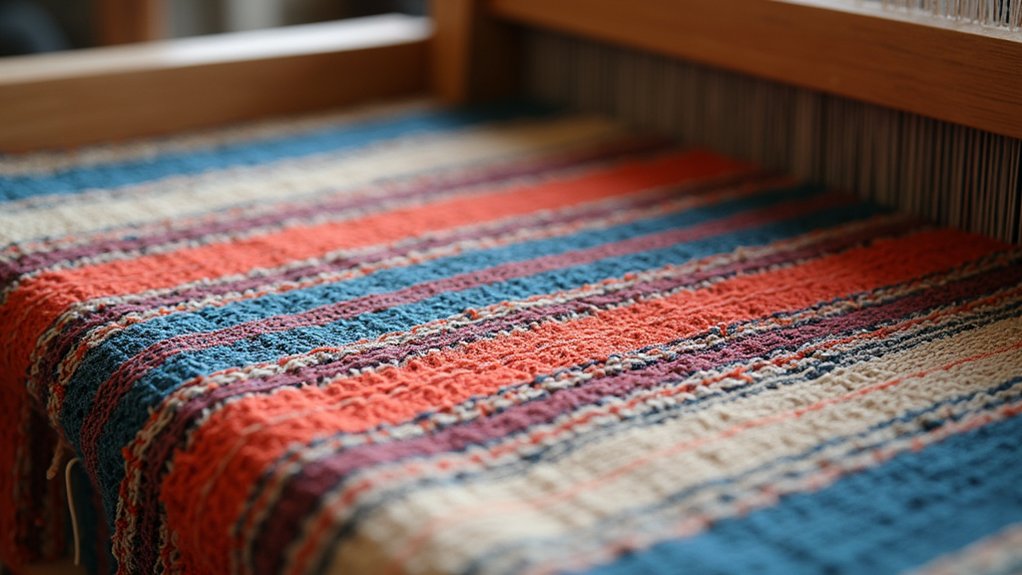
Understanding the visual characteristics of weave patterns leads naturally to examining how weavers create these structures through specific loom setups. Threading sequencing determines the horizontal arrangement of warp threads across the loom's heddles, while treadling controls which heddles lift during each pick. Stripes emerge when weavers use consistent threading sequencing with alternating treadling patterns, creating parallel bands of texture or color. Checks form through balanced repetition in both threading and treadling, producing regular grid-like intersections. Geometric designs require more complex threading sequencing combined with treadling symmetry, where mirror-image or rotational patterns develop through calculated heddle arrangements. Weavers manipulate these two fundamental elements - threading and treadling - to generate infinite pattern variations. The interplay between warp setup and treadle operation transforms basic principles into distinctive textile designs.

Decoding Weave Drafts: The Grid System Weavers Use

Weave drafts function as standardized blueprints that translate textile structures into visual notation systems. These technical documents employ a grid-based format where each square represents a specific intersection of warp and weft threads. The draft divides into four distinct sections: threading, tie-up, treadling, and drawdown. Threading shows how yarns thread through heddles, while treadling indicates the sequence of harness movements. The tie-up connects treadles to harnesses, and the drawdown displays the resulting fabric pattern.

Grid conventions vary by region, though most follow either rising shed or sinking shed notation. Drafting symbols include filled squares for raised threads and empty squares for lowered threads. Weavers read these grids from bottom to top and right to left, tracking each thread's path through the loom structure. Understanding these standardized representations enables weavers to reproduce historical textiles and create original designs.

Classic Handwoven Patterns: Tartans, Ikat, Kente, and Overshot

Understanding Handwoven Patterns - Classic Handwoven Patterns: Tartans, Ikat, Kente, and Overshot

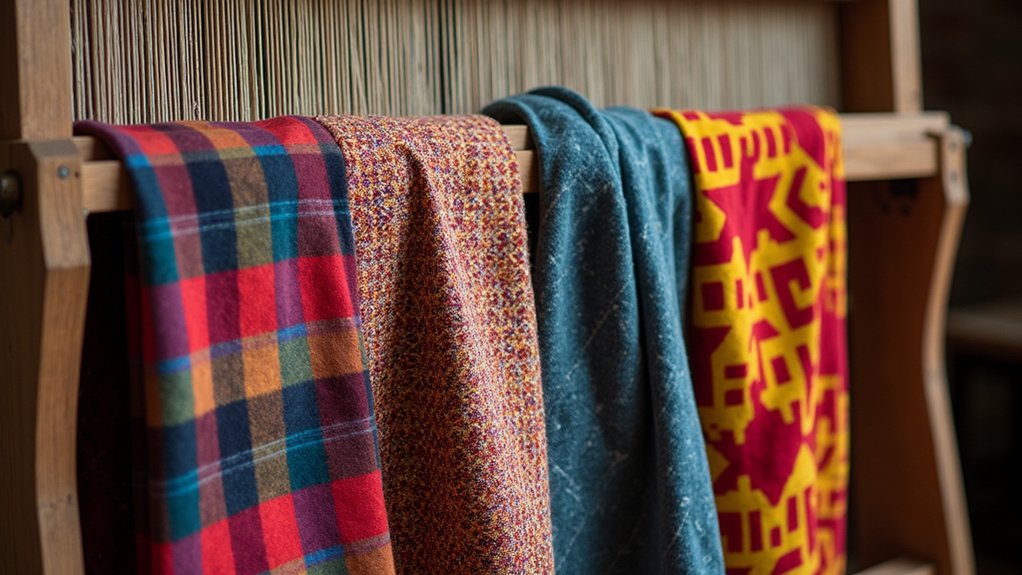
Across cultures and centuries, four distinctive weaving traditions demonstrate how different societies applied grid-based principles to create iconic textile patterns.

Scottish tartans utilize specific color sequences and thread counts to represent clans and regions. Tartan symbolism remains deeply connected to heritage and identity, with each pattern documented in precise threading formulas.

Ikat employs resist-dyeing techniques before weaving, creating characteristic blurred edges. Ikat motifs range from geometric to figurative designs, achieved by binding yarns in calculated patterns prior to dyeing.

West African kente cloth features vibrant silk strips woven with symbolic geometric patterns, traditionally worn during ceremonies.

American overshot weaving creates raised pattern areas through supplementary weft threads floating over the foundation fabric, producing reversible designs with distinctive texture and visual depth.

Why Complex Patterns Require Multi-Shaft Looms

How do weavers create the intricate patterns found in tartans, ikat, and kente cloth? The answer lies in multi-shaft looms. Simple looms with two shafts can only produce basic plain weave. However, complex patterns require additional shafts to control different groups of warp threads independently.

Each shaft holds specific warp threads that lift in predetermined sequences. Tartans typically need four shafts for their twill structures, while elaborate overshot patterns demand eight or more. The loom capacity directly determines pattern complexity - more shafts enable more intricate designs.

Different shaft configurations create distinct weave structures. Four-shaft looms produce twills and simple geometric patterns. Eight-shaft looms reveal advanced designs with multiple pattern blocks. Sixteen-shaft looms allow weavers to create highly detailed motifs. This mechanical advantage transforms thread into sophisticated textile art.

Adapting Historical Handwoven Patterns for Modern Projects

Understanding Handwoven Patterns - Adapting Historical Handwoven Patterns for Modern Projects

Translating centuries-old weaving drafts into contemporary textiles requires understanding both traditional techniques and modern constraints. Weavers must first analyze the original threading sequences and treadling patterns, then adapt them for available loom configurations and yarn weights. Historical transformation begins by identifying the pattern's core structural elements - what makes it distinctive - before making necessary modifications.

Modern reinterpretation involves scaling patterns to suit current fabric widths and adjusting thread counts for contemporary fibers. Many historical drafts assumed handspun yarns with different characteristics than today's commercially produced threads. Weavers often need to substitute materials while preserving the pattern's visual impact. Color choices can honor traditional palettes or introduce updated aesthetics. Documentation through photography and detailed notes guarantees these adaptations remain faithful to their origins while serving modern functional requirements.

A useful companion read is the alpaca overview.

Related guides