Ponchos
Alpaca Poncho: Drape, Warmth, and Wearability
A cornerstone guide to alpaca ponchos, how they are built, and what to look for before buying one in Peru.
An alpaca poncho can be an unusually useful garment: warm for its weight, easy to layer, and forgiving in sizing. The hard part is that “alpaca” labels vary, and construction quality ranges from excellent to purely decorative.

For broader context, browse the Poncho guides.
How Alpaca Compares to Wool and Cashmere (Practical Differences)
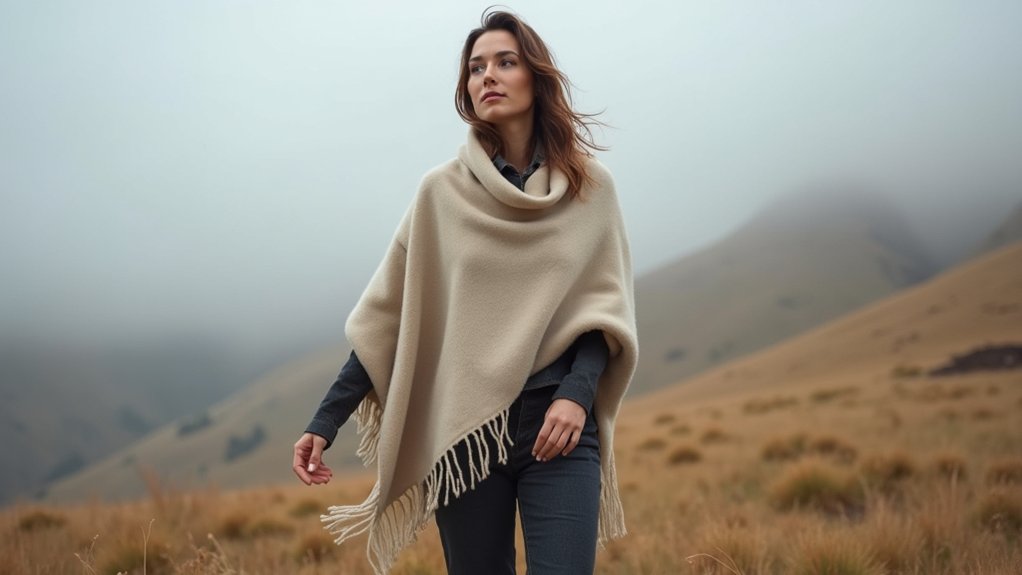
Alpaca is often valued for warmth without heavy bulk, and many people find it comfortable against skin. Compared to some sheep wool, alpaca can feel smoother; compared to cashmere, it is often less “cloud soft” but can still be very comfortable depending on grade and construction.
As a buyer, the practical takeaways are:
- Warmth-to-weight: many alpaca ponchos feel warm without being heavy.
- Drape: alpaca can drape smoothly, especially in lighter weaves/knits.
- Construction matters: a great fiber can still produce a mediocre garment if the weave/knit and finishing are weak.
How to Choose a High-Quality Alpaca Poncho
Selecting a high-quality poncho is mostly about fiber content plus finishing. “Baby alpaca” and other grade terms are used inconsistently, so treat them as hints, not proof.
Examining construction reveals quality indicators. Tight, consistent weaving/knitting usually holds up better. Seams should lie flat without puckering, and edges should feel secure.
Color fastness testing prevents disappointment. Rubbing white fabric against the poncho exposes poor dye quality if transfer occurs. Natural, undyed alpaca maintains inherent shades ranging from white to black without fading concerns.
Reputable sellers provide transparency about fiber origin and processing methods, distinguishing authentic products from synthetic blends.
Wearing an Alpaca Poncho (Layering Basics)

Ponchos are easiest to wear when you treat them as an outer layer over a simple base. If wind is a factor, add a light shell over the top rather than stacking heavy layers underneath.
How to Wash and Store Your Alpaca Poncho
Proper maintenance extends the lifespan of an alpaca poncho while preserving its soft texture and appearance. Many washing myths suggest frequent cleaning, but alpaca fiber naturally resists odors and dirt, requiring minimal washing. When cleaning becomes necessary, hand-washing in cool water with mild detergent works best. Gently squeeze without twisting, then lay flat on a towel to dry. Machine washing can damage the fibers and cause felting.
Storage techniques greatly impact the poncho’s condition. Before storing, make sure it’s completely clean and dry to prevent moth damage. Fold it loosely and place it in a breathable cotton bag with cedar blocks or lavender sachets. Avoid plastic containers that trap moisture. During off-season storage, keep the poncho in a cool, dry location away from direct sunlight.
What to Expect When Buying Your First Alpaca Poncho
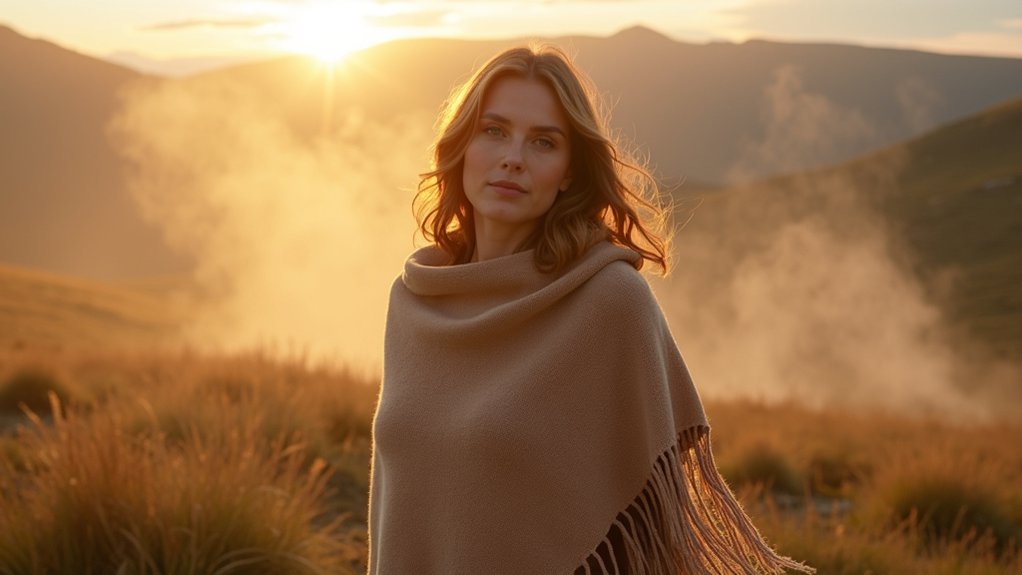
How does one navigate the alpaca poncho market as a first-time buyer? Compare pieces by fiber content, density, finishing, and how the fabric behaves when you move it (drape vs. stiffness). Price varies with those inputs and with the number of intermediaries involved.
Fit guidance proves essential since ponchos don’t follow standard sizing. Most designs feature one-size-fits-most construction, draping loosely from shoulders to hips. Buyers should consider their height and preferred length before purchasing. Arm openings vary by style - some offer slits while others remain open-sided.
First-time buyers should examine fiber content carefully. Pure alpaca can feel great but may stretch if the knit is loose; blends can add structure. Use fiber content as a starting point, then judge construction.
A useful companion read is the alpaca overview.
Related guides
- Compare it with the poncho weaving notes.
- Use the handwoven pattern guide for a nearby point of comparison.
- Pair this topic with the alpaca and llama fiber comparison.