Ponchos
Traditional Poncho Weaving: What to Notice
A guide to poncho construction, weave balance, and the structural details that shape quality.
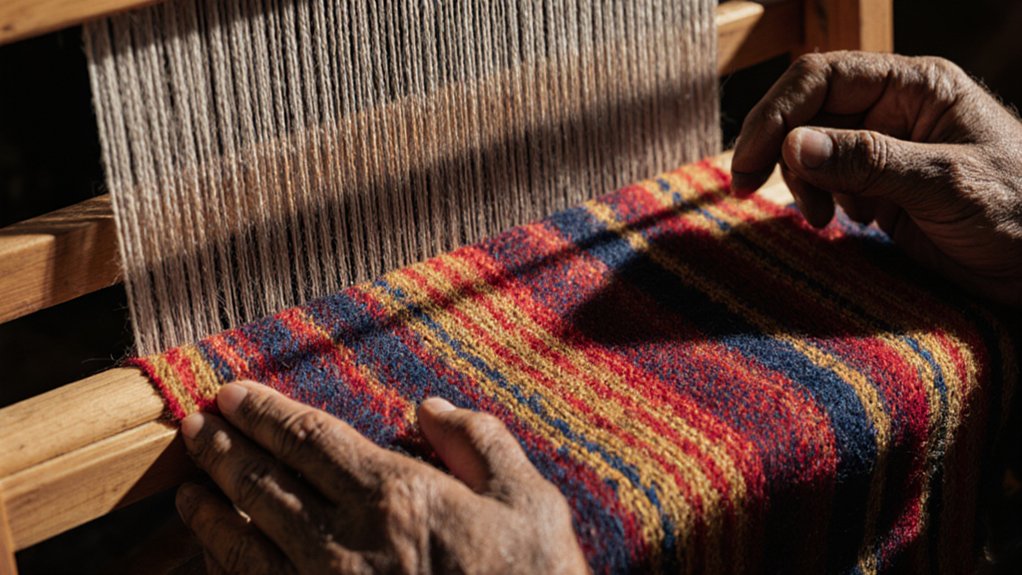
Distinguishing a traditional poncho from mass-produced alternatives is mostly about structure: tension, fiber, edges, and finishing. The telltale signs are not always obvious, but they become easier to notice once you know what to check.
For broader context, browse the Poncho guides.
Handmade vs. Machine-Made: Spotting Authentic Traditional Ponchos
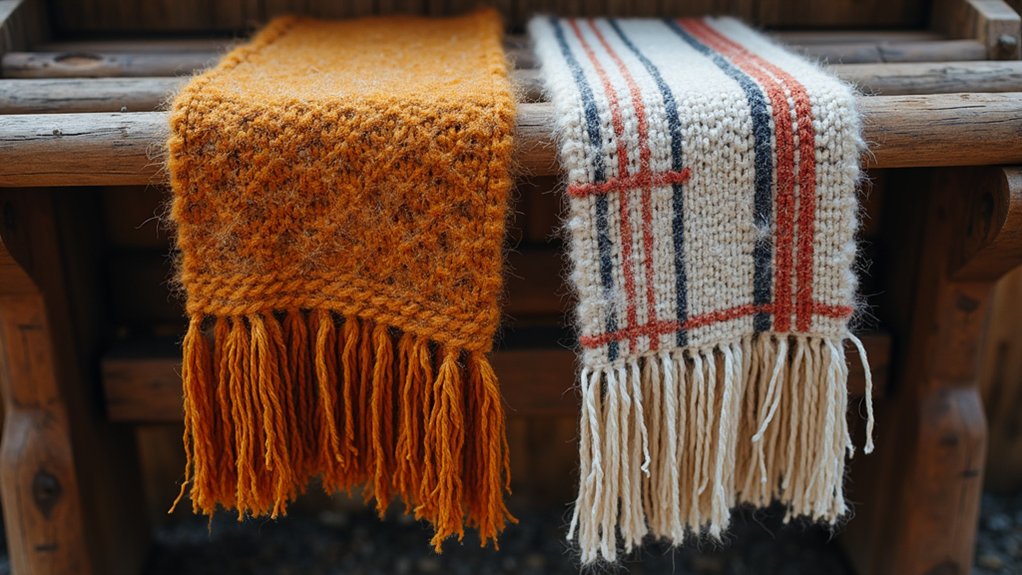
Traditional ponchos reveal their origins through telltale signs that distinguish handwoven pieces from factory-made alternatives. Handwoven authenticity shows in irregular patterns, slight variations in tension, and visible knots where artisans joined new threads. Machine-made versions display uniform stitching and perfectly symmetrical designs throughout.
Examining the poncho’s edges provides essential clues. Hand-finished borders often feature uneven fringe lengths and natural fiber inconsistencies, while factory edges appear mechanically cut and identical. The fabric’s texture differs too - handwoven textiles feel denser with subtle thickness variations.
Vendor verification strengthens purchasing confidence. Reputable sellers provide provenance details, including the weaver’s community and creation timeline. They’ll explain regional weaving techniques and answer specific questions about materials used. Buyers should request close-up photographs showing construction details before committing to purchases.
Wool and Fiber Quality in Traditional Ponchos
Beyond construction methods, the quality of fibers determines a poncho’s warmth, durability, and authenticity. Traditional weavers select wool based on sheep breed characteristics, with merino offering softness while churro provides strength and water resistance. Highland breeds produce coarser fibers suited for outer garments that withstand harsh weather.
Fiber processing greatly impacts the final product’s quality. Hand-processed wool retains natural lanolin, enhancing waterproofing and insulation. Artisans clean, card, and spin fibers using traditional methods that preserve their integrity. Machine processing, while faster, often strips beneficial oils and can damage fiber structure.
High-quality traditional ponchos feature wool with consistent crimp, elasticity, and loft. The fiber’s diameter affects texture - finer wool creates softer drapes, while thicker fibers increase durability. Examining these characteristics helps identify genuine craftsmanship.
Why Tight Weaving Indicates Superior Craftsmanship
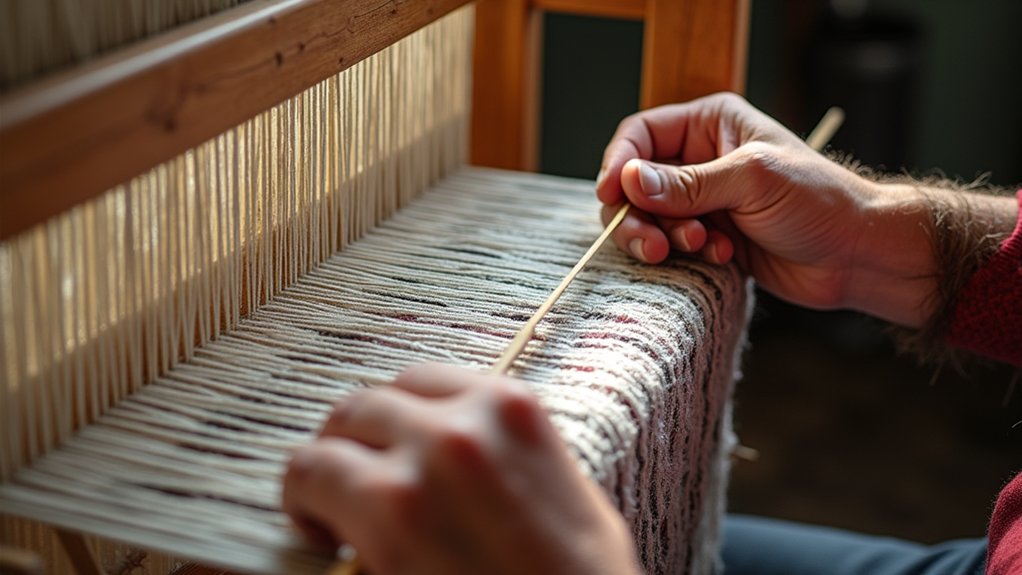
Skilled weavers compress fibers tightly during the weaving process, creating fabric that resists wind and holds up over time. Weave density is a useful quality signal because it is hard to fake quickly: consistent tension across the full width usually means practice and care.
Loose weaving is not automatically “bad” (some pieces are meant to drape), but weak spots, uneven tension bands, and sloppy edges tend to show up sooner in real wear.
Backstrap vs. Treadle Loom Ponchos (What Changes)
Andean weaving uses multiple techniques. As a buyer, the practical difference is usually width and finishing:
- Backstrap weaving often produces narrower widths and can involve joins for larger pieces.
- Treadle looms can produce wider cloth more easily, but quality still depends on fiber choice and finish.
Neither method ensures quality on its own. Use technique as context, then judge the actual fabric in front of you.
What Geometric Patterns and Colors Actually Mean
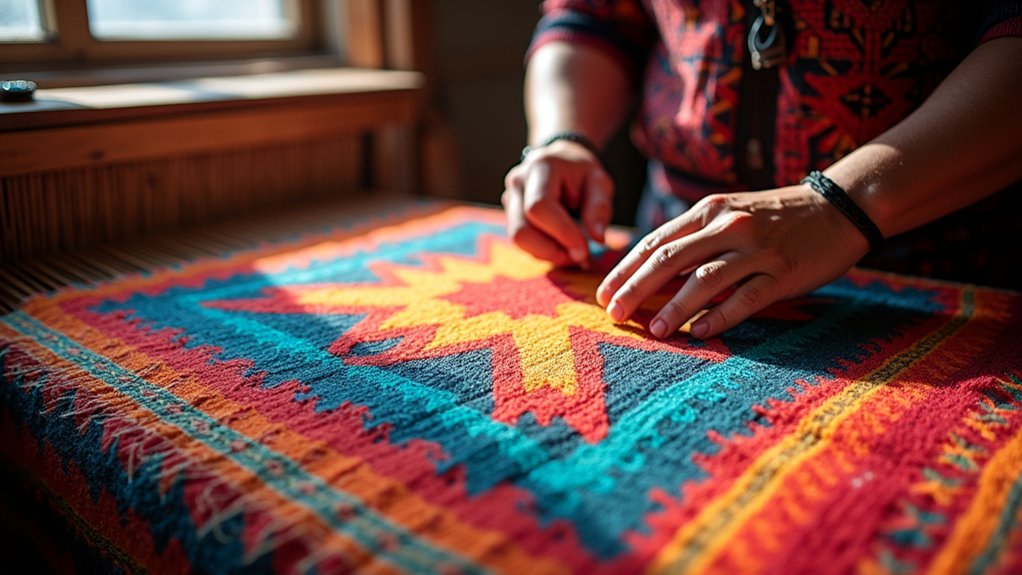
Many ponchos use recurring shapes: diamonds, steps, bands, and zigzags. Sometimes sellers will describe what a motif “means.” Meanings can vary by region and community, so treat symbolism as local knowledge rather than a universal decoding key.
For a practical buyer view, the more reliable questions are:
- Is the pattern woven into the structure or added afterward?
- Are pattern edges clean and consistent?
- Does the design repeat with stable rhythm across the garment?
Natural vs. Synthetic Dyes: How to Tell the Difference
How can collectors and enthusiasts distinguish between naturally dyed ponchos and those colored with synthetic alternatives? Understanding dye sourcing provides essential insights into a poncho’s authenticity and value. Natural dyes, derived from plants, insects, and minerals, exhibit specific characteristics that set them apart.
Key differences to watch for:
- Natural dyes can show depth and slight variation across a yarn batch (though they can also be even when done well).
- Synthetic dyes can look very uniform and bright, but uniformity alone is not proof of anything.
- The most reliable signal is usually the seller’s process explanation: what was used and how it was fixed to the fiber.
Experts recommend examining ponchos under natural light, where synthetic dyes often display an artificial brightness. Natural colorants typically produce softer, more muted tones that harmonize organically with the textile’s fibers.
Edge Finishing and Seam Work in Quality Ponchos
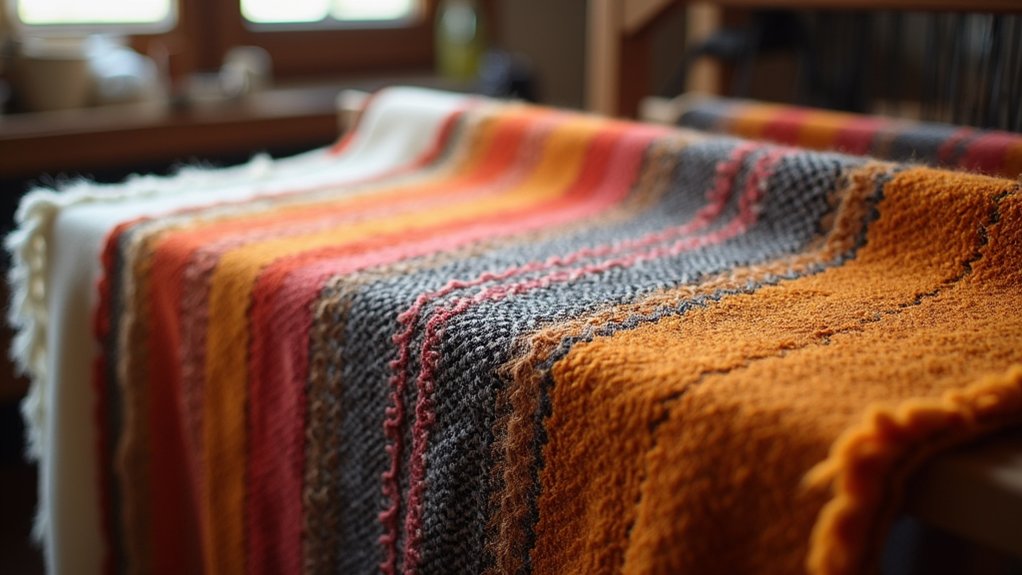
Beyond the visual appeal of dyes and patterns, a poncho’s construction quality reveals itself most clearly in its edges and seams. Traditional weavers employ specific fringe techniques that prevent unraveling while adding decorative elements. Knotted fringes, twisted cords, and braided edges demonstrate skilled craftsmanship. The hem finishing indicates whether a poncho was machine-made or handwoven. Quality handwoven ponchos feature tightly secured weft threads, often with supplementary binding to reinforce stress points. Seam work varies by regional tradition - some ponchos use invisible joining methods, while others showcase decorative stitching as part of the design. Examining these details helps buyers distinguish between mass-produced items and authentic artisan work. Well-executed edges remain intact through years of wear, while poorly finished hems fray quickly.
A useful companion read is the alpaca overview.
Related guides
- Compare it with the alpaca poncho guide.
- Use the handwoven pattern guide for a nearby point of comparison.
- Pair this topic with the alpaca and llama fiber comparison.