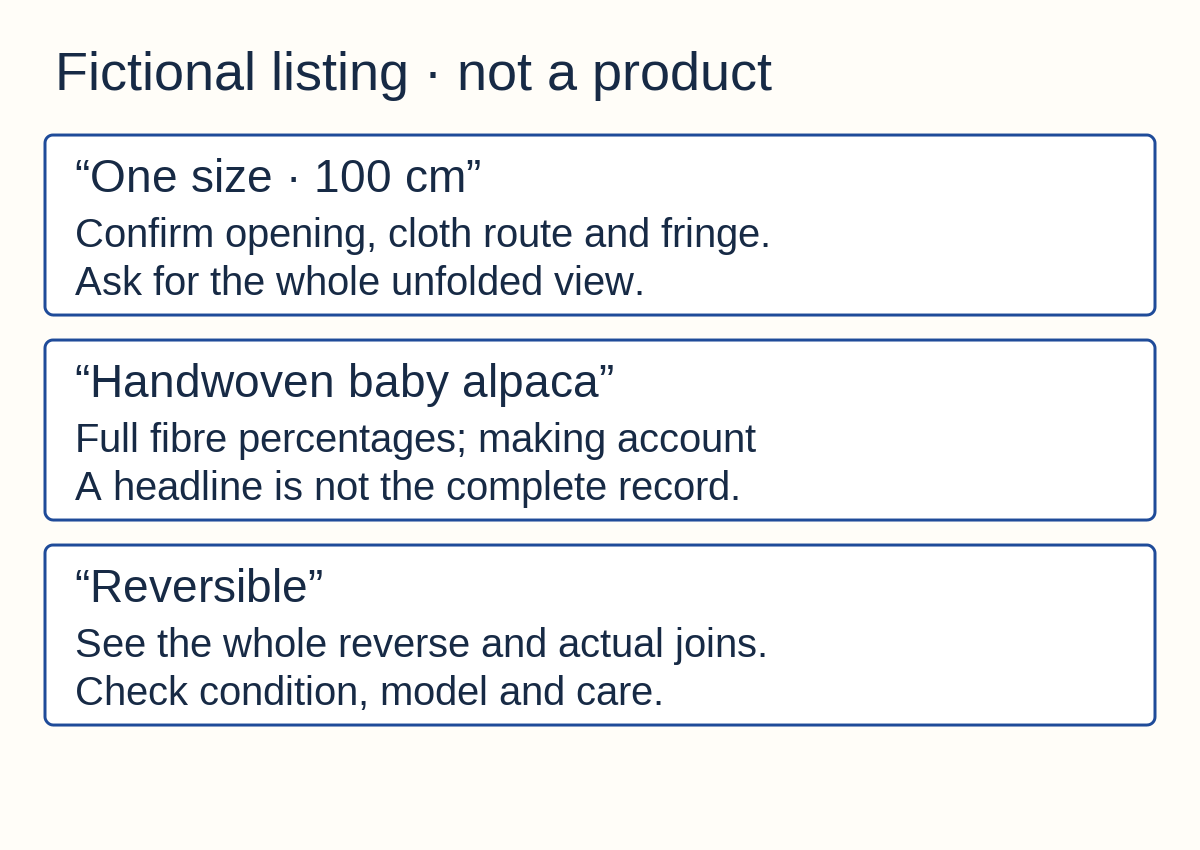
Imagine a fictional listing headed “Handwoven baby alpaca poncho, reversible, one size”, followed by “100 cm long” and one front photograph. You want it for everyday wear with a shoulder bag. Each attractive word leaves a practical question open: where is the opening, which length was measured, and what does the complete label declare?
Carry that same listing through shape, composition, construction, both faces and care. The aim is enough information to make a decision, including a reason to rule the piece out, without inventing a seller or product.
First find the opening and the edges
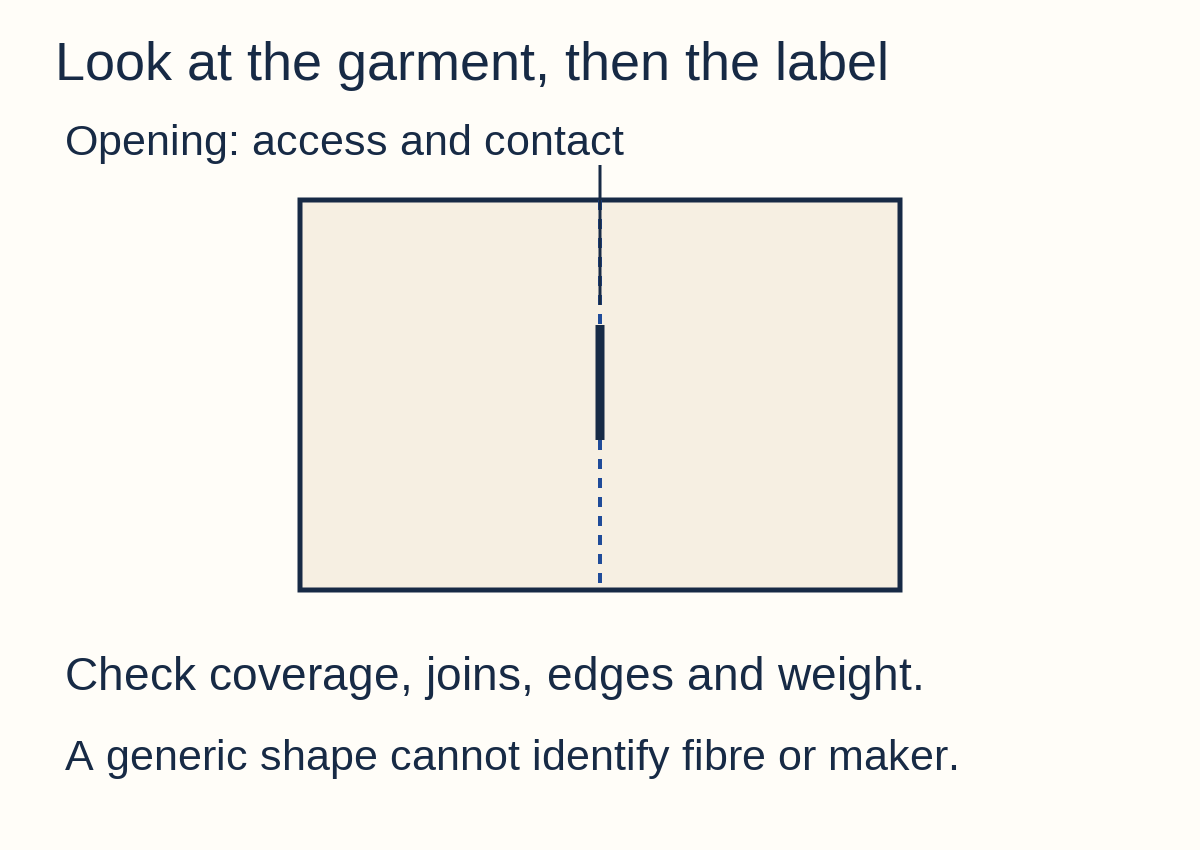
Ask for a fully unfolded view. A closed body with a head opening behaves differently from an open-front covering, whatever name appears in the listing. Hoods, collars, fastenings and joined panels also change how a piece goes on and hangs.
For a rectangular poncho, request the full unfolded width and front-to-back length, the head-opening dimensions, and the front neck-edge-to-hem length. Agree the landmarks if the shape is different. Measure fringe separately. “Length 100 cm” is ambiguous if one seller includes long fringe and another measures only the cloth.
The poncho overview puts shape and drape in a wearing context. Match a listing’s measurements with a covering you can handle at home, rather than translating “one size” into a promise of suitable coverage.
Read composition as a complete statement
The headline’s “baby alpaca” now needs a complete fibre statement, including any separately described lining. “Baby alpaca” is not a substitute for that list. If the seller describes different components, ask which statement applies to the body, trim and any knitted collar.
A regional or traditional name does not settle the material. CTTC’s account of Accha Alta describes a history involving synthetic fibres and a later return to sheep, alpaca and llama. That named account gives a reason to ask about the contemporary piece, rather than assume that all traditional ponchos share one composition.
Ask for the actual label and keep the seller’s written clarification with the order. A pleasant fibre description can be honest yet incomplete; a specific question gives the seller a chance to supply the missing information.
Give construction words something to point at
“Woven” describes cloth formed with warp and weft; “knitted” describes a different structure. A listing may combine the two in different components. Our traditional weaving guide explains the woven foundation, and the NPS weaving glossary supplies the basic warp, weft and selvedge vocabulary.
“Handwoven” adds a claim about how the cloth was made. A slightly uneven edge or a visible seam does not prove it. Ask which process was done by hand, who supplied that account and whether it relates to the actual item offered.
For “reversible”, ask what that means in use. Are both faces intended to be worn outward? Where are labels, joins and fastenings? Two attractive photographs might show a genuinely two-sided design, or simply the front and back of one intended outer face. A full reverse view resolves more than the adjective.
Separate colour and pattern from their explanation
“Natural” might refer to fibre, an undyed colour or a dyestuff. Ask the seller to finish the sentence. If colour matching matters, request another view under ordinary even light or a physical sample where feasible; a screen cannot promise an exact match.
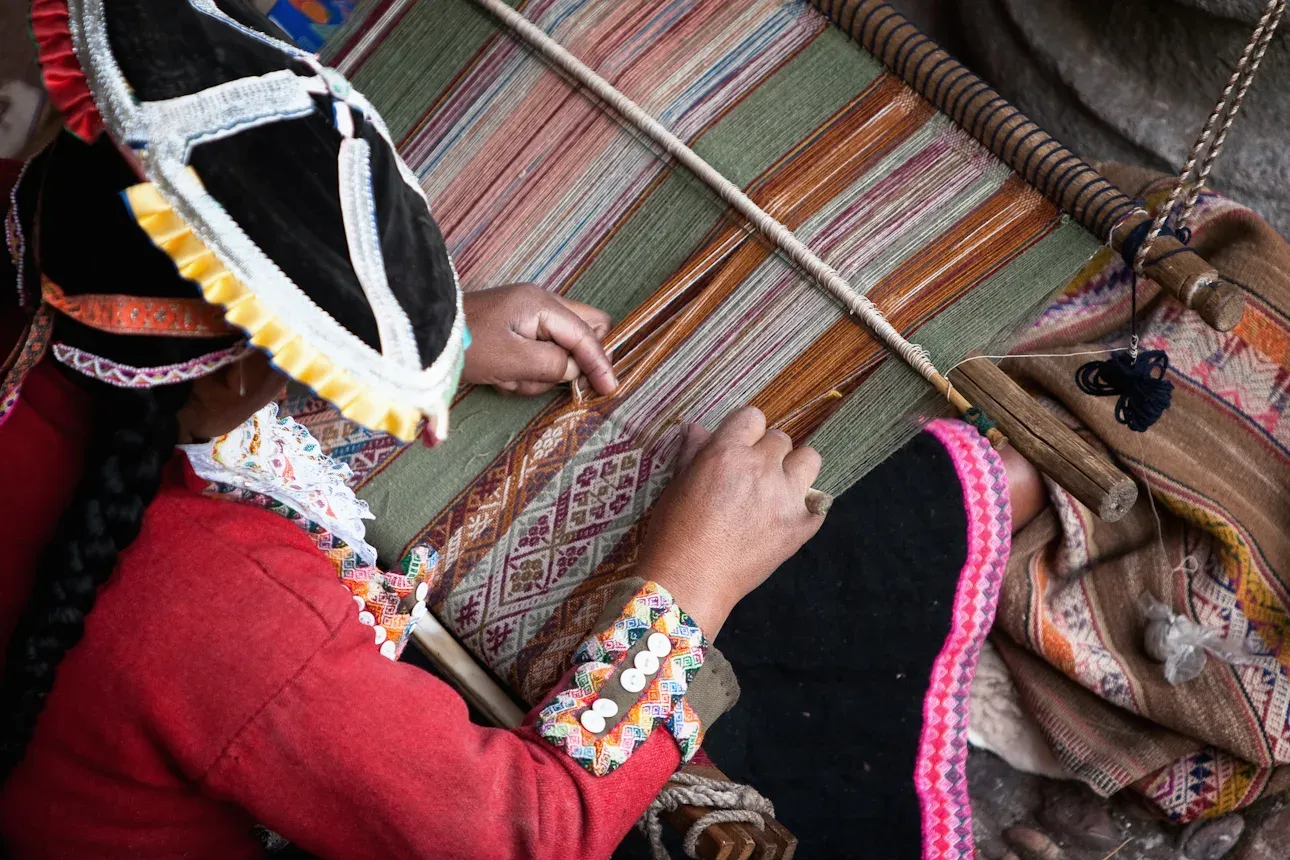
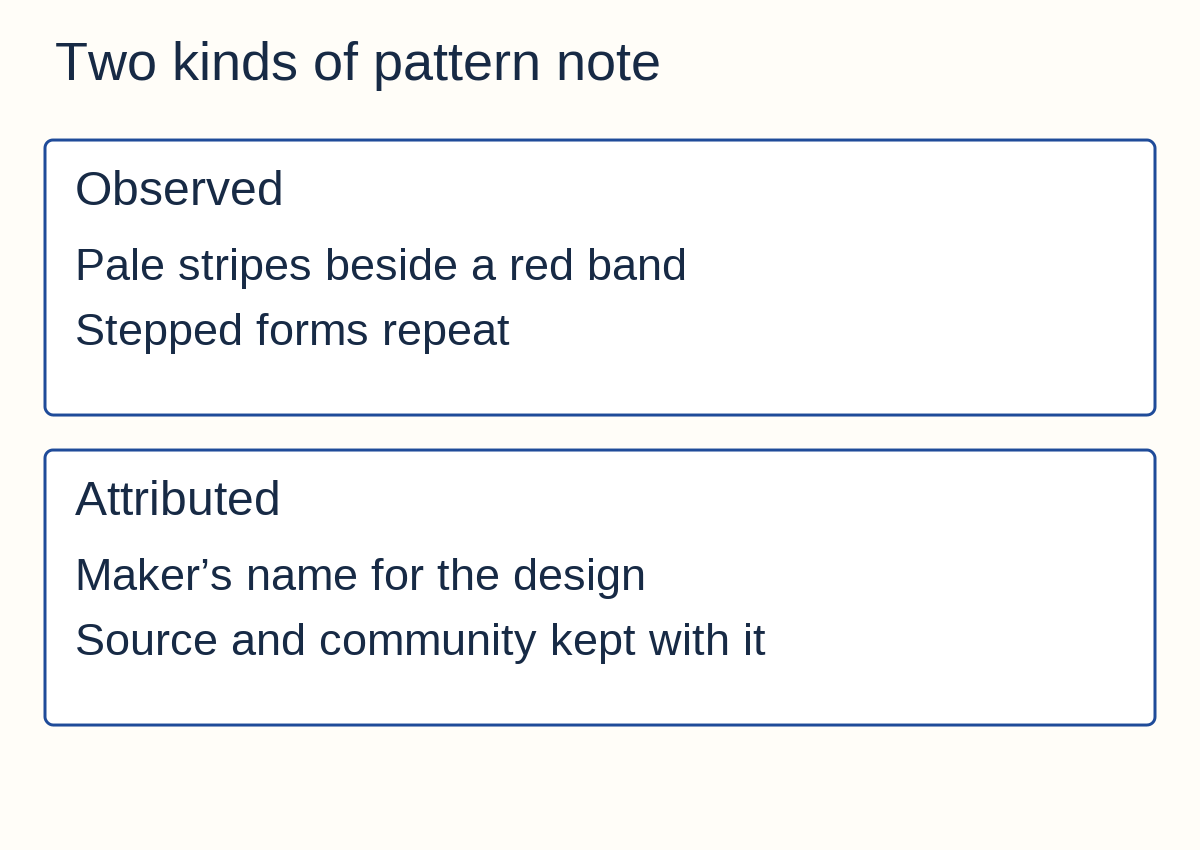
For a cultural explanation, ask for the maker or source of the account and its place. The pattern-reading guide separates observable design from attributed meaning. A motif name does not verify composition or establish a date.
Work one imaginary listing into a decision
The invented 100 cm listing has yet to explain how its opening and drape will work with your shoulder bag. The next useful request is not “Is this good quality?”
Ask: “Could you show the whole reverse and the head opening, measure the cloth without fringe, and confirm the full composition and garment mass?” Add an inside view of the shoulder or join if a strap will sit there. Explain the use so the seller understands why those details matter.
Perhaps the answer shows a heavier piece with an opening too small for your preference. The description has then done useful work, even if you decide against buying. More information is valuable because it can rule an item out as well as in.
Finish with the transaction and care
Confirm that the photographs show the item you will receive, or understand what variation is expected if it will be made to order. Read the condition statement, delivery arrangements and return terms before paying.
Obtain clear care instructions for the cloth and any attached collar or lining. Sol Alpaca’s supplier page illustrates why the fibre name alone is insufficient: it gives a dry-cleaning recommendation alongside washing advice. If the care label and seller’s suggested method conflict, ask them to resolve that for this garment before closing the purchase.