If you already have a pair of wool socks that works, use it as the reference when considering alpaca. What would you like to change: the feel, bulk, cuff, care routine or a particular wearing problem? A comparison with a clear purpose is more useful than choosing whichever fibre has the stronger warmth claim.
In ordinary shopping conversation, “wool socks” often means sheep wool, including Merino. This article uses that meaning for the comparison. Alpaca is a different animal fibre, although labelling terminology can be broader in some jurisdictions.
Confirm that the two descriptions mean what you think
The FTC’s US guidance permits certain specialty animal fibres, including alpaca, to be described as wool within its scope. Merino, meanwhile, is sheep wool. If a seller’s wording is simply “wool”, ask which material and full composition are intended rather than assuming an alpaca-free product.
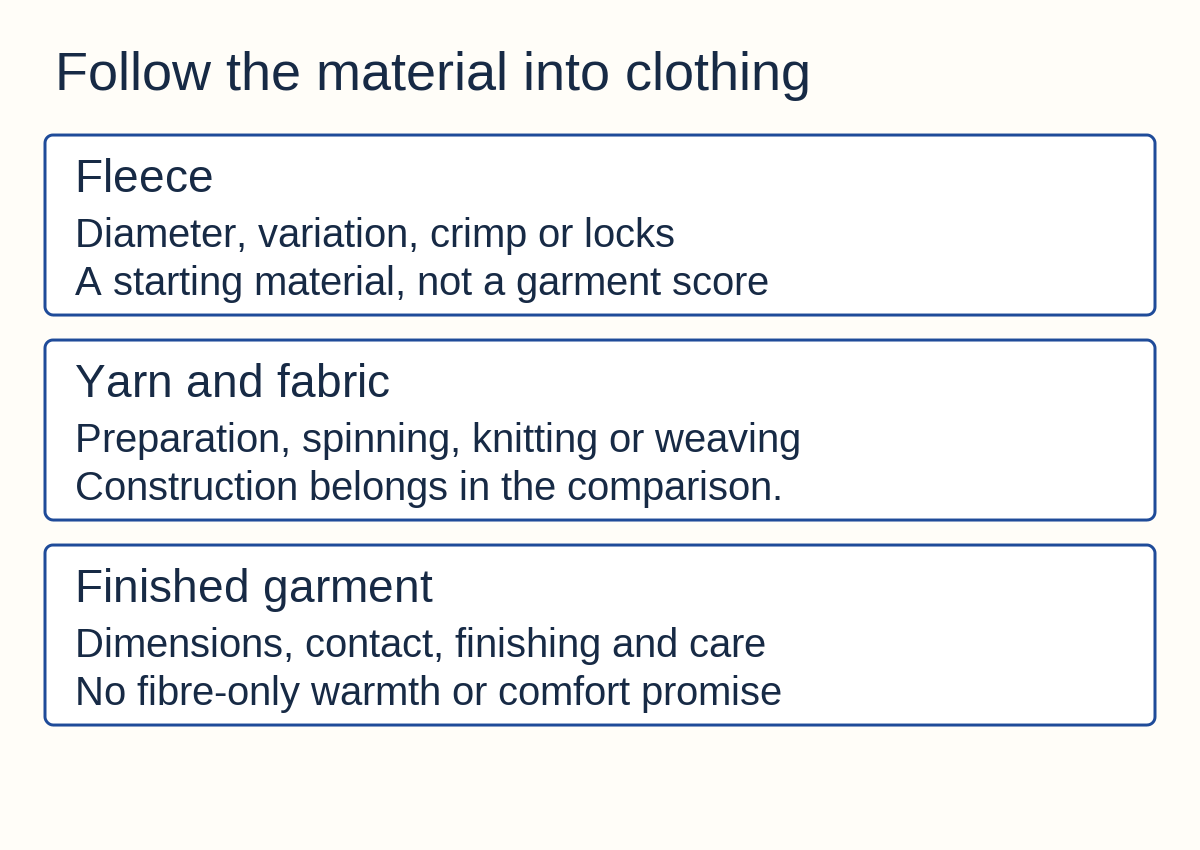
Both alpaca and sheep-wool socks may contain other fibres. Compare the complete products, including their yarn and construction. A higher percentage of the headline animal fibre does not identify the reinforcement, cuff behaviour or inside surface.
The alpaca wool guide explains why the material name is not a complete garment specification. For a sock comparison, the product’s intended use and actual construction need to accompany it.
Name the problem the replacement must solve
Write one requirement, such as ‘less bulky in these shoes’ or ‘a smoother toe closure’. AOA’s fibre account and Woolmark’s Merino account describe material characteristics; neither supplies matched sock results. Changing the headline animal fibre may leave a construction problem untouched.
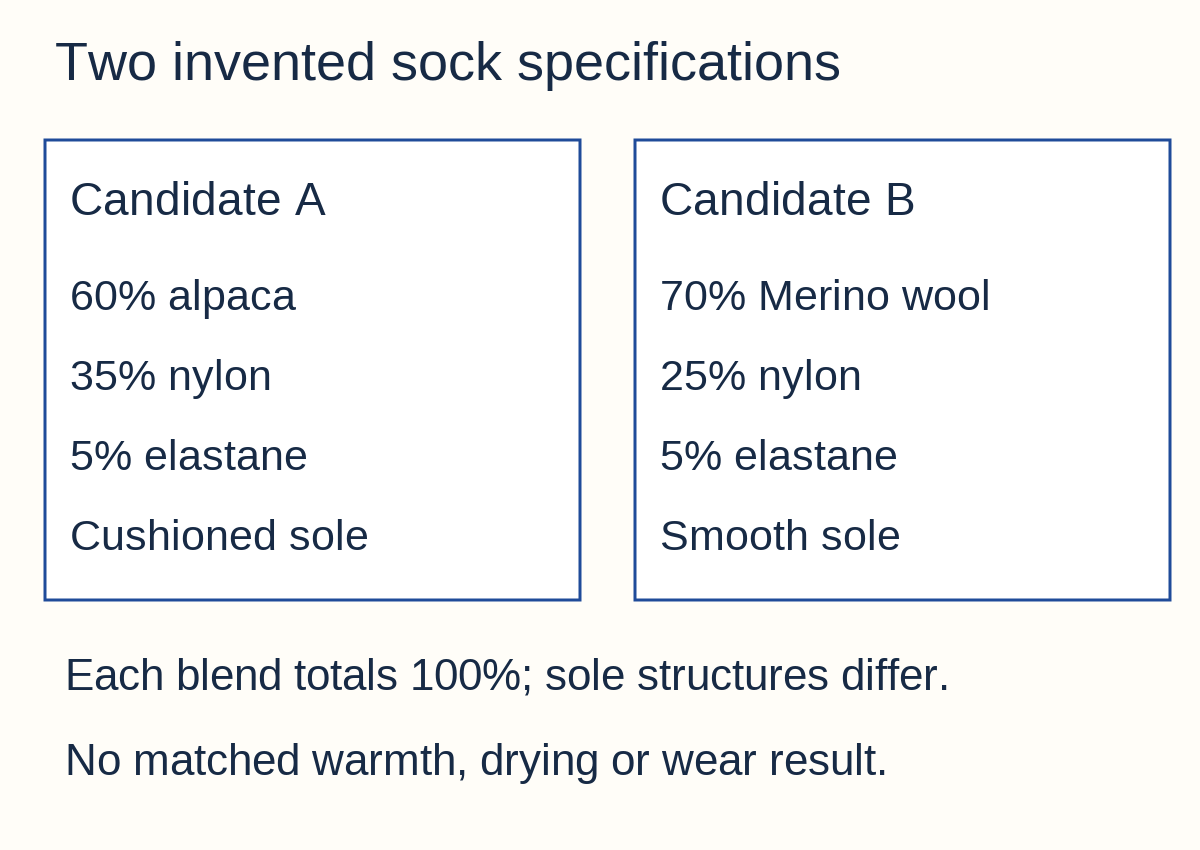
The illustration puts the two invented specifications below side by side. It leaves the performance result empty because neither composition nor sole description supplies it.
Compare two specifications without inventing the missing result
Here is a deliberately invented pair of listings, not real products or a performance trial:
| Field | Alpaca-labelled candidate | Sheep-wool candidate |
|---|---|---|
| Declared composition | 60% alpaca, 35% nylon, 5% elastane | 70% Merino wool, 25% nylon, 5% elastane |
| Sole description | Cushioned sole | Smooth, unpadded sole |
| Product-specific thermal result | Not supplied | Not supplied |
The declared ingredients and sole construction differ. Nothing in this record establishes which pair is warmer, dries faster or lasts longer. Even an observed difference in bulk would not isolate the effect of alpaca versus Merino, because the sole structure changes too.
For a shoe with little spare room, thickness becomes a practical constraint. Request information about actual thickness and try the intended sock-and-shoe combination under the seller’s terms. REI’s sock guide treats cushioning, height, fabric and fit together. Our accessories guides are the current starting point for that wider selection; this checklist’s job is to identify what the comparison does and does not establish.
Ask for evidence against the requirement
For a ‘warmer’ or ‘drier’ promise, ask which sock was compared, using which method and conditions. A testimonial about another boot and activity does not fill the empty results row. None of the sources here supplies matched alpaca and sheep-wool sock tests.
For a practical requirement, a simpler answer may suffice: an inside view of the toe closure, the cushion layout or an instruction for the exact model. Keep that answer with the requirement rather than collecting unrelated fibre benefits.
Keep care permission attached to the model
PAKA gives category-specific instructions for its own socks and knitwear. Use the instructions for the offered pair, then compare the routine you can manage; the care overview helps resolve unclear wording. The reason to buy is a documented answer to your requirement, not a species-wide winner left unsupported by the two listings.