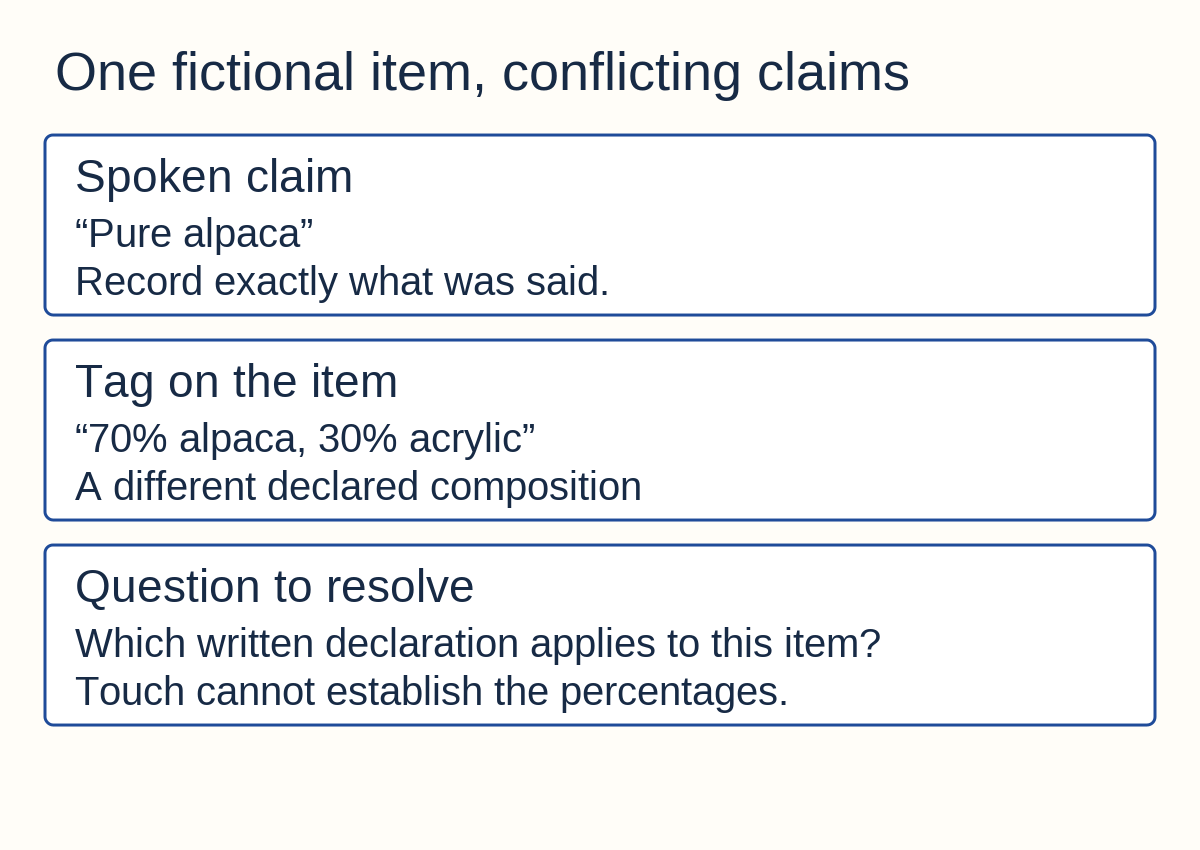
A seller says “pure alpaca”, while the item’s tag reads “70% alpaca, 30% acrylic”. This hypothetical disagreement is the useful starting point: write down both statements and ask which declaration applies to this piece. A pleasant feel in the hand will not resolve the percentages.
Follow the claim through the seller’s evidence, the connection to the product and the remaining unknown. The decision may be a clearer purchase record or a pause before paying, rather than an improvised authenticity test.
Write down the exact claim
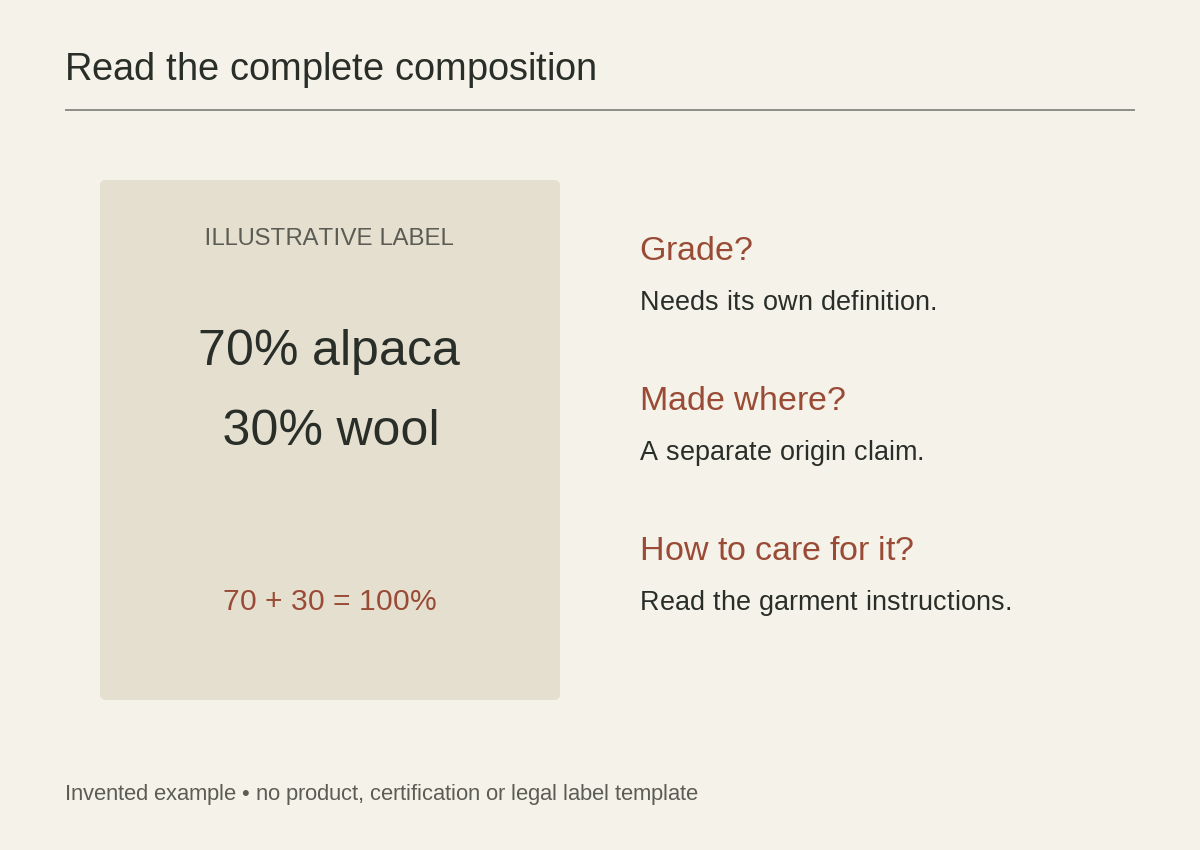
‘Alpaca’, ‘alpaca blend’ and ‘100% alpaca’ are different descriptions. A grade word adds another question rather than replacing composition. Ask whether the complete percentages appear on a sewn-in label, a product record or only in a verbal explanation.
If the written and spoken accounts disagree, request clarification before paying. Do not silently select the more attractive version. The alpaca blend reference explains why clear percentages are more useful than treating every blend as a poor material.
Ask how the seller knows
A maker may know the yarn they purchased. A retailer may rely on a supplier’s product information. An organisation may keep records connecting products with particular materials or artisan groups. These are different sources of information and should be described accurately.
Awamaki’s FAQ, for example, distinguishes the materials it uses in its own product categories and explains its artisan relationships. That account cannot be extended to a different seller simply because the goods look similar or use the same language.
| Information offered | A useful next question |
|---|---|
| A composition label | Does it belong to this exact item or product range? |
| A supplier document | How is this piece connected to that supplier or lot? |
| A grade name | Which classification or definition is being used? |
| A general certificate image | What scope, date and product does it cover? |
| A verbal maker account | What does the maker know directly, and what was supplied to them? |
This is a documentary conversation, not an independent certification process performed by the buyer.
Do not turn a sensory impression into a percentage
A fabric that feels soft is one you may enjoy touching. It is not automatically pure alpaca. Likewise, sheen, warmth in the hand or visible hairiness cannot establish an exact blend.
The Alpaca Owners Association describes variable fibre characteristics and the distinction between Huacaya and Suri. That variability is another reason not to treat one remembered texture as a reliable species detector.
Avoid destructive shop-floor tests or instructions to burn, pull or damage fibres from a garment. Proper material analysis is a specialised process, and even a genuine test report needs a connection to the product being sold.
Work through a conflicting claim
For the spoken-versus-tag disagreement introduced above, point to the exact words and ask which declaration applies to this item. A general photograph of alpacas or an unrelated certificate cannot settle the conflict.
If the answer is that the tag is wrong, ask for an accurate written composition attached to the item or purchase record. That is still the seller’s declaration, not independent laboratory proof. If the inconsistency remains unresolved, decide whether you are comfortable buying an uncertain composition; do not promote the verbal claim into a verified percentage.
A short record can be enough:
- Claim: the precise written or spoken description.
- Evidence offered: label, item-linked supplier record, report or verbal account.
- Connection: how the evidence identifies this product or lot.
- Unknown: missing percentages, unclear grade or unresolved disagreement.
Keep an item photograph or reference with those notes so two similar-looking products do not become mixed up later.
Keep provenance separate from composition
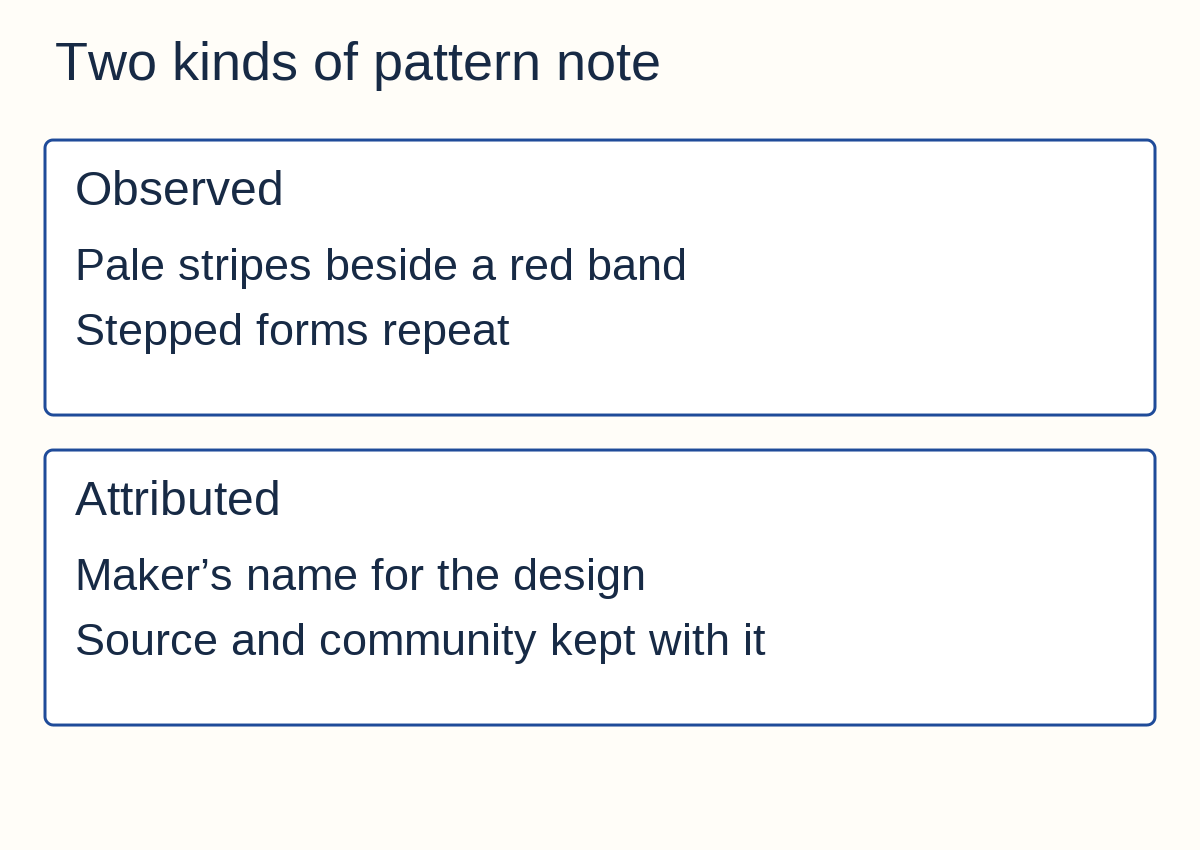
A textile can have a well-attributed maker story without a detailed fibre test. A fully specified fibre composition can appear on a garment with little maker information. Neither kind of evidence should be used to fill in the other automatically.
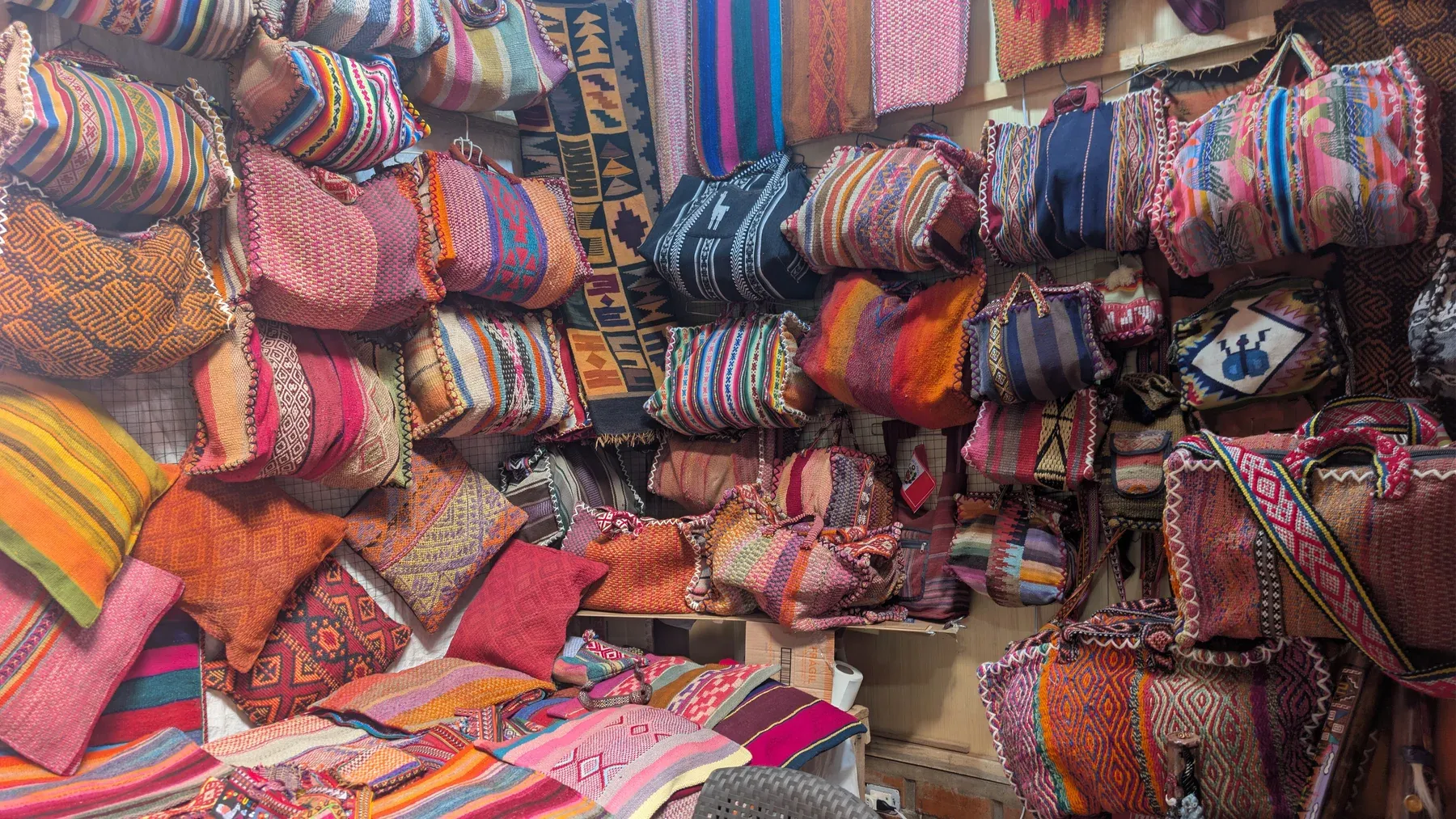
CTTC’s descriptions of materials and techniques in its communities show that Peruvian textiles can involve different fibres and processes. A location, a motif or a photograph of a loom does not establish the composition of every item offered there.
For the larger buying conversation, use buying textiles in Cusco. For visual and cultural questions, read understanding handwoven patterns.
Save an honest record
Keep the receipt, labels and product description. Record a seller’s statement as their statement unless supporting evidence establishes more. If documentation is not available, mark that limitation clearly rather than replacing it with an informal authenticity score.
Then make the ordinary garment checks: fit, finishing, care and intended use. If a particular composition is essential to the purchase, unresolved documentation is a reason to pause the purchase rather than substitute a touch test.