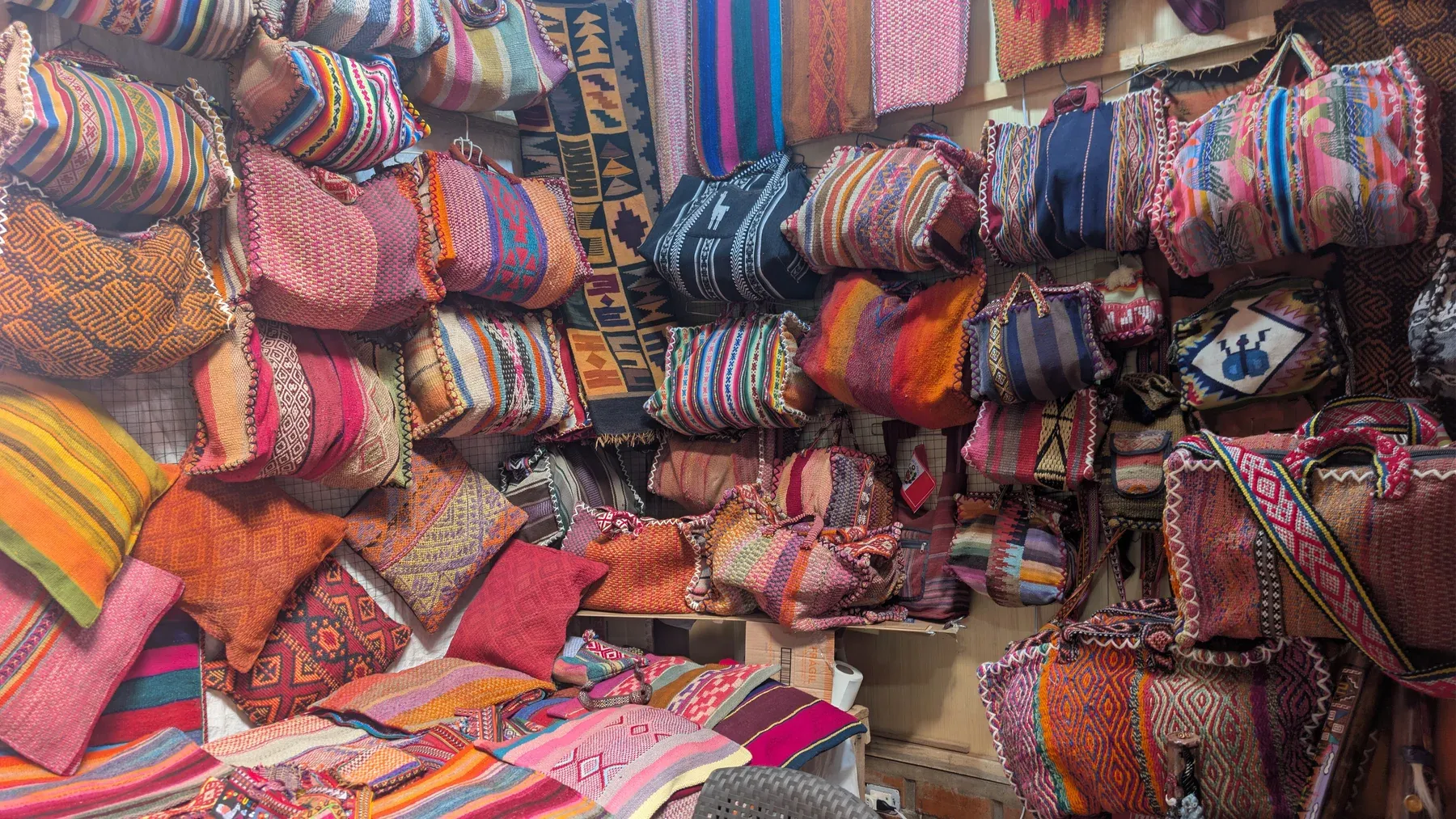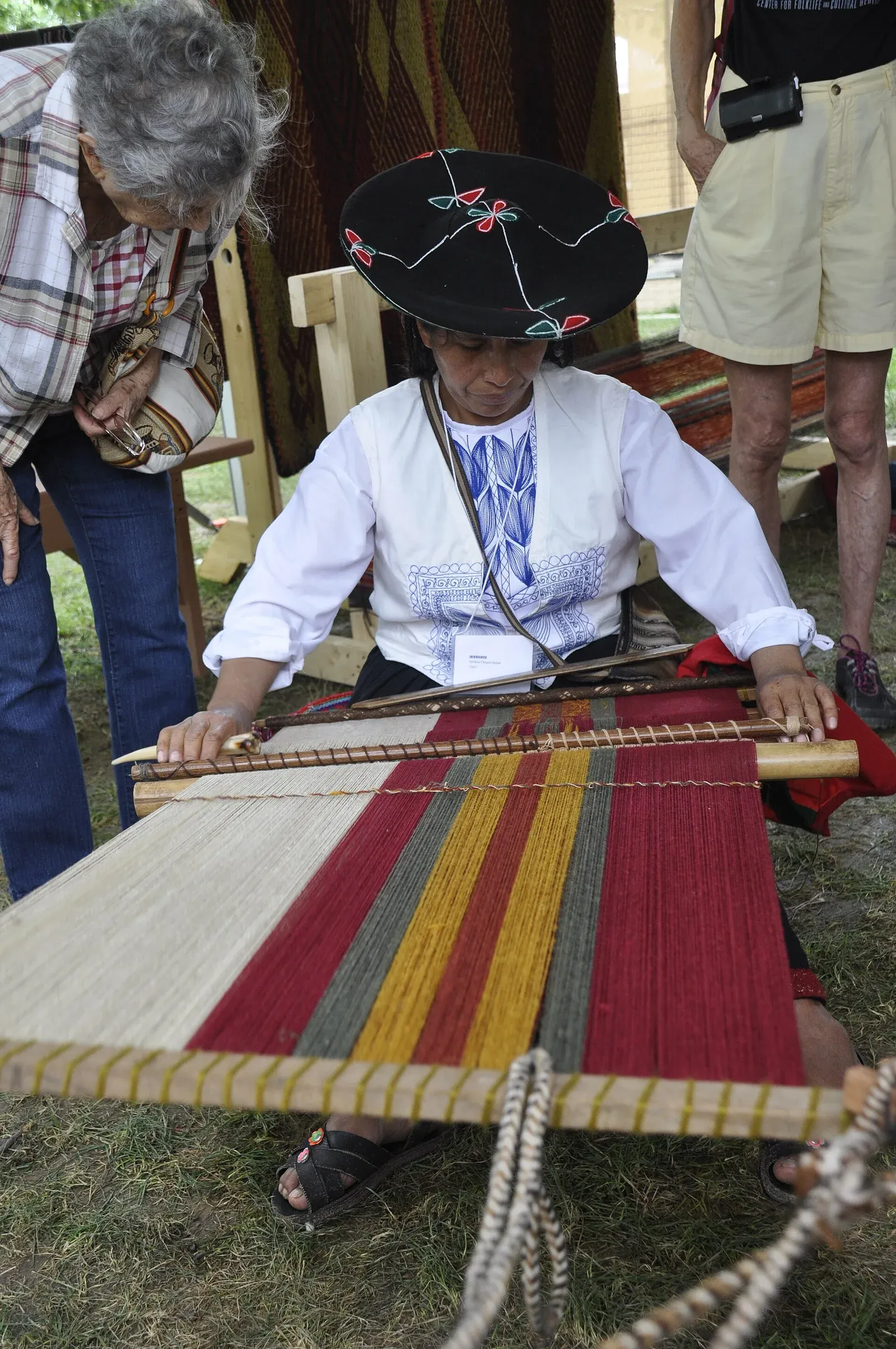
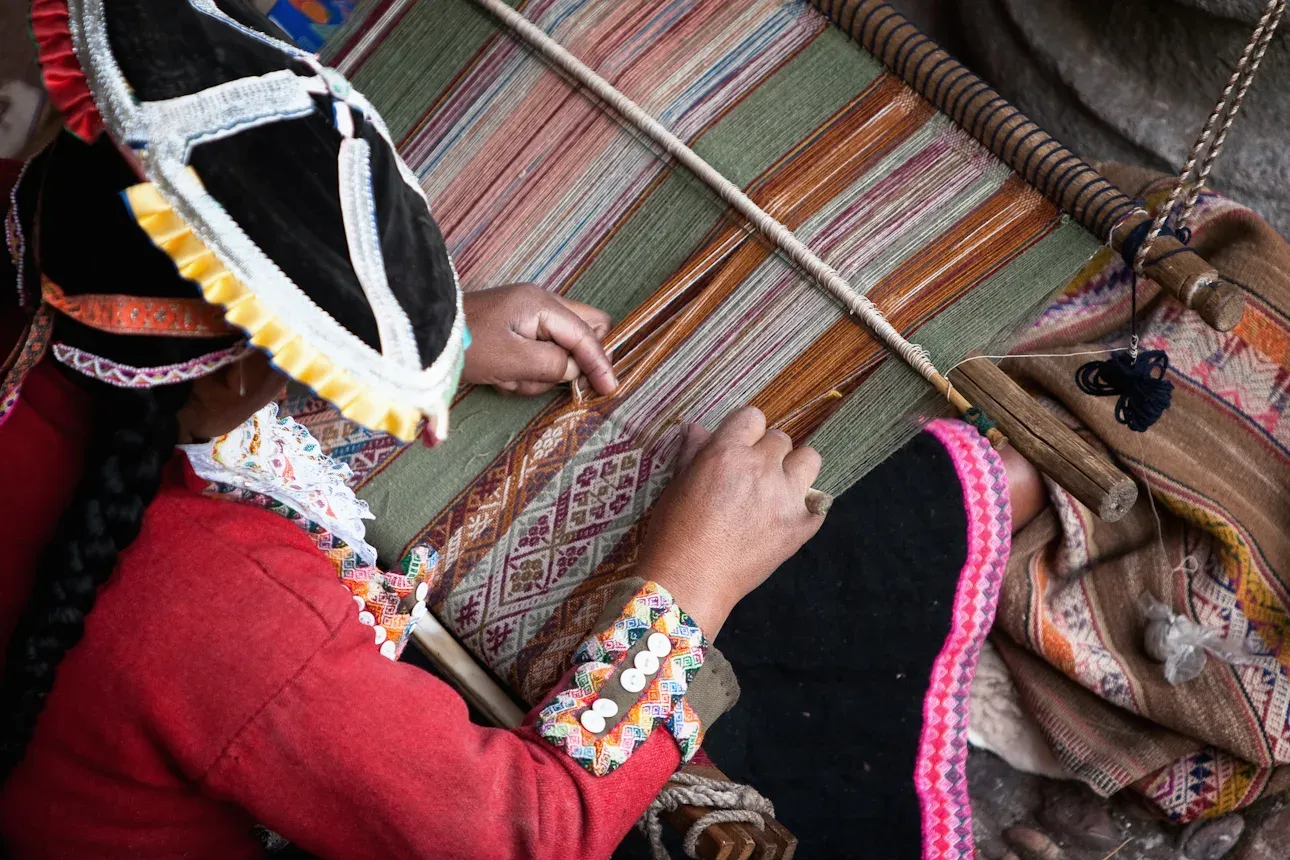
Awamaki describes two quite different ways to spend time with textile makers near Ollantaytambo: an artisan-led session in town and a visit to a rural weaving community. CTTC’s Chinchero account describes a weaving association, demonstrations and a shop representing work from several partner communities. “Buying in the Sacred Valley” can involve different relationships, not one standard market encounter.
Choose first what you want time for: selecting a finished textile, understanding a process or arranging a hosted visit. Then make the practical arrangements for that choice. Our Cusco textile buying guide covers the broader purchase questions; this guide looks more closely at the setting in which the exchange happens.
In Chinchero, follow the work beyond the demonstration
CTTC identifies Chinchero’s Away Riqcharicheq association and describes a history of recovering designs and natural-dye knowledge. That work gives a visit a subject to follow: how an inherited technique becomes a piece the association makes now. Its community page also discusses complementary warp-faced weaving and a border woven and attached at the same time. These are specific things a visitor can ask to understand, rather than treating a demonstration as a performance with one obligatory purchase at the end.
The shop described on that page includes work from CTTC’s ten partner communities. That matters when reading a label: the place where you buy a piece may differ from the place where it was made. Ask which association or maker is responsible for the textile you are considering.
The source gives visiting information, but check the organisation’s current arrangements before travelling. This is not a tested itinerary or an independent assessment of every weaving centre in Chinchero. A shared town name does not make separate businesses one organisation.
If a technique interests you, the weaving guide supplies useful vocabulary for a conversation about warp, weft, pattern and finishing. You can ask a focused question without expecting a short visit to teach you a complete craft.
Around Ollantaytambo, distinguish town and community visits
Awamaki’s artisan-visit page describes a town-based session with partner artisans, conversation, demonstrations, participation and an opportunity to buy their textiles. Its wider programme also describes visits to rural communities above Ollantaytambo. These are the organisation’s own descriptions, accessed in October 2026.
Ask where the activity actually takes place, how you reach it and what is included. Confirm the language or interpretation arrangements, who hosts the session and whether the visit includes time for purchases. Those answers are more useful than assuming every experience has the same journey, schedule or level of participation.
The host’s role changes the exchange. Awamaki says its tourism arrangements compensate artisans for hosting whether or not visitors buy. That separates payment for teaching or hosting from the price of an object. Ask how that works for the particular activity you book, instead of treating a purchase as the only way a host’s time can be recognised.
No booking, journey or purchase was made for this article. Programme details can change; use the linked organisations’ current information for the actual visit rather than treating our source-reading date as a reservation.
Let the textile have its own conversation
Move from the hosted session to one textile. Establish its intended use, measurements, material declaration, construction and care; the making conversation now has a particular object to attach to. Keep those questions attached to the actual piece even if you have just watched a different object being made.
Awamaki’s FAQ, for example, distinguishes sheep-wool woven textiles from alpaca knitted products in its range. It is a useful reminder to ask “What is this made from?” rather than letting “Peruvian textile” or a nearby alpaca demonstration supply the answer.
A good conversation can begin with one detail: a border you noticed, a change of colour or a join between panels. Ask who made that part and how it relates to the rest. If an explanation needs translation, allow time for it rather than replacing an unfamiliar term with the nearest English word.
Price the object and respect the setting
Discuss the complete item and any included work before discussing a reduction. Ask whether alterations, packaging or delivery would change the price. The fair-pricing guide helps compare equivalent work without imposing an invented “correct” market price.
Awamaki’s social-impact account describes host groups setting availability, organising rotations and agreeing photography guidelines. Ask before taking or sharing photographs. An invitation to a particular session is not an invitation into every nearby workspace or home.
If you choose not to buy, follow the agreed terms for the visit or demonstration. If you do buy, obtain a receipt and a usable description of the item, including any maker attribution and care instructions the seller provides.
Before leaving, consider how the textile will travel. Our packing guide covers support, fringe and stowing several pieces. Whether the visit took place in town or in a rural community, keep the host’s contribution and the textile’s account distinct. One records the time shared in learning; the other helps the next owner understand and care for the piece.