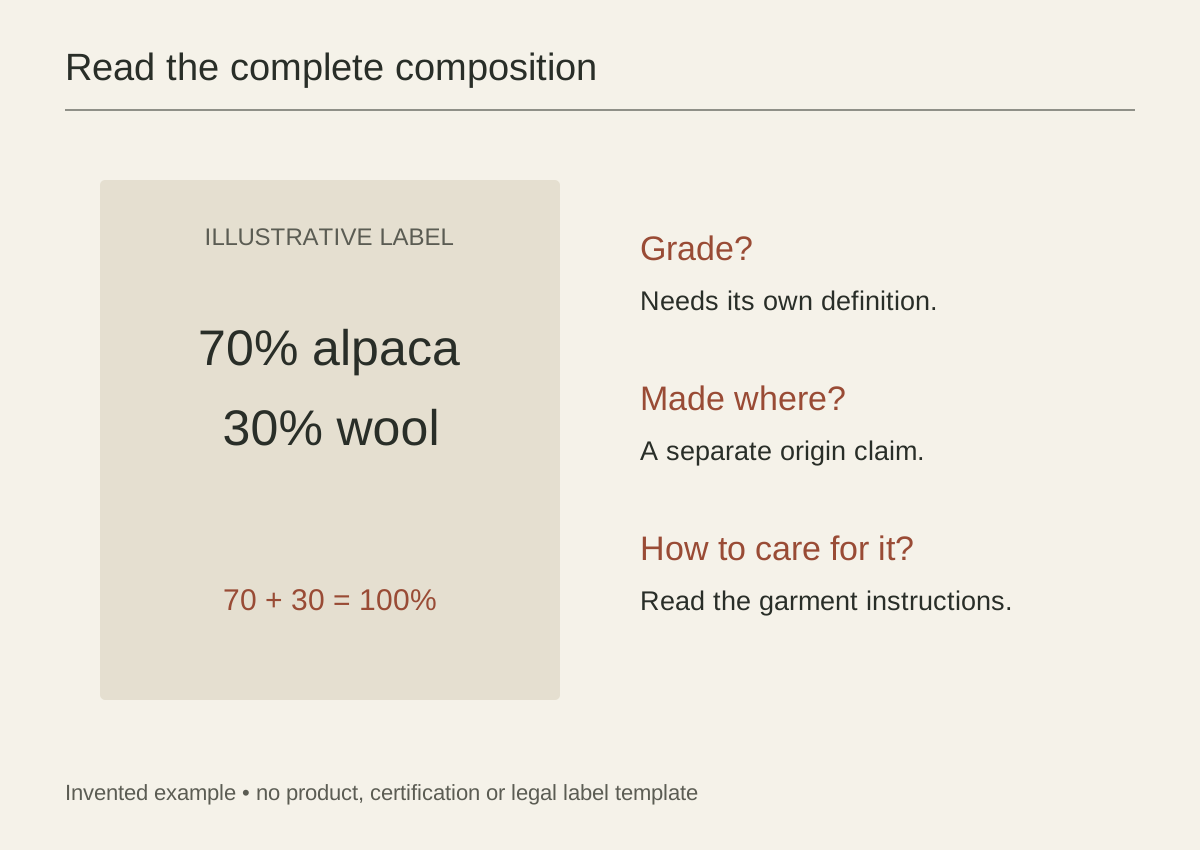
Two hypothetical listings offer “baby alpaca blend” and “70% baby alpaca, 30% wool”. The second gives a fuller composition. Neither tells you, by those words alone, which grading definition was used or the age of the animals.
Alpaca Owners Association describes Baby Alpaca as a commercial name for finer fleece grades; Sol Alpaca lists it as a named fineness category. Follow the two listings from that grade word to the missing definition, keeping composition and any first-shearing claim on separate lines.
A grade word needs a definition
Suppliers may describe fineness through familiar commercial names and micron values. Sol Alpaca’s published fibre table, for example, places named categories beside diameter information. That is evidence of the supplier’s terminology; it is not a worldwide translation key for every garment tag.
The Alpaca Owners Association’s U.S. fibre standard uses numbered micron spans and explicitly avoids assigning familiar commercial names because their meanings vary internationally. This is why two retailers can use a similar word without supplying directly comparable technical information.
If you want to compare grades, ask for the named classification or the supplier’s own definition. Avoid creating a numerical equivalence from a name alone.
One named example, with its limits
On the Sol Alpaca fibre page accessed for this guide, the supplier lists ‘Baby Alpaca’ at 21–22.5 microns. That is a concrete definition you can attribute to that supplier on that page. It should not be copied onto an unrelated shop’s label, or used to certify a garment that has no connection to that classification.
The useful question is: ‘Does your use of baby alpaca follow this definition, another named standard, or your own specification?’ A different answer needs its own documentation, rather than an automatic accusation that the seller is wrong.
Composition is another line on the label
The two listings now answer different questions. “Baby alpaca blend” leaves the companion fibres and proportions unanswered. “70% baby alpaca, 30% wool” answers that composition question more fully, while still leaving the grade definition to establish. Neither independently identifies a spinner, knitter or country of manufacture.
Ask for the complete fibre statement once, then keep it beside the supplier’s grade explanation. The alpaca blend reference develops the composition question without treating a blend as automatically inferior.
What the name cannot promise
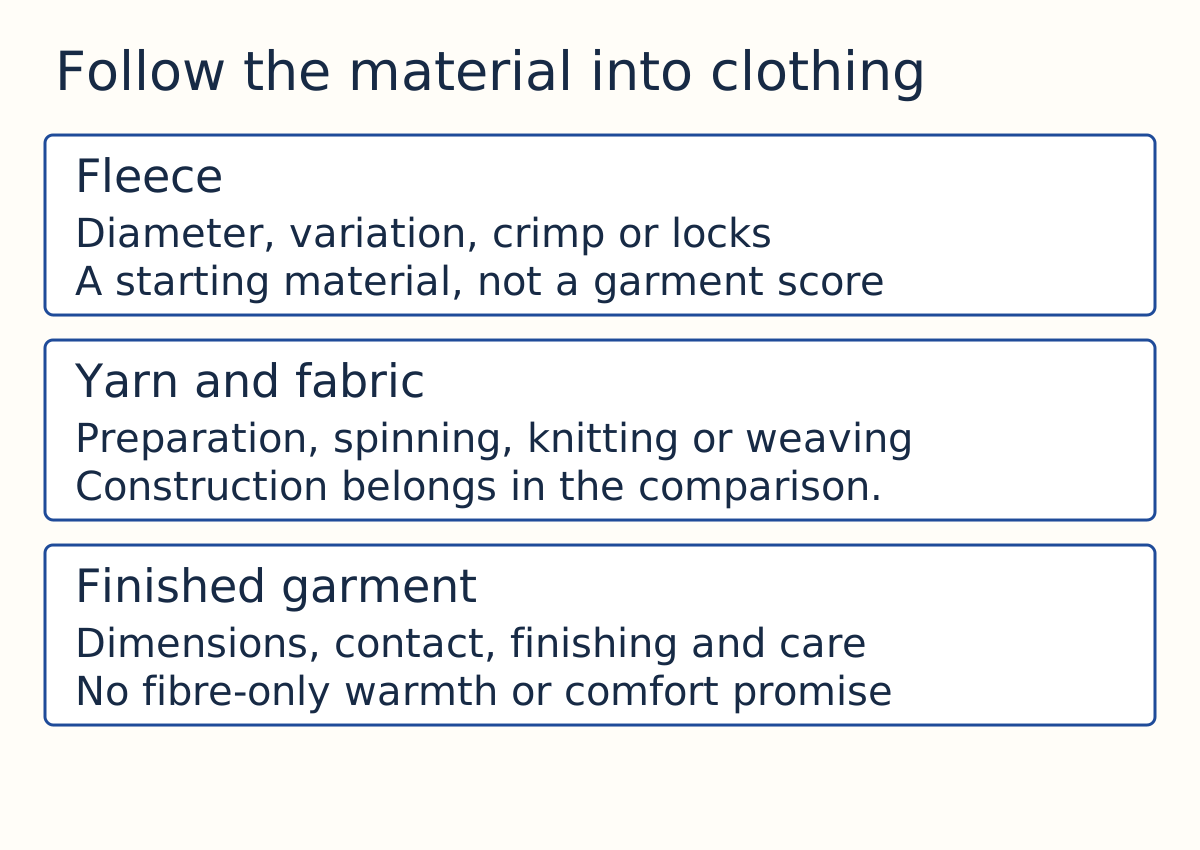
A grade word does not tell you the garment’s knitting gauge, finishing quality or stretch recovery. It also does not guarantee comfort for every wearer. The completed fabric, its construction and the way it contacts your skin still matter.
If you can inspect the piece, assess the actual surface and where it will touch your neck or forehead. Do not pull at fibres or perform a damaging shop-floor test. If buying remotely, ask about the fabric and the return arrangement instead.
The alpaca wool guide separates fibre characteristics from finished-garment claims. A reassuring label does not replace that comparison.
Keep the missing answer visible
For the first listing, the open question is composition as well as classification; for the second, it is the classification behind “baby”. Save the exact wording and the corresponding answer rather than sending both sellers a generic request for “better alpaca”.
A useful note is ‘seller describes the fibre as baby grade; no classification supplied’. That records the limit without silently turning a name into a fineness certificate. If a first-shearing claim matters to you, keep its evidence separate from both the composition and grade definition.
From the name to a purchase
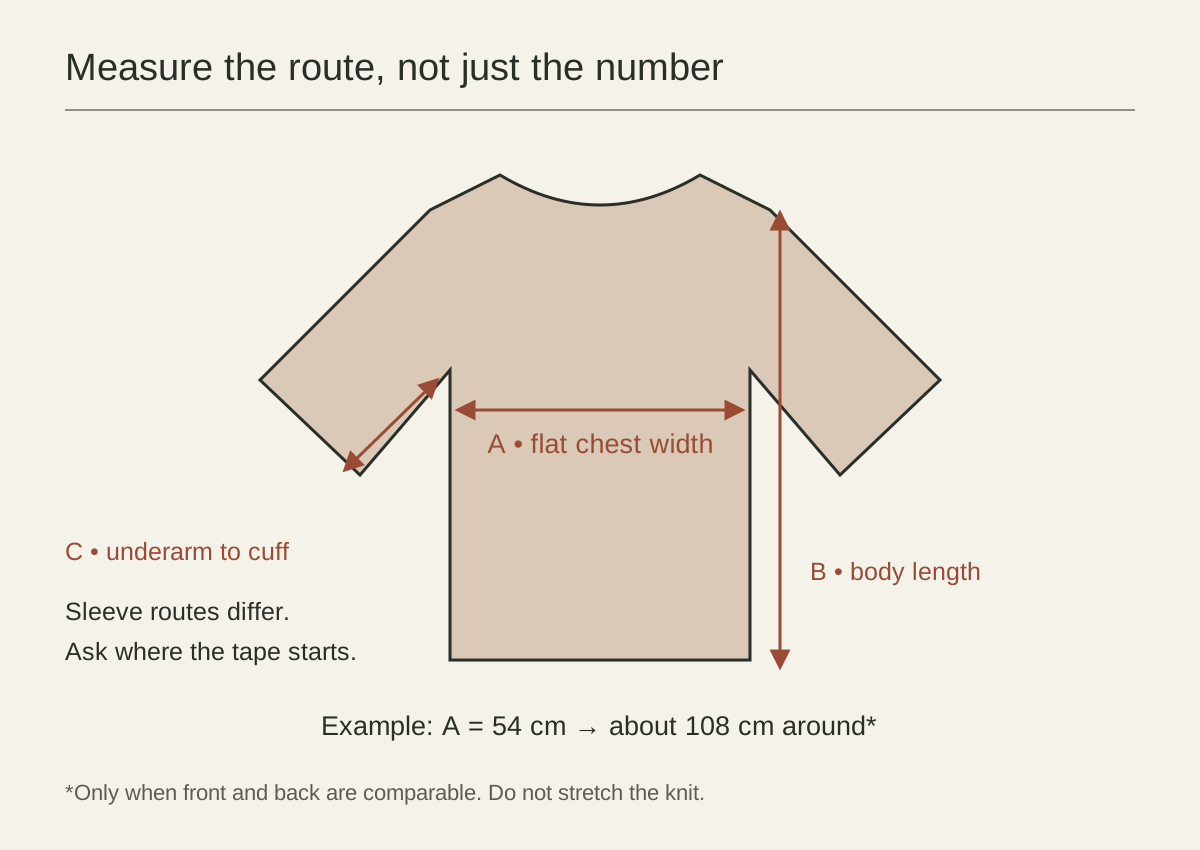
Once the grade claim is clear, return to the garment. Use the sweater sizing guide for dimensions. The baby label cannot settle sleeve fit or care; its useful contribution is the specific, attributed fibre description you have established.