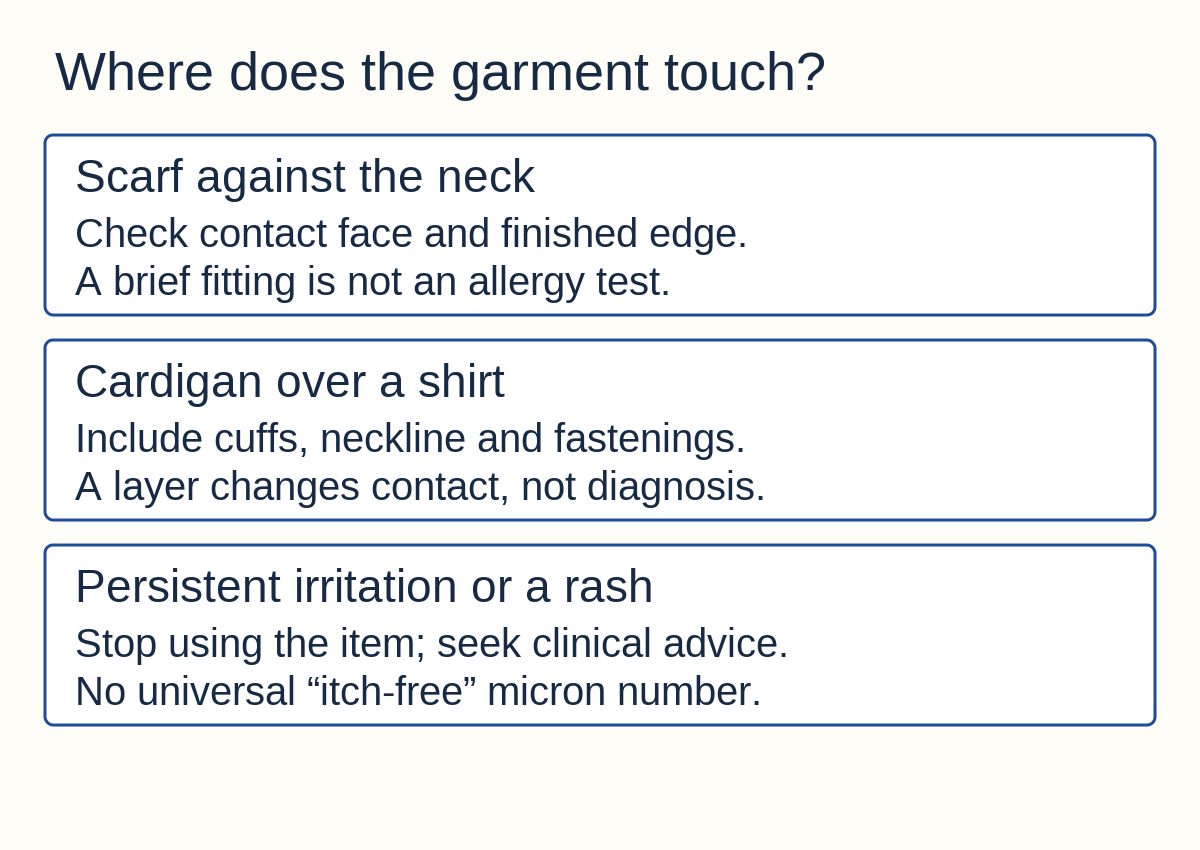
A scarf touches a bare neck; a cardigan sits over a shirt. In this hypothetical comparison, a similar pleasant feel in the hand leaves different questions about prolonged contact, neckline seams and cuffs. Start with where the garment will actually touch you.
Alpaca can feel comfortable to one wearer and prickly to another. The Peruvian alpaca guide explains the material; here the scarf and cardigan help distinguish an ordinary fitting from a medical question.
Softness is more than one number
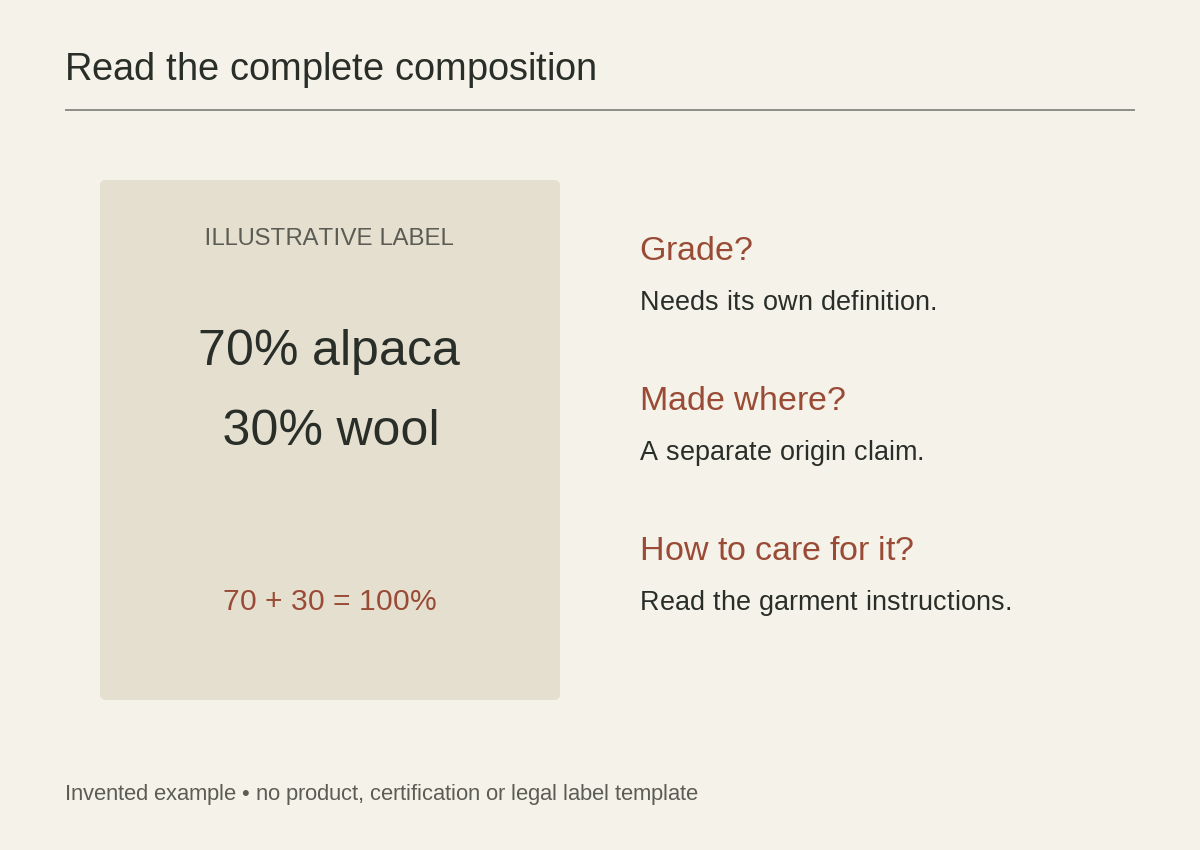
AOA describes variation in alpaca fibre diameter and structure. A mean diameter describes a sample average, while a grade name needs its own definition. Neither supplies a universal personal comfort threshold for the scarf or cardigan.
That keeps the useful focus on the finished contact surface. The inside of a neckline can differ from the central panel you first handled, and a report is useful only within its identified material scope.
Look at the whole contact surface
For the scarf, inspect the face and edge that will rest against the neck. For the cardigan, include the neckline, cuffs and any fastening: those contact points may remain exposed above or beyond the shirt. A fluffy surface and a smooth surface can also feel different against skin. Those observations are reasons to inspect the finished piece, rather than rank fabrics from a fibre percentage alone.
| What you notice | Useful next question |
|---|---|
| Prickle mainly at the collar | Is it the fabric, seam, label or edge touching there? |
| Sleeves comfortable over a shirt | Will you usually wear this garment with that layer? |
| A soft sample but no finished garment to handle | Is the sample the same yarn, structure and finish as the item? |
| A blend advertised as softer | What is the full composition, and can the actual fabric be examined? |
A blend is not automatically a compromise or an improvement. Read alpaca blend labels for the difference between composition and finished behaviour. Percentage arithmetic cannot predict an individual’s comfort.
Use a fitting as a comparison, not an allergy test
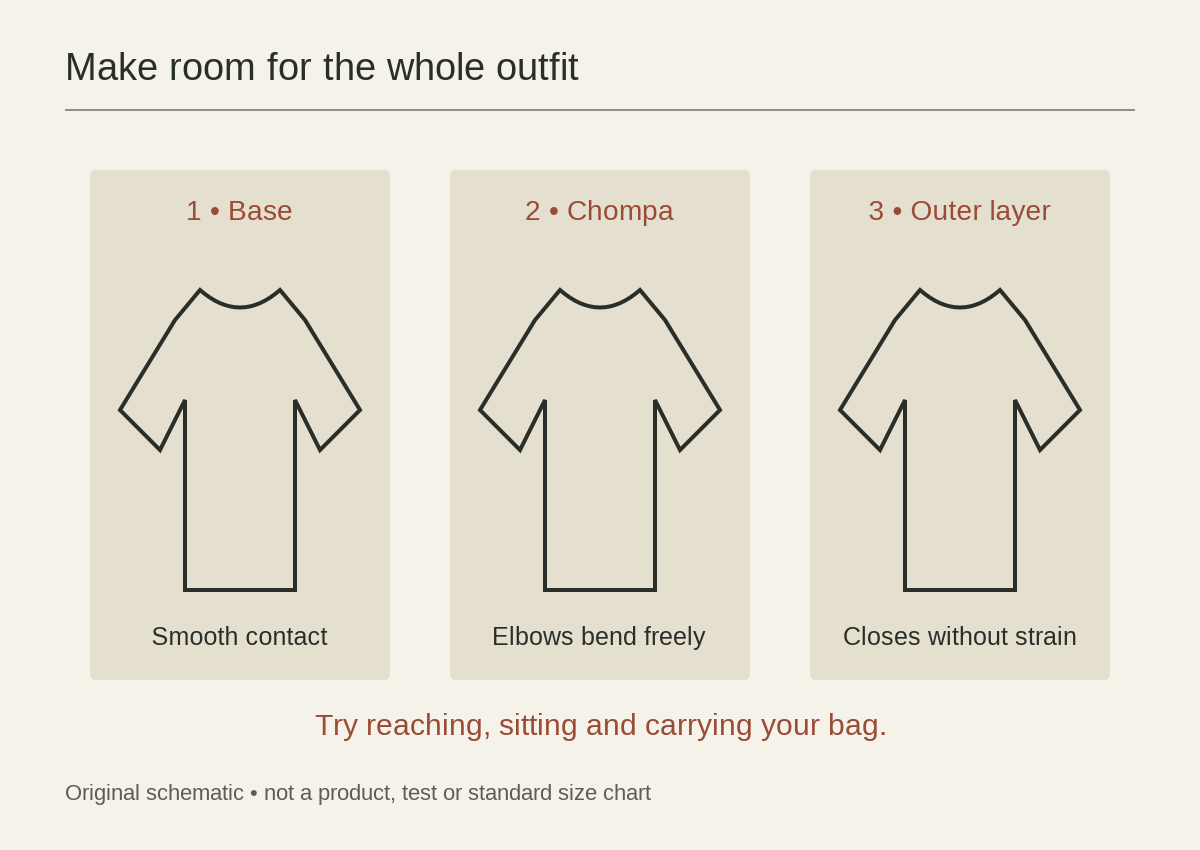
Where a seller permits trying on, wear the layer you expect to use with the garment. Notice the points of contact as you turn your head, bend your elbows and sit down. Check the neckline in its ordinary position rather than stretching it away from your skin.
This is an ordinary fitting, not a way to diagnose a reaction. Do not deliberately continue wearing something that irritates you, or rub a sample repeatedly against sensitive or already irritated skin. A moment of pleasant handling is useful information, but it cannot guarantee comfort throughout a day’s wear.
If buying remotely, a clear return policy may be more useful than another adjective about luxury. Check whether trying on is permitted, what condition a return must be in, the deadline and who pays return postage. Keep the composition and care-label photographs with the listing.
Itch and clothing dermatitis are different questions
DermNet’s clinical overview explains that clothing-related skin problems may involve the fabric, and that allergic contact reactions more often involve processing additives such as dyes or finishing agents. Fasteners can also be relevant. That does not identify the cause of a particular wearer’s symptoms.
An association’s description of alpaca, or a seller’s use of “hypoallergenic”, cannot rule out irritation or a reaction to the finished product. Avoid choosing a garment on a promise that nobody can be allergic to it. If you develop a rash or a persistent reaction, stop using the item and seek advice from a qualified health professional. This buying guide is not a diagnostic guide.
Work through the intended use
Return to the hypothetical scarf and over-shirt cardigan. Neither has undergone a wear test here. The same pleasant hand-feel would leave different unanswered questions: prolonged neck contact for the scarf, and neckline, cuffs and layer compatibility for the cardigan.
For the cardigan, use the layering guide to check the whole outfit. A base layer may change contact with the knit, but it does not make an unsuitable garment suitable for someone with an unresolved skin reaction.
Before ordering, record four things: the precise item and composition, the parts that will touch skin, what the seller’s evidence actually covers, and the return terms. If any of those matter to you and remain unclear, resolve that question before paying. That gives you a better decision than searching for one universal “itch-free” grade.