Alpaca
Huacaya and Suri: Texture and Drape Differences
A practical guide to the difference between huacaya and suri alpaca, centered on texture, loft, and drape.
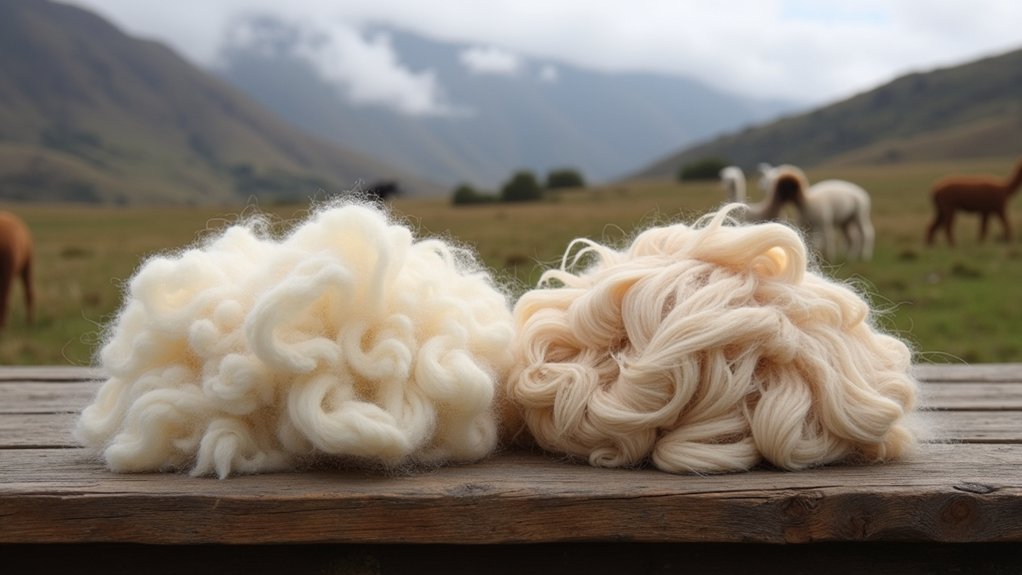
Alpaca fiber is commonly described in two broad types: huacaya (loftier, more crimp) and suri (smoother, more drape). The names are useful because they hint at how a finished garment will feel and move, but real-world pieces still vary with spinning, knitting/weaving, and blends.
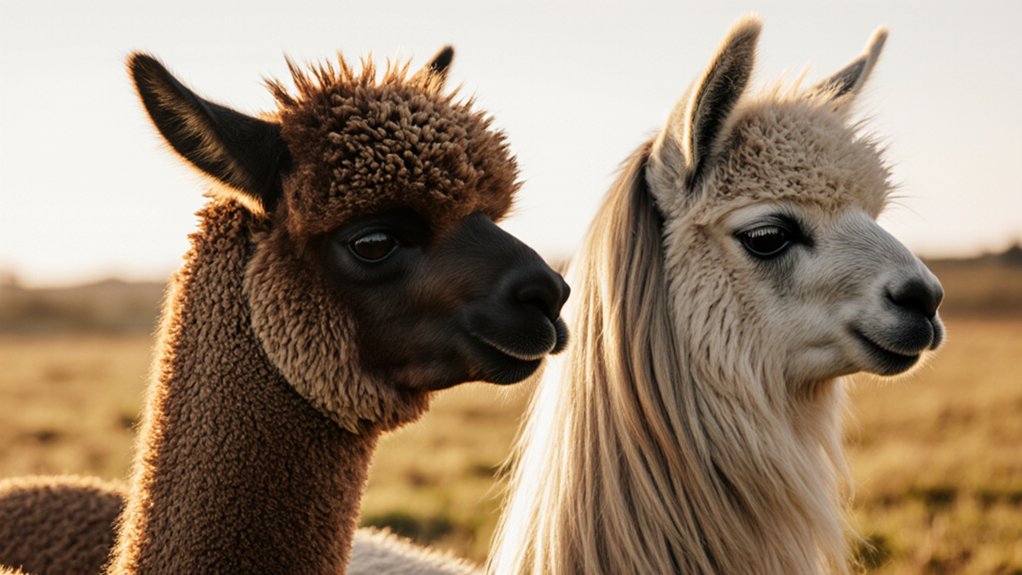
For broader context, browse the Alpaca guides.
The Key Structural Difference Between Huacaya and Suri Fiber
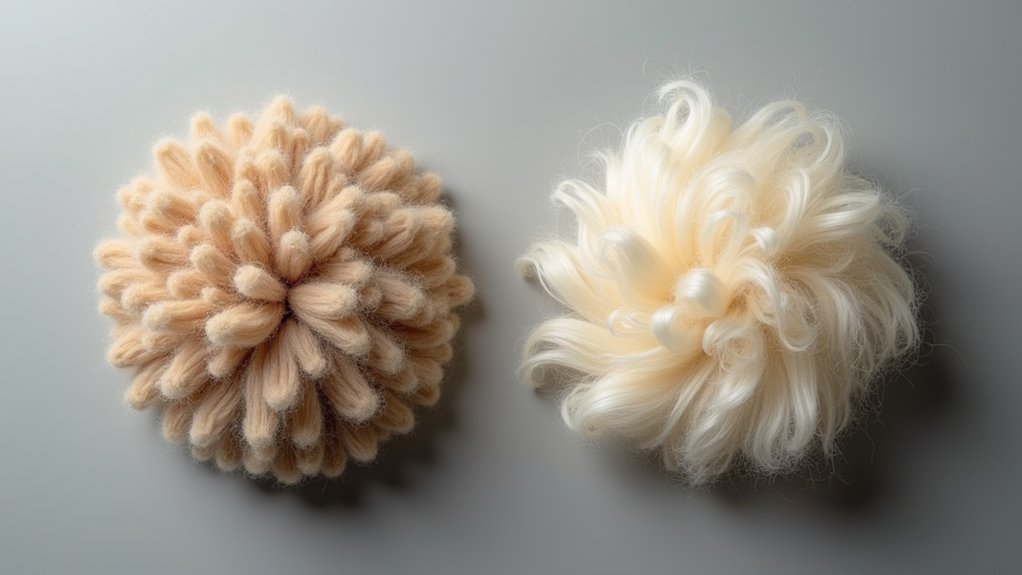
Alpaca fiber’s appearance and behavior stem from fundamental differences in how individual fibers grow from the follicle. Huacaya fiber exhibits pronounced crimp formation, creating a three-dimensional wave pattern that runs along each strand. This zigzag structure develops as the fiber emerges from the follicle, resulting in a springy, elastic quality. The follicle arrangement in Huacaya alpacas produces fibers that naturally separate and stand perpendicular to the body, forming a fluffy, dense fleece.
In contrast, Suri fiber grows straight without crimp formation. The follicle arrangement generates smooth, parallel strands that hang in lustrous locks. These pencil-like bundles cascade downward, creating the breed’s characteristic silky drape. This structural distinction fundamentally determines each fiber type’s textile properties, influencing everything from fabric hand to thermal performance.
How Huacaya’s Crimp Creates Warmth and Bounce
How does crimp transform alpaca fiber into an effective insulating material? Huacaya’s distinctive crimp formation creates a three-dimensional structure that traps air between the fibers. These microscopic air pockets act as natural insulators, preventing heat transfer and maximizing heat retention. The crimped waves cause individual fibers to stand apart rather than lying flat, forming a lofted fabric with superior warmth-to-weight ratio.
This structural characteristic also gives Huacaya textiles their characteristic bounce and springiness. When compressed, the crimped fibers resist matting and quickly recover their original shape. Garments made from Huacaya fiber maintain their volume and insulating properties even after repeated wear. The crimp’s resilience ensures that the air-trapping structure remains intact, providing consistent thermal protection throughout the fabric’s lifespan.
Why Suri Fiber Drapes Like Silk Instead of Wool
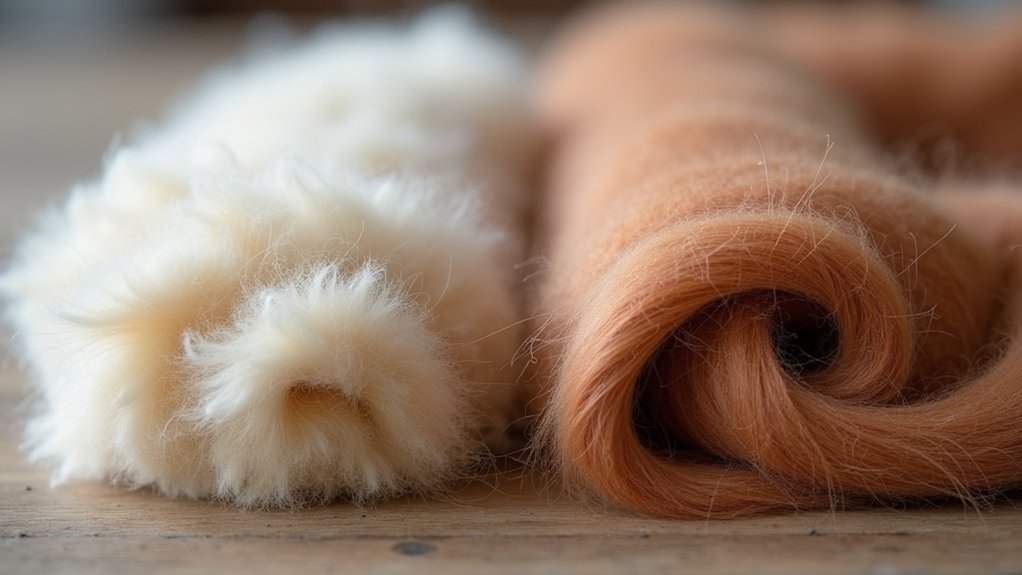
While Huacaya’s crimp creates loft and bounce, Suri fiber follows an entirely different structural pattern. Suri lacks crimp entirely, allowing individual fibers to hang straight and parallel. This smooth alignment creates a lustrous surface that reflects light uniformly, producing silk-like sheen and drape.
The fiber chemistry of Suri contains similar protein structures to Huacaya, but the absence of crimp fundamentally changes how fibers interact. They slide past one another easily, creating fluid movement rather than woolen bulk. This characteristic influences spinning techniques substantially - Suri requires minimal twist to maintain yarn integrity since the long, straight fibers naturally cling together through their length.
The result is fabric that flows and drapes elegantly, resembling silk or rayon more than traditional wool. This makes Suri ideal for garments requiring graceful movement and sophisticated appearance.
When to Choose Huacaya vs Suri for Your Textile Project
Choosing between Huacaya and Suri fiber depends on the intended garment’s function and desired aesthetic. Huacaya’s crimp creates loft and elasticity, making it ideal for insulating sweaters, scarves, and outerwear that require warmth and structure. Its crimped fibers trap air effectively, providing superior thermal regulation. Suri’s smooth, lustrous locks excel in formal garments, shawls, and suits where elegant drape matters most. The fiber’s natural sheen rivals silk, creating luxurious finished pieces.
End use determines the optimal choice: huacaya for everyday items where loft and warmth matter, and suri for pieces where drape and sheen are the priority.
What to Ask When You See “Suri” or “Huacaya” on a Label
Label terms can be inconsistent, especially on tourist-market items. If a seller uses these words, ask a few practical questions:
- Is the piece 100% alpaca or a blend?
- Is the yarn described as baby alpaca or another grade, and what does the seller mean by that?
- Was the piece woven or knitted, and what care do they recommend?
Even if the label is unclear, you can still judge the finished garment: huacaya-style textiles often feel loftier, while suri-style textiles tend to drape more smoothly.
A useful companion read is the alpaca poncho guide.
Related guides
- Compare it with the alpaca and llama fiber comparison.
- Use the alpaca overview for a nearby point of comparison.
- Pair this topic with the alpaca wool overview.