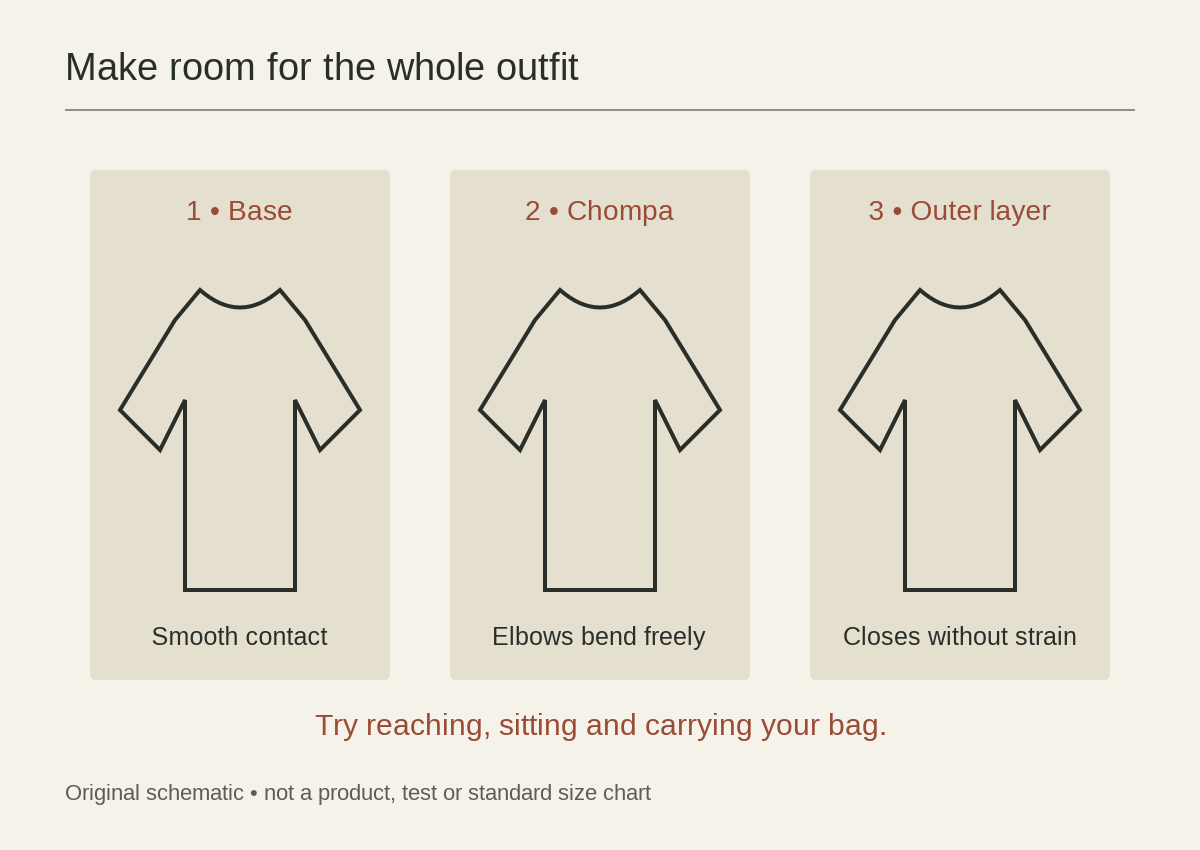
Start with the space in your wardrobe, rather than a winner between fibres. A light layer beneath a fitted jacket and a generous cardigan for evenings at home are different purchases. Either alpaca or cashmere might suit one of them; the useful comparison is between the actual garments available to you.
Both are animal fibres. Alpaca comes from an alpaca’s fleece; cashmere is associated with the fine undercoat of cashmere goats. Neither name, on its own, specifies a sweater’s thickness, finished dimensions or personal comfort.
Cashmere has a defined meaning; softness is still a separate question
The US FTC guide gives a precise definition for cashmere under the Wool Act: dehaired cashmere-goat undercoat, average diameter no greater than 19 microns, no more than 3 per cent by weight above 30 microns, and a coefficient of variation around the mean no greater than 24 per cent. These conditions concern fibres within that regulatory scope. They are not an international sweater-quality score.
Alpaca grading names follow their own classifications. Alpaca Owners Association describes variation in fineness and the different fleece characteristics of Huacaya and Suri. A retailer’s “baby alpaca” and “cashmere” therefore do not form two equivalent rungs on a universal softness ladder.
Our alpaca overview explains why material description is only the beginning. If you are sensitive at the neck, check the inside neckline of the actual garment, including its seam and label, rather than comparing the outer faces in your hands.
A fibre claim can change which shortlist you keep
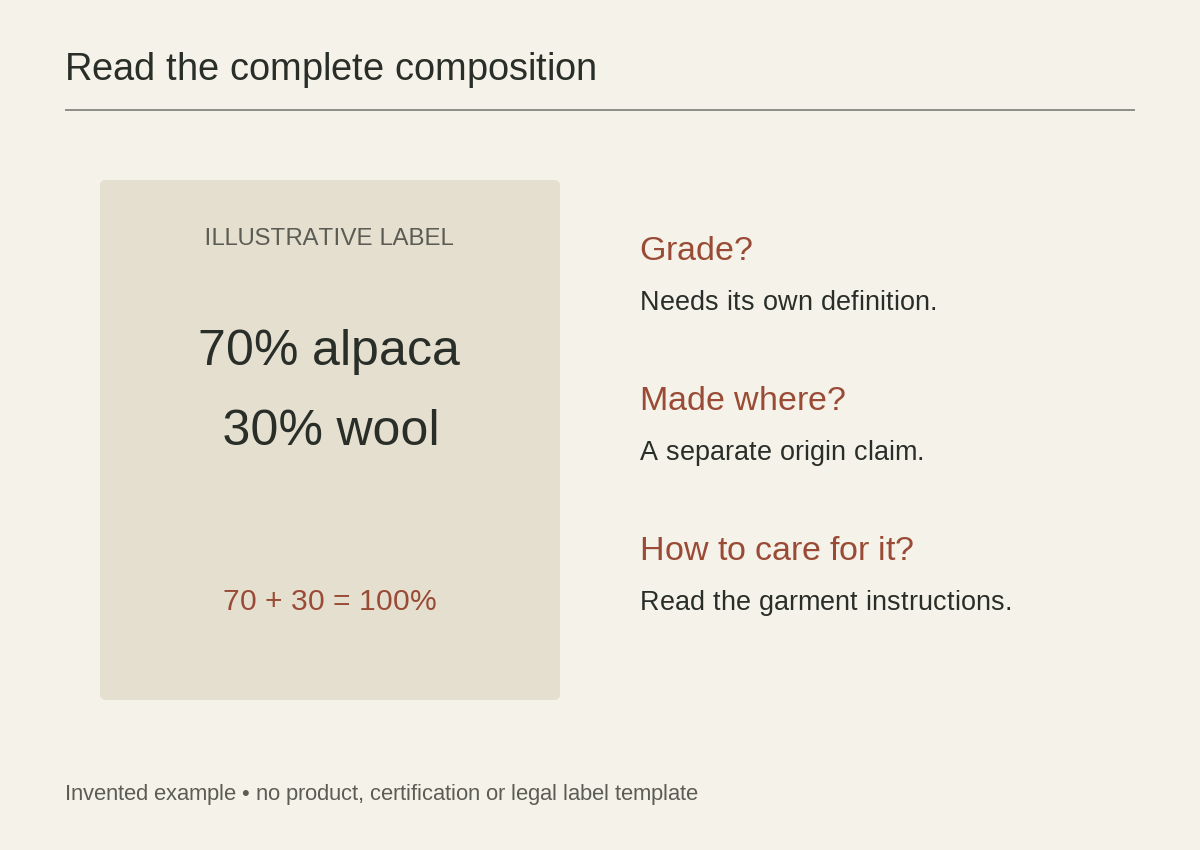
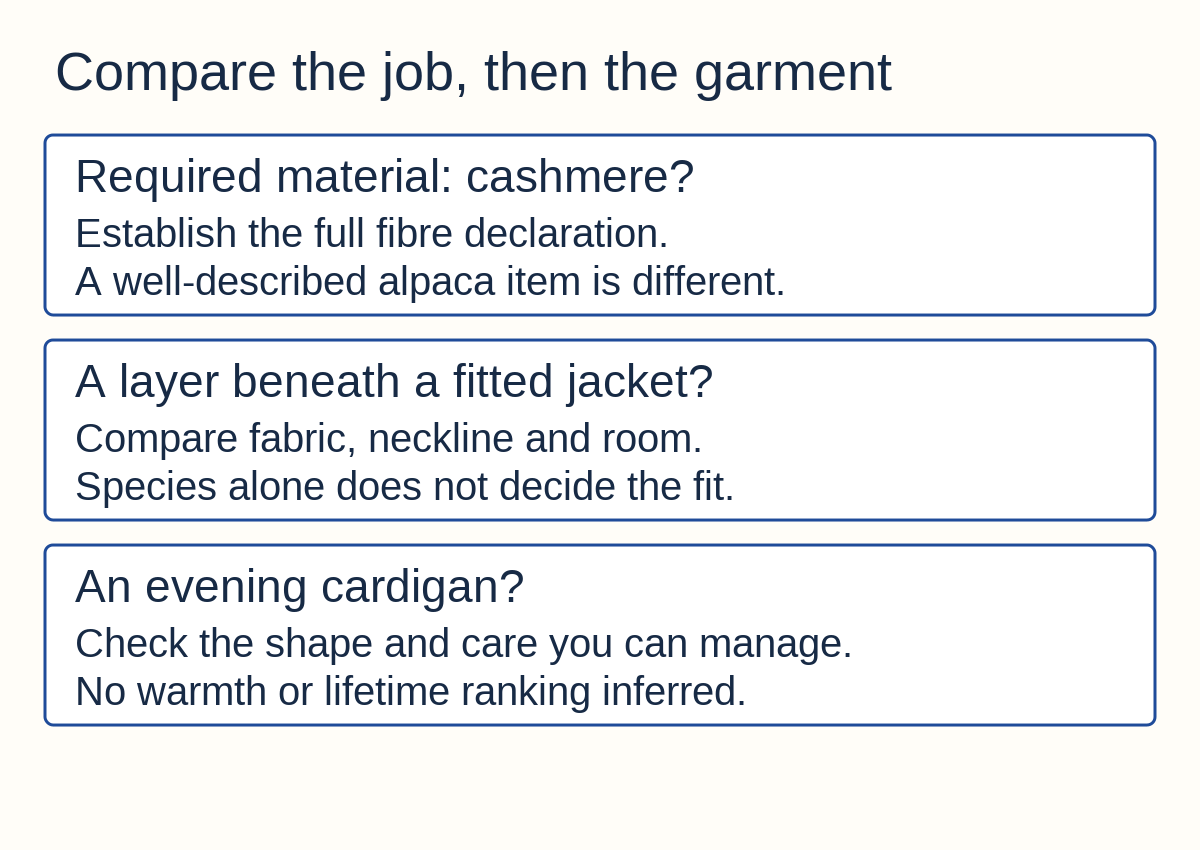
Imagine a reader buying a fine pullover specifically because they want cashmere. One hypothetical listing says ‘cashmere blend’ without percentages; another identifies an alpaca blend in full. The second may be better documented, but it does not meet the reader’s cashmere brief. Ask for the missing composition before comparing prices or treating a cashmere-sounding description as equivalent to a cashmere declaration.
Now change the brief to a comfortable evening cardigan with no required species. Both can remain candidates. Compare the actual inside neckline and the shape you will wear, using the layering guide if it must fit beneath a coat. These are different decisions: verifying a named material requirement, then judging a garment’s suitability.
Compare fabric amount and construction before making a warmth claim
Ask about yarn thickness, stitch structure and garment mass if it is available. A loosely knitted, lightweight piece and a dense, substantial one differ in more than their fibre. A controlled warmth comparison would need comparable fabrics and stated testing conditions; this guide supplies no such test.
For online shopping, request a clear fabric view and finished measurements. If the seller describes a sample’s feel or drape, ask whether it is the same yarn and construction as the offered garment. A numerical micron claim does not describe every aspect of the finished fabric.
A blend needs reading in full. “Cashmere blend” and “alpaca blend” can describe very different proportions and companion materials. The composition reference helps separate those declarations from origin and handwork claims. Compare complete labels rather than two prominent words in product titles.
Look at wear without predicting a lifespan
For the evening-cardigan brief, inspect cuffs and underarms; for the under-jacket pullover, include where the jacket will rub. On a display or second-hand garment, note wear already present at those places. Ask about existing repairs and the seller’s surface-care advice.
Pilling does not provide a simple cashmere-versus-alpaca verdict. Woolmark’s guidance explains that rubbing and several fibre, yarn and fabric factors influence pilling in wool clothing. It does not establish a fixed pilling rate or lifespan for either candidate here.
If two sellers make contrasting durability claims, ask for the evidence about those products: what was assessed, against what comparison, and under which conditions? An attributed experience report can be useful, but it should not quietly become a species-wide guarantee.
Include the care you will actually carry out
Bring the chosen brief into the care decision too. Read the label before deciding the price is acceptable. Include any professional-cleaning cost or drying-space requirement in your own budget. Sol Alpaca’s guidance, for example, strongly recommends dry cleaning while also discussing washing; resolve the instructions for the individual item rather than treating fibre alone as permission.
Do the same for the cashmere candidate. The easier routine is the one confirmed for that garment and manageable in your home, not an assumption that one luxury fibre always needs the same treatment.
Keep the reason for the premium explicit. If you require cashmere, obtain a clear cashmere declaration; if the purpose is a particular fabric and silhouette, compare those directly. A lower price for an alpaca blend is an alternative purchase, not proof that you have bought equivalent cashmere performance.