Hats
Choosing Knit Hats: Warmth, Shape, and Packability
A guide to evaluating knit hats by fit, stitch density, warmth, and how well they handle travel.
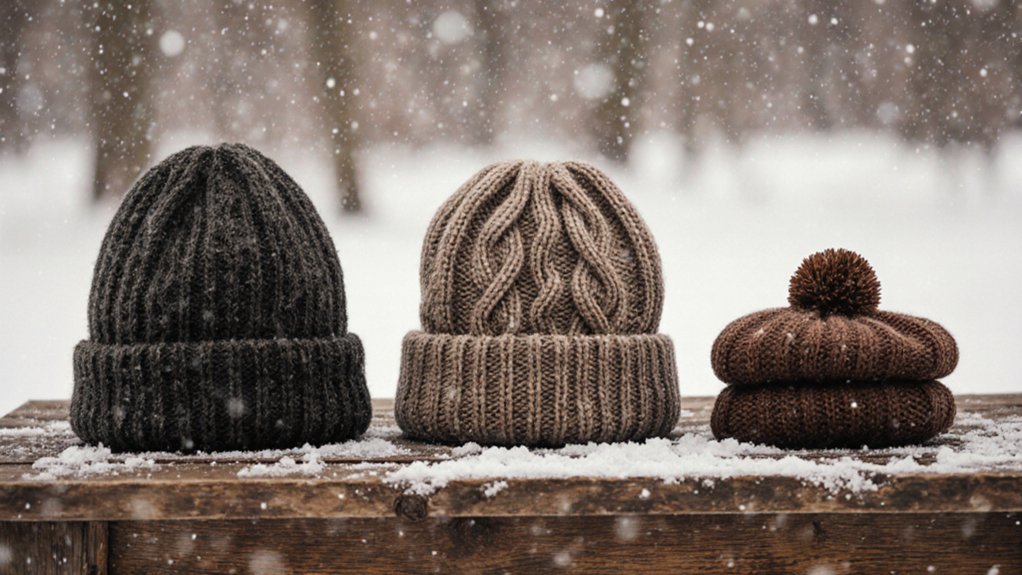
Knit hats are a small purchase that can still go wrong: too loose, too itchy, too thin to block wind, or so dense that they feel clammy indoors. This guide focuses on the comparisons that matter most: fit, stitch density, fiber content, and small design details like cuffs, lining, and ear flaps.
For broader context, browse the Hat guides.
Cuffed, Slouchy, or Fitted: Which Knit Hat Style Fits Your Needs?
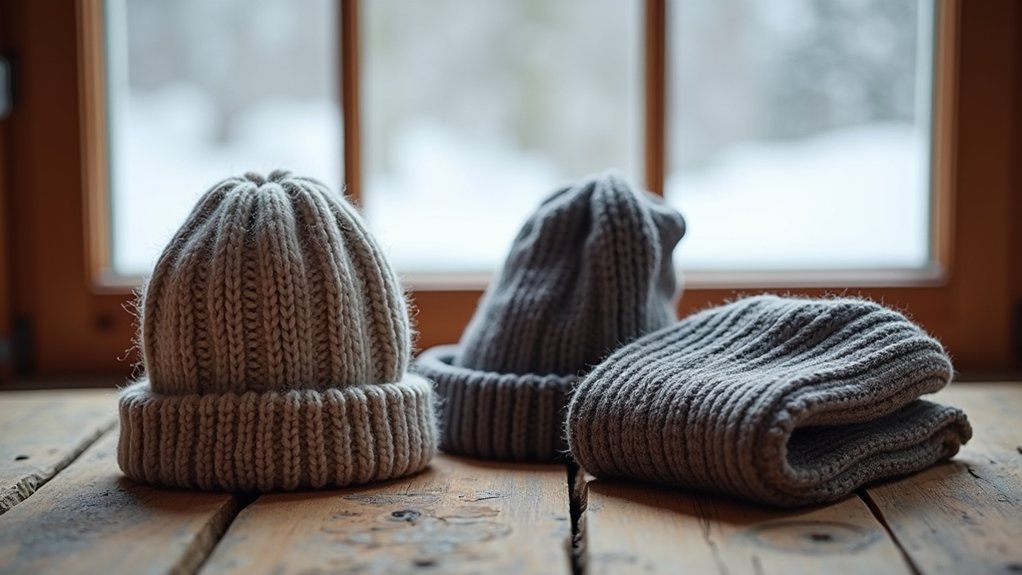
Choosing the right knit hat style depends on personal preference, head shape, and intended use. Cuffed beanies offer versatility through adjustable fit - wearers can fold the cuff for extra warmth or unfold it for additional coverage. Slouchy styles provide a relaxed appearance and accommodate larger head sizes or voluminous hairstyles. Fitted beanies sit snugly against the skull, making them ideal for active pursuits where secure placement matters.
Size considerations affect comfort and functionality. Cuffed designs work well for those between sizes, while fitted options require accurate measurements. Slouchy hats typically run large intentionally. The style choice impacts performance too: fitted hats stay put during movement, cuffed versions balance warmth with breathability, and slouchy designs prioritize comfort over security. Understanding these distinctions helps consumers select appropriate options.
Which Knit Hat Materials Balance Warmth and Packability?
Material selection directly determines how well a knit hat performs in cold conditions and how easily it fits into a pocket or bag. Merino blends offer exceptional warmth-to-weight ratios while naturally resisting odors during extended wear. These materials compress well without losing their insulating properties, making them ideal for travelers and backpackers. Synthetic fibers like polyester and acrylic dry quickly when wet and maintain their shape through repeated packing. They’re also more affordable than natural options. Pure wool provides superior warmth but adds bulk and weight. For best performance, many manufacturers combine materials - pairing merino’s temperature regulation with synthetic durability. A 70/30 merino-synthetic blend typically delivers the best balance, offering packability, warmth, and quick-drying capabilities without excessive cost. Material choice determines feel, warmth, and how a hat behaves over time.
- Alpaca: often warm for its weight and can feel soft, but pure alpaca knits can stretch if the structure is loose.
- Sheep wool: generally resilient with better “bounce” than alpaca, but can feel itchier depending on quality.
- Blends: small blends can improve shape retention and durability while keeping the feel of alpaca.
- Acrylic: common in tourist markets; can be practical, but the feel and breathability differ from natural fibers.
Why Some Knit Hats Hold Their Shape (and Others Go Limp)
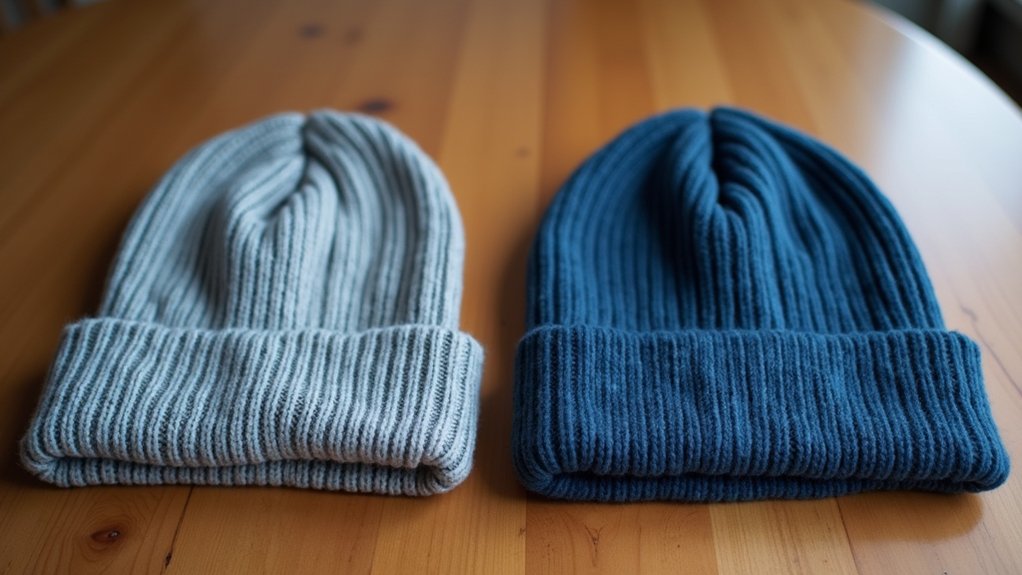
How does a knit hat maintain its structure after months of wear while another becomes a shapeless tube within weeks? The answer lies in fiber elasticity and stitch tension working together. Natural fibers like wool contain microscopic scales that interlock, creating memory. Synthetic blends with elastane add mechanical stretch. Meanwhile, tighter stitch tension creates denser fabric that resists deformation.
Key factors affecting shape retention include:
- Fiber composition and whether the yarn has natural elasticity.
- Stitch density (tighter knits usually deform less).
- Ribbing at the brim (helps the hat grip without sliding).
- Finishing at seams and joins (weak joins often fail first).
Hats combining these elements resist sagging and maintain their original silhouette through repeated use.
What Makes a Knit Hat Warm Without Adding Bulk
Why do some knit hats provide exceptional warmth while remaining lightweight and comfortable? The answer lies in fiber loft - the ability of fibers to trap air within their structure. Materials like merino wool and quality synthetics create tiny air pockets that deliver superior thermal insulation without requiring thick, heavy fabric.
The crimped structure of wool naturally maintains loft, allowing it to trap warm air close to the scalp. High-quality synthetics achieve similar results through engineered hollow fibers. These materials regulate temperature effectively while adding minimal weight.
Tightly knit constructions with fine-gauge yarns enhance this effect by preventing heat loss through the fabric while maintaining breathability. The combination of appropriate fiber choice and proper gauge creates hats that offer maximum warmth-to-weight ratio, ensuring comfort without unnecessary bulk.
How to Tell if a Knit Hat Will Last All Season
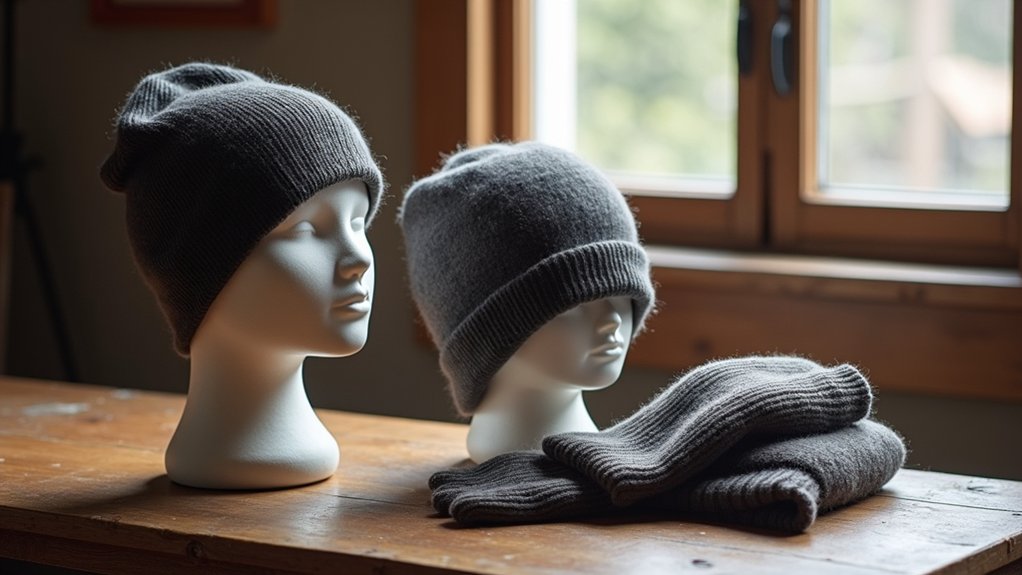
Examining a knit hat’s construction reveals indicators of seasonal durability. Shoppers should inspect several key features before purchasing to help ensure the hat withstands regular wear throughout winter months.
Quality markers include:
- Tight, even stitching (avoid obvious loose ladders and weak spots).
- A brim that recovers after a gentle stretch.
- Clean finishing at seams and edges.
- A fiber label or a clear explanation of what the hat is made from.
Durability is usually a combination of fiber choice and construction. A well-made blended hat can outlast a loosely knitted “100% alpaca” hat if the structure is weak.
Travel-Friendly Knit Hats (Packability and Care)
For travel, focus on the basics:
- Choose a hat that compresses without crushing permanently (denser knits rebound better).
- If you expect wet weather, prioritize hats that dry reasonably fast and do not trap moisture.
- Avoid packing damp knitwear inside sealed plastic for long periods.
A useful companion read is the alpaca overview.
Related guides
- Compare it with the alpaca hat guide.
- Use the alpaca and llama fiber comparison for a nearby point of comparison.
- Pair this topic with the huacaya and suri comparison.