Hats
Alpaca Hat: Fit, Knit Density, and Utility
A practical guide to alpaca hats, with a focus on warmth, fit, construction quality, and everyday usability.
Alpaca hats can be genuinely warm, but the label alone does not tell you much. Warmth and comfort usually come down to fit, knit density, and small construction details like lining and ear coverage.

For broader context, browse the Hat guides.
What Makes an Alpaca Hat Warm: Fit, Knit, and Construction

How does an alpaca hat achieve its remarkable warmth? The answer lies in three essential factors working together.
First, proper fit helps the hat sit snugly against the head, minimizing heat loss through gaps. A well-fitted alpaca hat creates an insulating barrier without excessive tightness.
Second, fiber density plays an essential role. Alpaca fibers contain hollow air pockets that trap warm air, while the natural crimp of the fibers creates additional insulating space within the fabric structure.
Third, knit tension determines how tightly the fibers interlock. A balanced knit tension prevents cold air penetration while maintaining breathability. Too loose, and warmth escapes; too tight, and the fabric loses its thermal properties.
These elements combine to create exceptional warmth retention in alpaca headwear.
How to Measure Your Head for an Alpaca Hat
Getting an accurate head measurement requires just two simple tools: a flexible measuring tape and a mirror. The measurement should be taken around the widest part of the head, typically about one inch above the eyebrows and ears. The tape should sit level all the way around, neither too tight nor too loose - just snug enough to stay in place.
For proper head sizing, the individual should stand in front of a mirror and keep the tape parallel to the ground. Recording the measurement in both inches and centimeters provides flexibility when comparing hat sizes across different manufacturers.
These measurement tips improve the odds that the alpaca hat will fit comfortably without sliding or creating pressure points during extended wear.
Why Tight-Knit Alpaca Hats Outperform Loose Weaves

When examining alpaca hat construction, the tightness of the knit directly impacts warmth retention and durability. Weave density determines how effectively a hat traps air and blocks wind penetration. Dense knits create smaller gaps between fibers, forming an insulating barrier that maximizes heat retention.
Tight-knit alpaca hats offer distinct advantages:
- Superior wind resistance - Minimal spacing between stitches prevents cold air from reaching the scalp
- Enhanced shape retention - Denser construction maintains the hat’s form through repeated wear and washing
- Improved longevity - Tighter weaves resist pilling and fiber breakdown better than loose alternatives
Loose weaves, while breathable, compromise thermal efficiency. The alpaca fiber’s natural insulating properties perform best when weave density supports air pocket formation. This structural integrity is one of the more reliable signals when comparing similar-looking hats.
Ear Flaps, Fleece Lining, and Windproof Brims Worth Buying
Beyond the weave itself, specific design features transform a quality alpaca hat into a winter weather barrier. Ear flaps provide critical ear warmth in frigid conditions, extending coverage where standard beanies fall short. Fleece lining adds an insulating layer that traps heat while wicking moisture away from the scalp. Windproof brims shield the face from harsh gusts, making them essential for exposed environments.
When evaluating these features, buyers should prioritize functionality over aesthetics. Ear flaps must extend low enough to cover completely, while fleece lining shouldn’t add excessive bulk. Brims require reinforced stitching for brim durability, as they endure constant wind stress. Hats combining all three features offer maximum protection, though each addition increases weight. Select designs based on typical weather exposure rather than occasional extreme conditions.
Alpaca Hat Styles: Beanies, Chullo, and Trapper Hats Compared
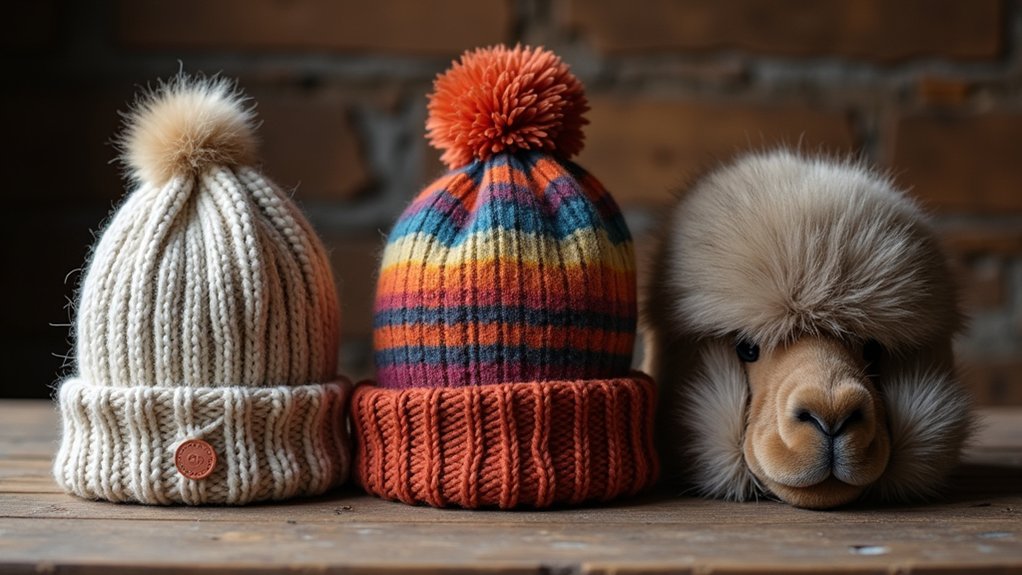
Three distinct alpaca hat styles dominate the market, each engineered for different winter scenarios. Style comparisons reveal performance differences worth considering before purchase.
Beanies offer streamlined profiles that fit under hoods and helmets. They’re lightweight, packable, and provide essential warmth without bulk. Modern designs incorporate various knit patterns and cuff options.
Chullo hats feature traditional Peruvian construction with ear flaps and braided ties. Chullo aesthetics combine colorful geometric patterns with functional ear protection. The design excels in extreme cold conditions where exposed ears pose frostbite risks.
Trapper hats deliver maximum coverage through fur-lined flaps that fold down over ears and neck. They’re ideal for prolonged outdoor exposure but sacrifice portability due to their structured form and additional materials.
Testing Alpaca Hat Quality: Touch, Stretch, and Label Checks
Quality assessment requires hands-on evaluation before purchasing an alpaca hat. The touch texture should feel soft and smooth, not scratchy or coarse. Genuine alpaca fiber exhibits a silky quality that distinguishes it from synthetic materials or lower-grade wool. Buyers should gently stretch the fabric to test elasticity and knit density. A well-constructed hat returns to its original shape without sagging or distorting. Excessive stretch indicates loose knitting or poor-quality yarn blends.
Label checks provide essential information about fiber content and origin. Authentic alpaca products typically specify the percentage of alpaca fiber, whether it’s baby alpaca, royal alpaca, or standard grade. Labels should also indicate care instructions and manufacturing details. Reputable manufacturers display transparent labeling with country of origin and fiber composition clearly stated.
Price Signals: What Usually Moves Cost Up or Down
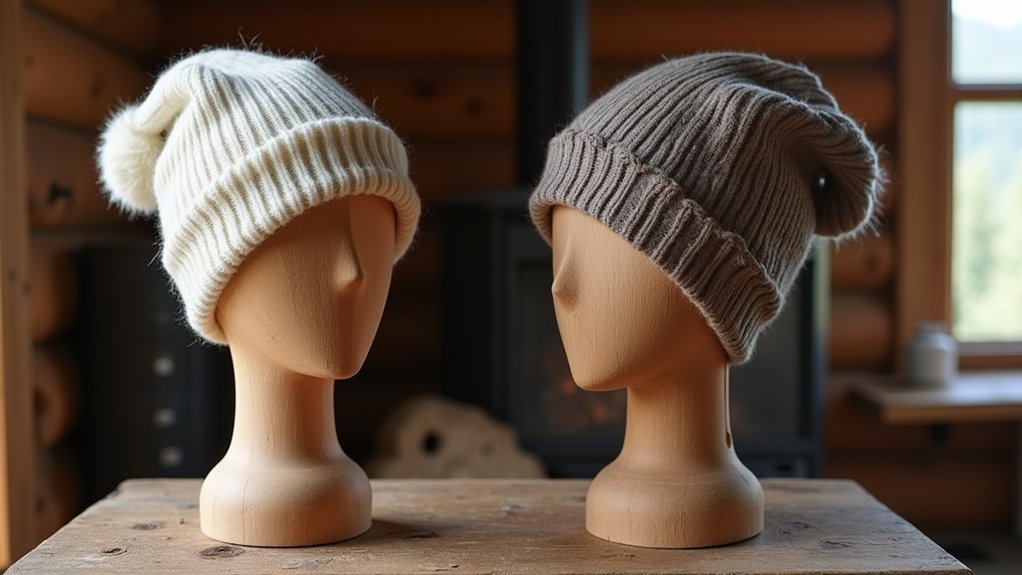
Price varies by fiber content, knit density, finishing, and whether the hat is lined. When comparing prices, look for specific attributes that justify the difference:
- Clear fiber composition (and whether it is blended).
- Dense, consistent knitting (especially around the brim).
- Clean finishing at seams and edges.
- Lining or ear coverage if the hat is meant for wind and cold.
Where to Buy Authentic Alpaca Hats Online and In-Store
Finding genuine alpaca hats is easier when the seller can explain fiber content and process consistently. In Peru, look for maker-direct stalls, weaving centers, and shops that can name the workshop or community. Online, rely on clear fiber composition, clear photos of the knit, and consistent care guidance rather than brand claims.
A useful companion read is the alpaca overview.
Related guides
- Compare it with the knit hat selection guide.
- Use the alpaca and llama fiber comparison for a nearby point of comparison.
- Pair this topic with the huacaya and suri comparison.