An online photograph shows crossed fronts, but the listing calls the garment a ruana and says little about its opening. In this hypothetical case, an unstyled front view answers a more useful question than another name: is the cross-over secured, or is the model holding it in place?
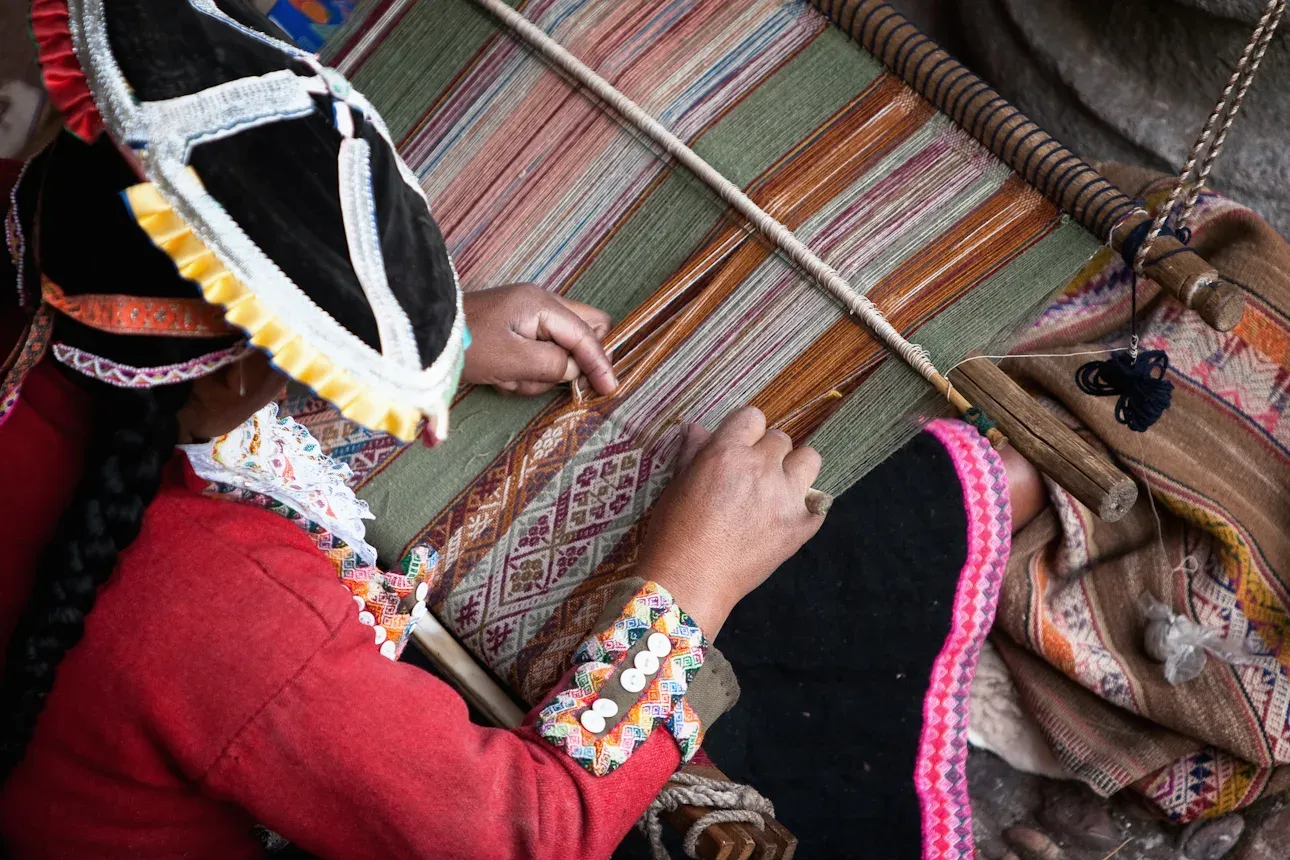
Follow the opening, fastenings and flat shape before deciding how you would wear the piece. Poncho, ruana and cape are useful words with overlapping usage. The traditional weaving guide supplies the separate textile context.
What the names can tell you
The RAE–ASALE dictionary describes a poncho as a covering with a central head opening, commonly formed from a square or rectangular textile. Its entry for ruana includes Colombian and Venezuelan use for a kind of poncho or outdoor covering. Its clothing definition of capa describes a loose sleeveless garment, open in front and carried over the shoulders.
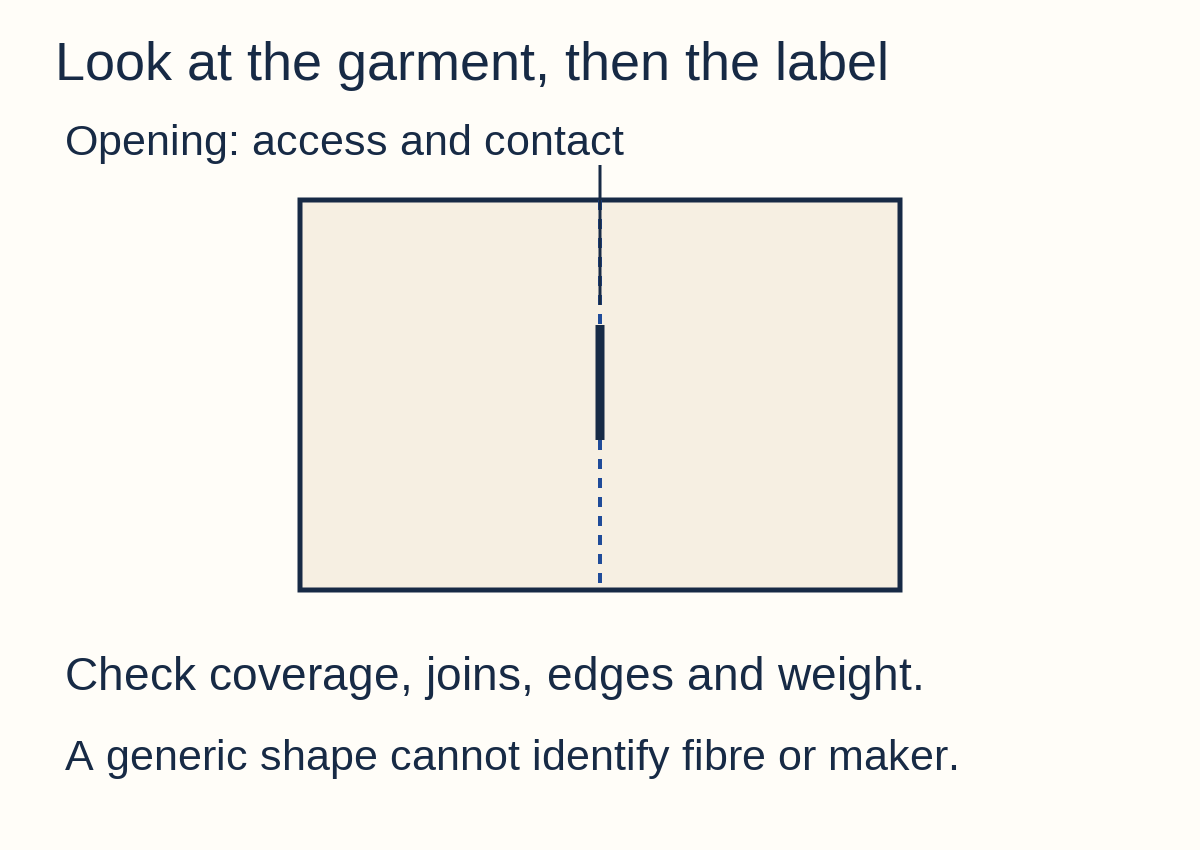
Those entries offer a useful starting point and also show overlap. Do not assume that a retailer’s “ruana” must have one precise slit arrangement, or that every “cape” closes in the same way. Ask for a photograph showing the entire garment laid flat and another showing the front opening.
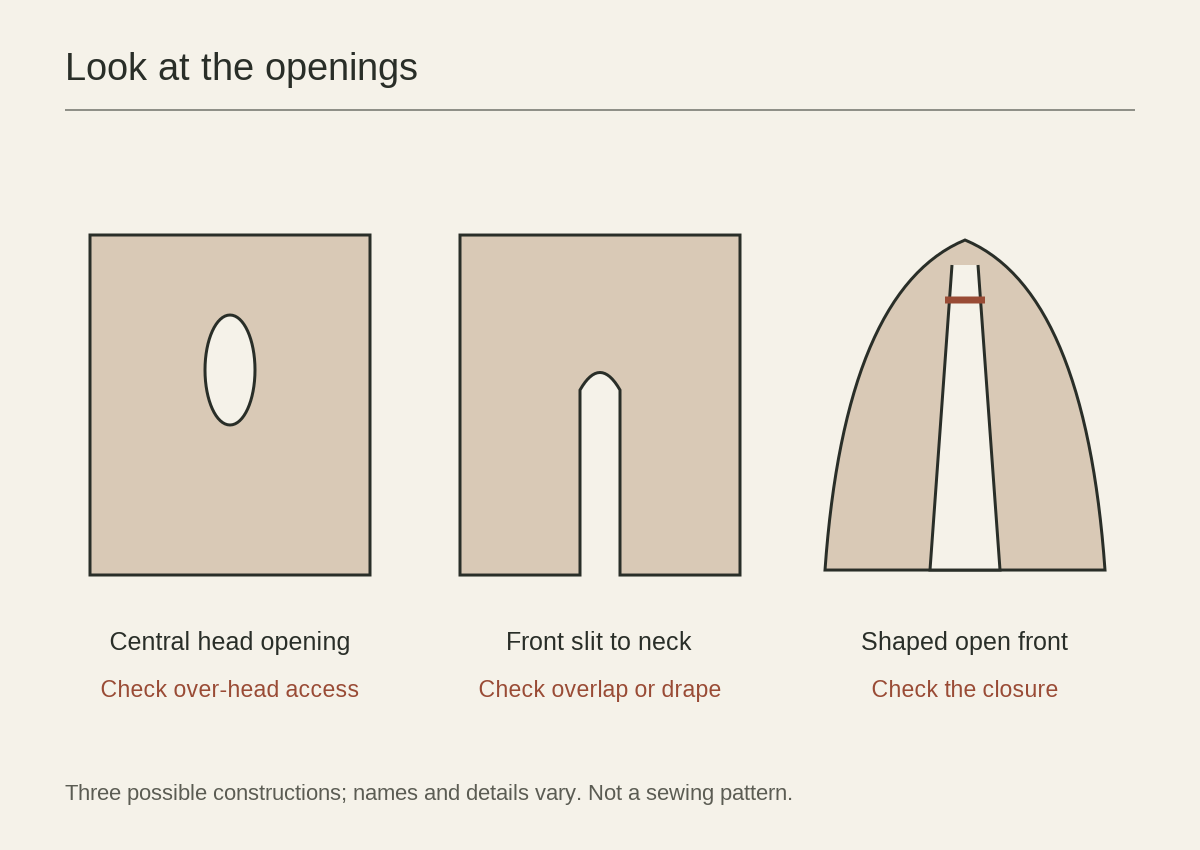
The schematic above shows three possible constructions to inspect. It is an original comparison of openings, not a universal naming chart or a pattern for a culturally specific garment.
Compare the opening before the silhouette
| Construction you can verify | How you put it on | What to check |
|---|---|---|
| Central head opening, front uninterrupted to hem | Usually over the head | Neck opening and front/back orientation |
| Front slit reaching the neck | Can be placed around the shoulders | Whether fronts overlap, drape or need holding |
| Shaped open front with a closure | Around the shoulders, then fasten if intended | Closure position, arm openings and movement |
These rows describe features, not three rigid definitions. A garment may combine them or use an additional side seam, hood or fastening. If the listing offers only a styled photograph, you may not be able to tell what is holding the front in place.
Ask how it sits on the shoulders
A flat rectangle draped over a body will not present the same outline as it does on a table. Shoulder shape, neck position and the way the front is arranged affect where the edges fall. A rectangular width alone does not tell you how far a garment will cover your arms.
Check whether the seller’s length includes fringe and whether it is a full unfolded measurement or a worn shoulder-to-hem measurement. Ask to see the garment without a belt if it is shown belted. Do not assume the styled arrangement is the garment’s natural resting position.
The poncho reference helps you examine the garment as a purchase: dimensions, fibre information and construction matter alongside the name. None of these forms automatically establishes water resistance, warmth or suitability for a particular climate.
Test movement and the front arrangement
If trying on is permitted, use the layer you expect underneath. Reach forward, sit down and check the position of the edges. Notice whether you need a hand to hold an open front, whether a closure presses against you or whether the neck moves more than you want.
A front opening may be convenient when you want to remove the garment without passing it over your head. A closed front may suit you if you prefer fewer loose front edges. These are practical preferences; the actual dimensions and construction decide how a particular piece behaves.
For the imagined ruana with crossed fronts, ask whether the crossed fronts are secured and request an unstyled view; then compare that answer with how you want to move and remove the garment. The answer may change your decision more than finding a competing definition of the word.
Keep the cultural description specific
A museum object can demonstrate a particular construction without defining all modern garments. The Metropolitan Museum of Art describes a twentieth-century Sica Sica poncho from Bolivia made from two woven panels joined while leaving a head opening. That is a documented example from a named place, not evidence that all Peruvian ponchos use the same construction.
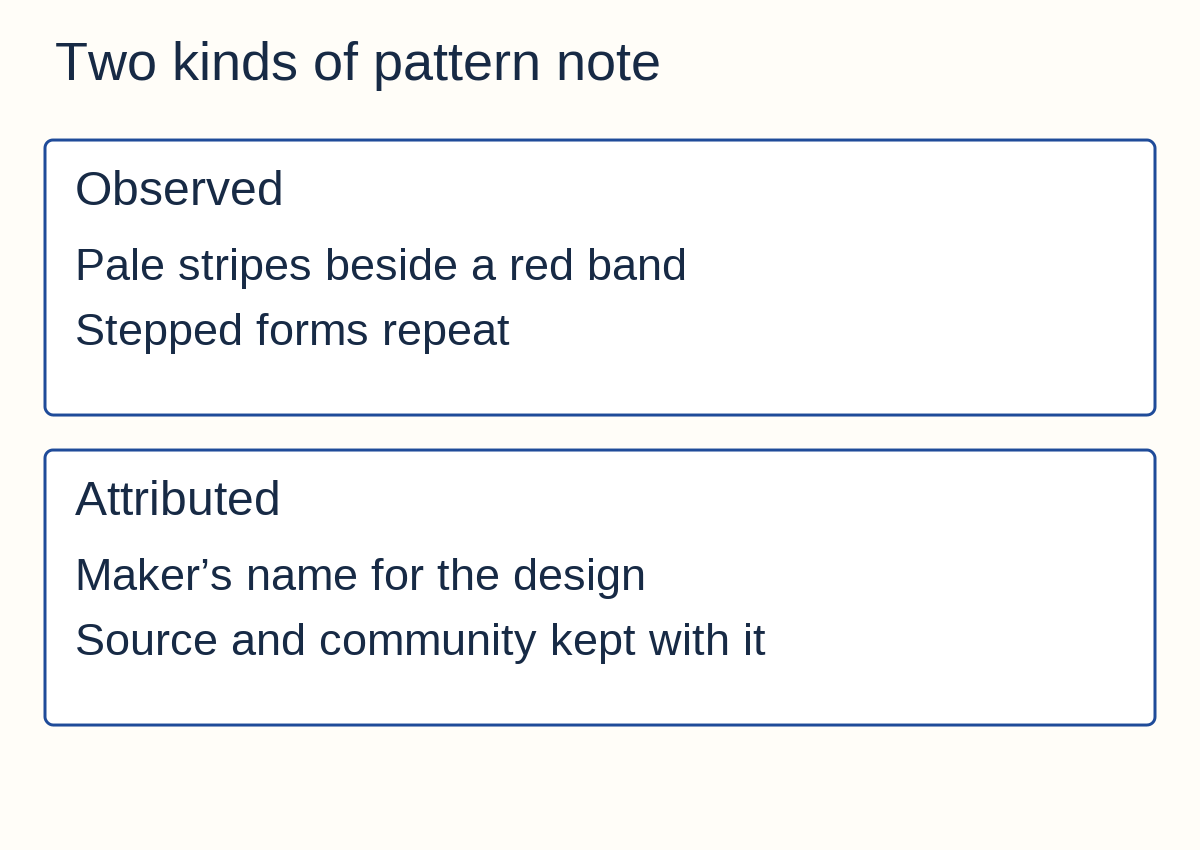
The fibre also needs its own evidence. A poncho form does not prove alpaca content; a ruana name does not prove a Colombian maker; a cape silhouette does not identify a handweaving technique. Use the pattern-reading guide to ask about visible structure and attributed context rather than assigning meanings from appearance alone.
Save a feature description with the listing
Write a short description in ordinary words: “open front, no fastening, rectangular when flat, fringe measured separately”. Add the measuring routes and any explanation from the seller. For a different garment it might be “central neck slit, sides open, over-head dressing”.
That record gives you a reproducible comparison even when sellers choose different names. If an opening, closure or important dimension cannot be established, leave it as an unanswered question before ordering instead of guessing from the styled photograph.