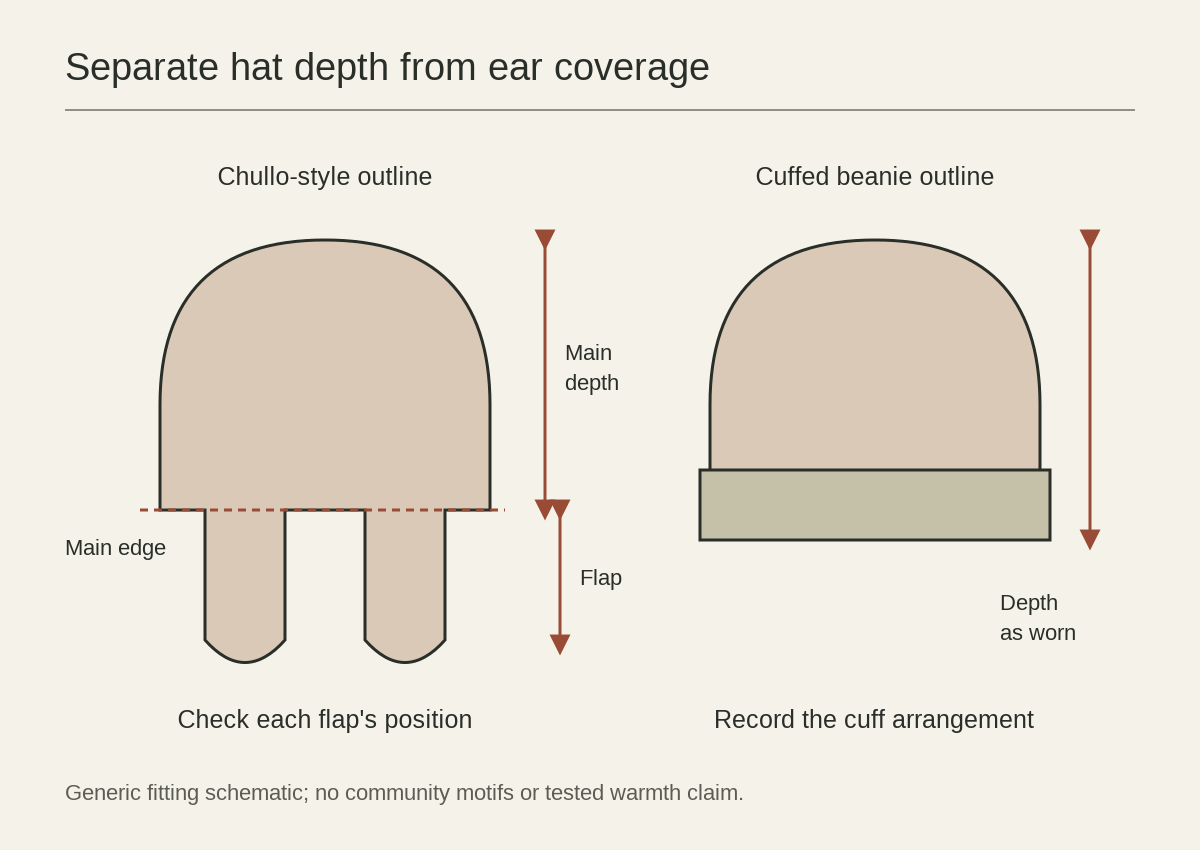
Before a chullo from Accha Alta takes shape on the needles, its decoration can already have begun in the yarn. CTTC describes knitters tying small knots that become raised bobbles, or qhurpus, as the hat is knitted. The outline with earflaps is recognisable; this account draws attention to the preparation behind its surface.
A chullo is an Andean knitted hat associated with earflaps, but its making varies between communities. Follow the Accha Alta account, then compare Acopia and Pitumarca. The alpaca hat guide handles general buying and fit; here the people and techniques give the name substance.
A name with a broader context than one souvenir
ASALE’s Dictionary of Americanisms records chullo, derived from Quechua ch’ullu, as a woollen hat with earflaps and multicoloured designs used in Andean regions. Its regional labels include Peru and Bolivia, with less common Ecuadorian use. That is a vocabulary entry, not a boundary around who may make or wear every modern version.
The name alone does not establish alpaca content. A hat may be described by its shape or style while its composition needs a separate fibre declaration. Do not turn “chullo” into a synonym for “100% baby alpaca”, “handmade” or “made in Peru”. Each is a different claim requiring its own explanation.
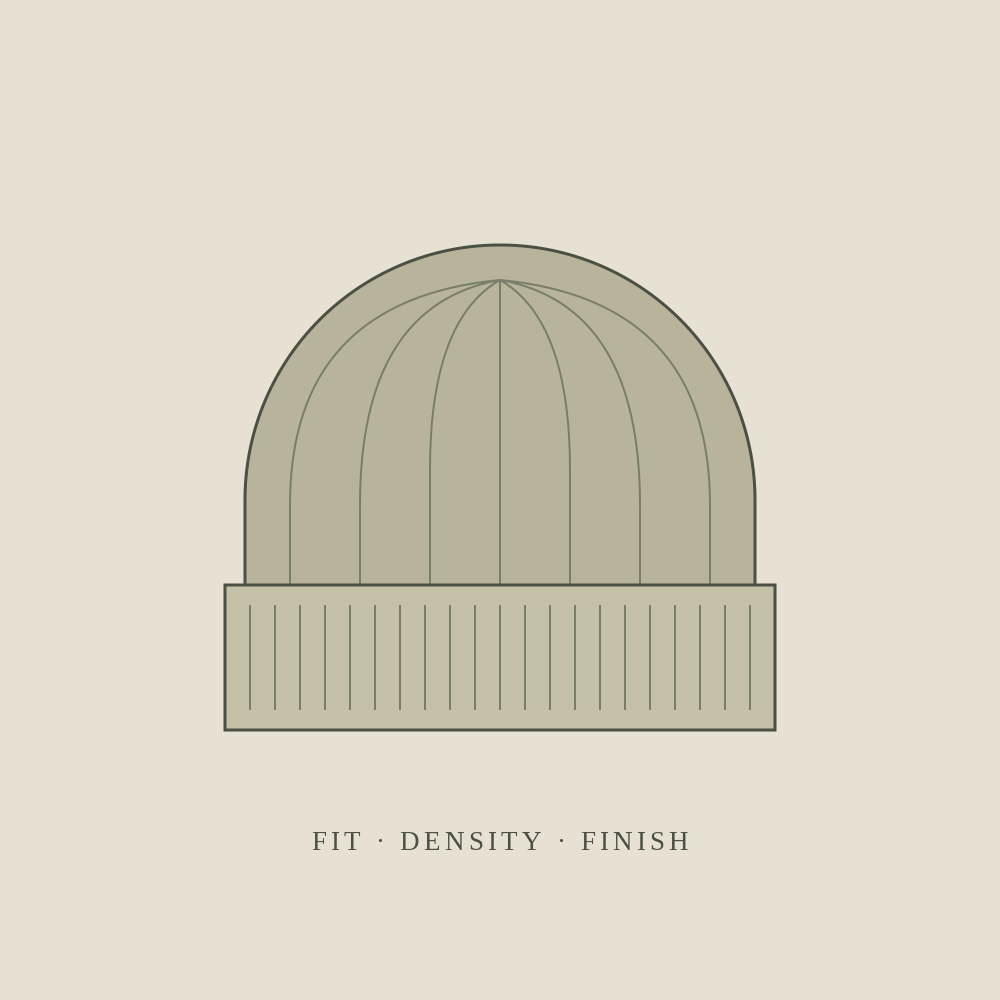
A simple hat illustration can show earflaps. It cannot authenticate a community’s work or supply a pattern’s meaning. The schematic on this page is generic rather than a documented example of a named community’s design.
Look at named community accounts
CTTC’s Accha Alta account describes women and men working in the round with five needles. For qhurpus, knots prepared in the yarn emerge as small exterior bobbles arranged into diamond patterns. Beads, sequins, ribbons and other embellishments can follow the knitting. Preparation, knitted surface and applied decoration are distinct stages in this local account, not instructions for copying a design.
Move to CTTC’s description of Acopia and the point of interest changes: it describes chullo knitted in the round with the finished side facing outward, contrasting that orientation with other local communities. Pitumarca’s account, meanwhile, identifies handspun local alpaca yarn used for chullo. It discusses llama yarn for slings, a different object.
Together these accounts invite closer attention to hands, yarn and sequence. They describe the work CTTC documents in named communities; they do not impose one technique on every knitter or identify an unrelated shop hat.
Ask who made the particular hat
Having followed the yarn into the knitted surface, ask who did that work on the particular hat: “Who knitted this, and what can you tell me about their work?” A seller may name an individual, association or workshop, or may know only the supplier. Record the answer at that level rather than assuming direct contact with the maker.
Ask separately where the garment was made and what its fibre label says. A community attribution can be relevant to cultural context without being a laboratory fibre result. An alpaca composition statement cannot by itself establish who designed or knitted the hat.
For a market purchase, the Cusco textile buying guide helps organise these questions without demanding a story the seller cannot substantiate. An honest limit is more useful than a detailed explanation invented to fill a gap.
Treat motif explanations as attributed knowledge
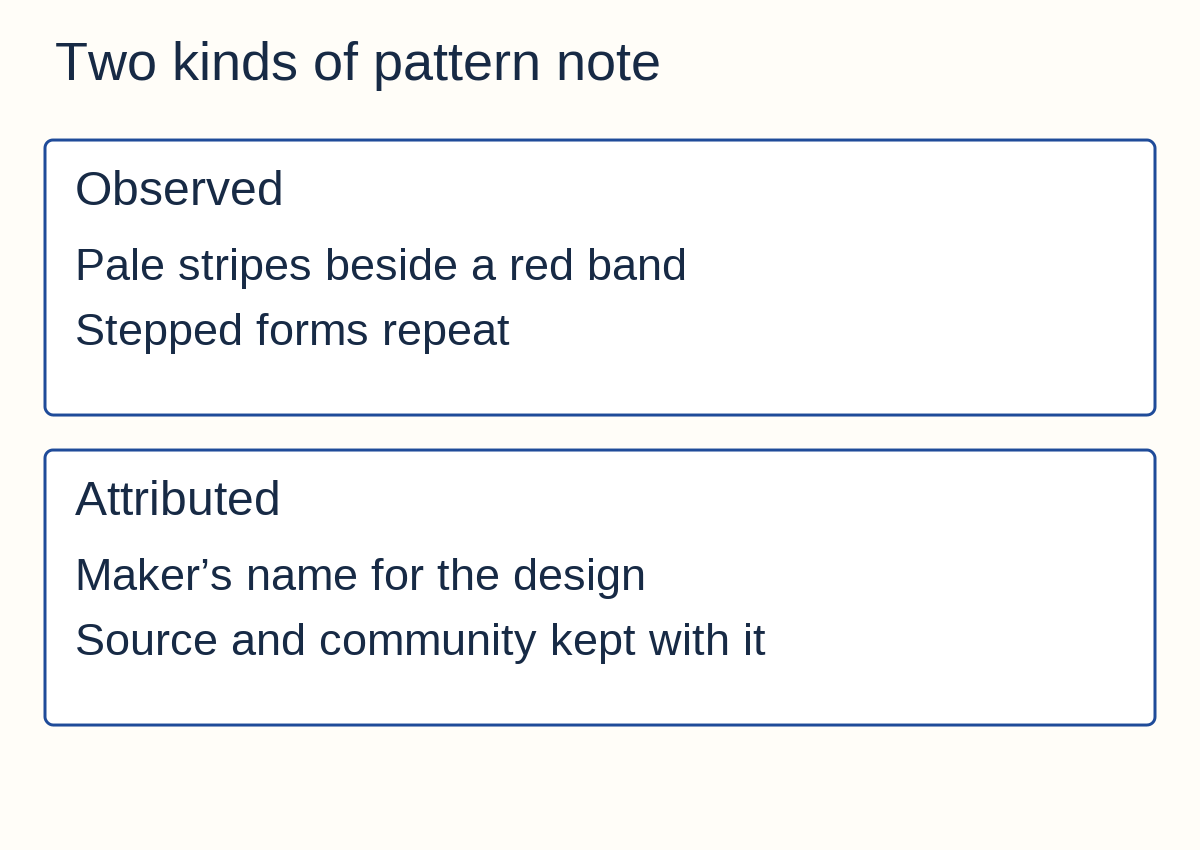
Ask whether a name or explanation comes from the maker, a community account or the seller’s interpretation. A visually similar zig-zag or animal shape can appear in different settings. Do not assign identity, marital status, rank or a ceremonial use solely from its appearance.
CTTC’s Accha Alta account discusses iconography in relation to the community’s sacred geography. That is a reason to preserve local attribution, not permission to extract a general “Andean symbol dictionary”. Our pattern-reading guide offers related questions about attributed explanations; its woven-structure examples are not knitting instructions.
If you want to share a maker’s explanation or photograph, ask what may be recorded and how they would like to be credited. Permission to buy a hat does not automatically include permission to photograph a person or reproduce their design commercially.
Keep cultural context and everyday fit together
Appreciating the work does not remove ordinary fit questions. Check head circumference, crown depth, earflap position and how the edge feels. Examine the care instructions for the actual materials, including any lining or applied decoration.
If the hat has ties or tassels, ask their intended use rather than assuming they must be tied under the chin. Do not pull them as a strength test. A garment sold for adults should not be assumed suitable for an infant or child because it looks small; this article is not a children’s-product safety assessment.
Write down what is known
An account of knots becoming bobbles tells us more than a generic claim of “Andean symbolism”. If a maker identifies a technique or explains a design, keep their name and community attribution with that explanation. Keep the fibre declaration and seller’s receipt alongside it as separate records.
There may be gaps. Leave those visible rather than supplying an attractive story. The Accha Alta, Acopia and Pitumarca examples show how much interest lies in precise, local detail: preparing yarn, orienting the knitting, choosing a material. A familiar outline can hold many different kinds of work.